
Best Flooring for a Basement: What Survives a Below-Grade Slab
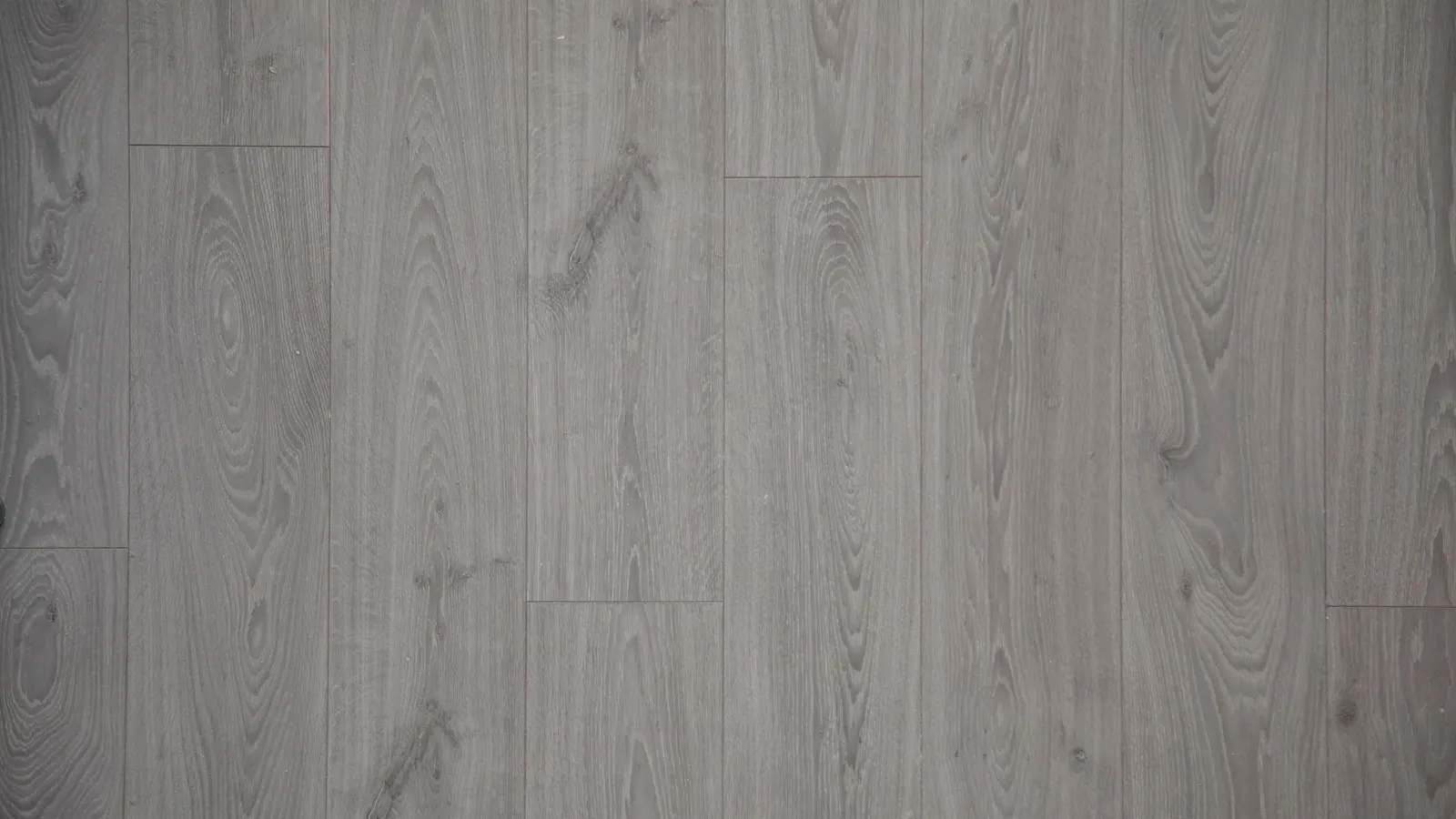
Choosing the best flooring for basement use is a different exercise from choosing flooring anywhere else in the house. Upstairs, you pick what you like. Below grade, the slab is in contact with the ground, and the basement flooring options that survive are the ones indifferent to moisture. Appearance comes after that, not before it.
Last reviewed and updated: October 9, 2026. Written by Jeremy Jarvis.
Key takeaways
- Rank basement flooring by moisture tolerance first; appearance and price are secondary in a below-grade room.
- Inorganic, non-absorbent materials survive; organic, absorbent ones generally do not.
- EPA’s principle applies to floors as much as walls: mold will not grow without water or moisture.
- Test the slab for vapour before choosing, because the result eliminates options.
- EPA notes concentrations of many VOCs are consistently higher indoors, up to ten times higher than outdoors.
Know the slab before you shop
Moisture coming up through concrete eliminates several options outright. Check your space with the Basement Moisture Diagnosis first.
The rule that picks the best flooring for basement use
Inorganic and non-absorbent materials survive in a basement. Organic and absorbent ones do not. That single test eliminates most of the field when you are choosing the best flooring for basement conditions.
That is the whole selection principle, and EPA explains why it works. Mold may begin growing indoors when mold spores land on surfaces that are wet, and there are many types of mold, none of which will grow without water or moisture. A material that absorbs and holds water provides exactly that surface. One that does not, cannot.
The second half of the rule is recoverability. Basements occasionally get wet even when everything has been done correctly, so a floor that can be dried and reused is worth more than one that has to be replaced.
Test the slab before you choose
Which is the best flooring for basement use depends partly on how much vapour your slab is passing, so test before shopping rather than after.
The plastic sheet test is free. Tape a square of clear plastic tightly to the slab, sealing all four edges, and check after a day or two. Moisture trapped underneath means the slab is passing vapour upward.
Flooring manufacturers often specify a more precise test, such as a relative humidity probe or a calcium chloride test, and they may require the result before a warranty applies. Read that requirement before you buy an expensive floor rather than after it fails.
A slab that fails is not the end of the project. It means dealing with the water first, as our waterproofing guide sets out, and then choosing from the materials that tolerate vapour.
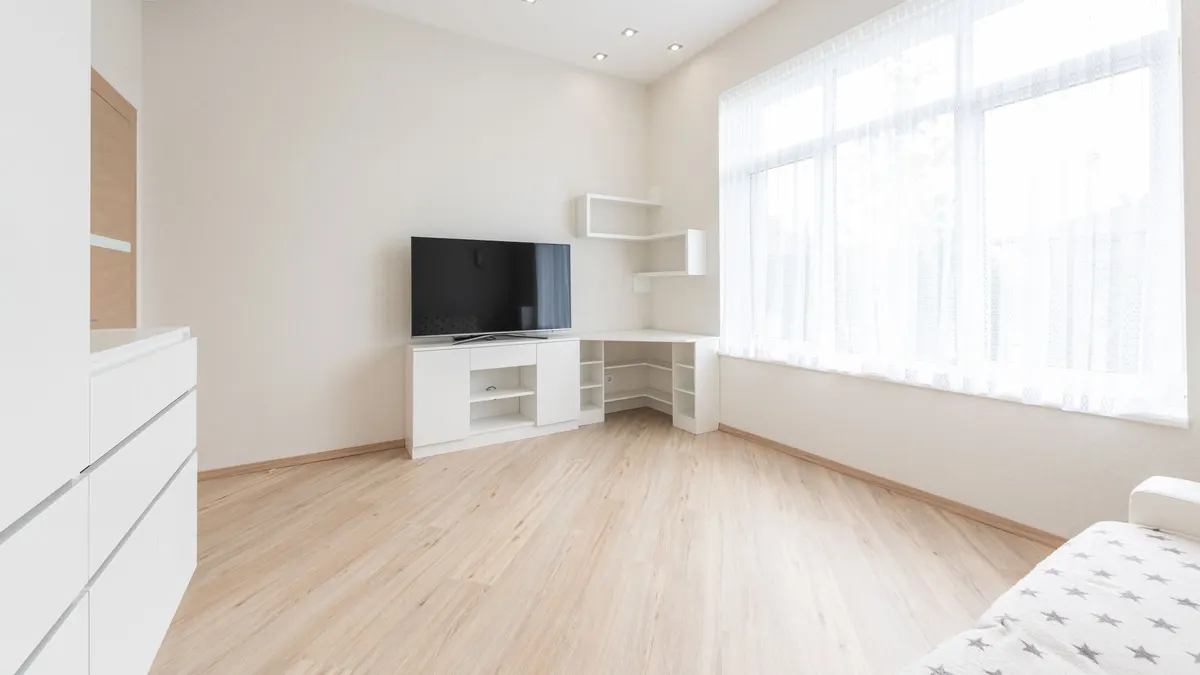
Comparing the realistic basement flooring options
| Material | Handles moisture | Survives a flood | Comfort underfoot | Needs a subfloor |
|---|---|---|---|---|
| Rigid vinyl plank, below-grade rated | Excellent | Usually | Good | Often optional |
| Ceramic or porcelain tile | Excellent | Yes | Cold and hard | No, over a sound slab |
| Sealed or polished concrete | Excellent | Yes | Cold and hard | No |
| Carpet tiles designed for below grade | Good | Replace affected tiles | Best | No |
| Engineered wood | Moderate | Usually not | Good | Yes |
| Laminate | Poor unless rated | No | Good | Yes |
| Solid hardwood | Poor | No | Good | Not suitable |
| Conventional carpet and underlay | Poor | No | Best | Yes |
Read the second column first and the fourth last. That ordering is what distinguishes a basement floor that lasts from one that looked good in a showroom.
Vinyl plank: the default best flooring for basement rooms
Rigid-core vinyl plank has become the default answer for basements, and the reasons are practical rather than fashionable.
The material is waterproof rather than merely water resistant, which is a meaningful distinction, because it does not absorb water or swell. Temperature swings in a below-grade room do not trouble it. Being dimensionally stable, it avoids the gapping and buckling that timber-based products suffer. Underfoot it is also comfortable and quiet compared with tile or concrete.
Two cautions. First, confirm the specific product is rated for below-grade installation, since not all are. Second, waterproof planks do not make the floor assembly waterproof: water can still get underneath through the perimeter and sit there, which is why the slab moisture question does not go away.
Where height and budget come in
Two practical constraints narrow the field further, and both are worth settling before visiting a showroom.
Height is the first. Every layer between the slab and your foot comes off the ceiling height, and basements rarely have any to spare. Sealed concrete takes none. Tile and glued vinyl take very little. A subfloor plus engineered wood takes the most. Where headroom is marginal, that ordering may decide the question on its own.
Budget is the second, though it behaves differently here than elsewhere in a house. Bob Vila lists the quality of materials used among the biggest factors affecting what it costs to finish a basement, and flooring is one of the larger material lines. In a basement, though, the cheapest material is frequently the most expensive outcome, because laminate laid over a damp slab is bought twice.
A useful way to think about it is cost per year rather than cost per square foot. Tile and sealed concrete are effectively permanent. Rigid vinyl has a long life in these conditions. Laminate over a below-grade slab may have a very short one, which makes its low purchase price misleading.
Tile and sealed concrete
These are the most durable options and the least forgiving underfoot.
Ceramic and porcelain tile over a sound slab is close to indestructible in basement terms. It does not care about moisture, it survives standing water, and it will outlast most other finishes in the house. The drawbacks are that it is cold and hard, and that a slab with movement can crack the grout or the tiles.
Sealed or polished concrete takes that further by removing the covering entirely. There is nothing to fail, no gap for water to get under, and no height lost, which matters where headroom is tight. It is the coldest and hardest option, and it shows every crack and patch in the slab, which some people like and others do not.
Both pair well with rugs, which give comfort where you need it and can be lifted and dried if the floor ever gets wet. That combination is often the most practical answer of all: a hard, indifferent floor with soft islands where people actually sit.
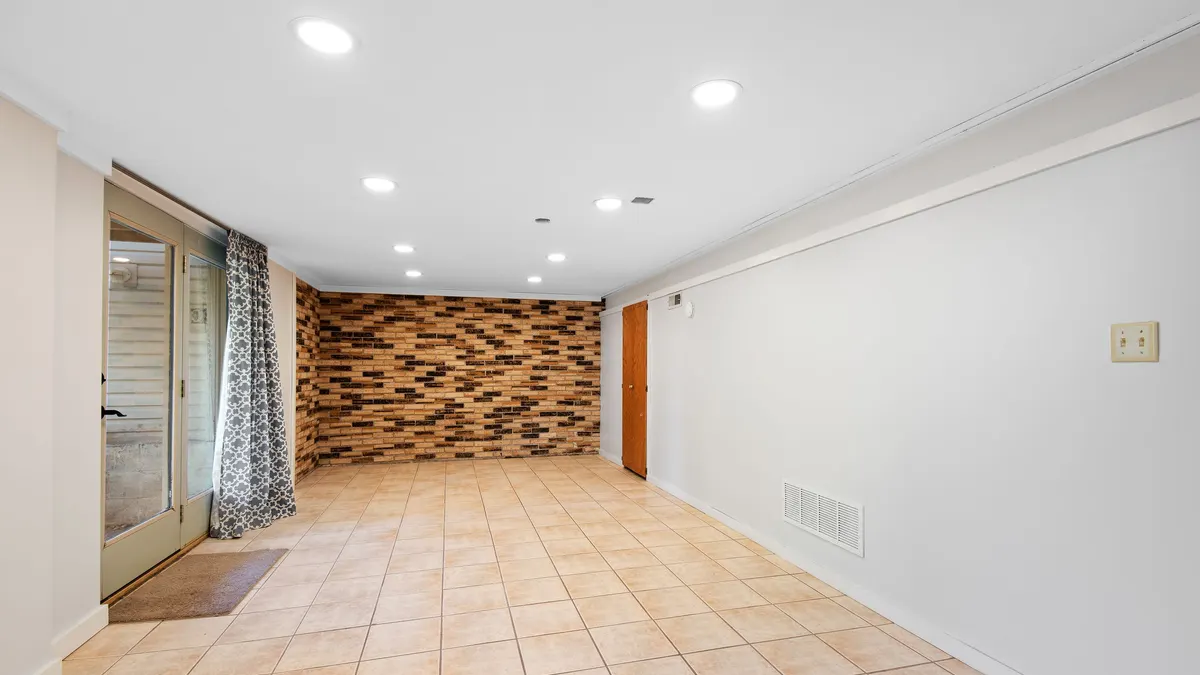
Carpet, done the right way
Conventional broadloom carpet with a foam or felt underlay is among the worst choices for a basement, because the underlay holds water and the carpet backing supports growth.
Carpet tiles designed for below-grade use behave differently. They typically have an impermeable backing, they are laid without a separate absorbent underlay, and if an area gets wet you can lift and replace individual tiles rather than the whole floor.
That replaceability is the real argument for them. Our flooded basement guide explains why porous materials usually have to be discarded after water damage, and a floor made of small replaceable units turns a disaster into an inconvenience.
Engineered wood, and where it fits
Engineered wood is the compromise for people who want the appearance of timber below grade.
Its layered construction makes it more stable than solid hardwood, and over a proper subfloor with slab moisture controlled, it can work. It remains a wood product, though, so it is not waterproof, and a flood generally finishes it.
If you choose it, treat the subfloor as mandatory rather than optional, keep the slab moisture within whatever the manufacturer specifies, and accept that you are trading durability for appearance. That is a legitimate choice as long as it is made deliberately.
Basement flooring options to avoid outright
Four materials cause most basement flooring failures.
Solid hardwood. It moves with moisture, and a below-grade slab supplies it continuously. It cups, gaps and eventually fails.
Laminate with a fibreboard core. The core swells when wet and does not recover. A small leak ruins a large area.
Conventional carpet with foam or felt underlay. The underlay is a sponge that stays damp and out of sight.
Anything with a paper or cardboard component. Including some underlayments, which quietly become the weak link in an otherwise sound assembly.
EPA’s cleanup guidance is the reason these matter: porous materials that cannot be dried quickly generally have to be discarded, and EPA stresses drying water-damaged areas and items within 24 to 48 hours to prevent mold growth. A floor that cannot be dried in that window is a floor that gets thrown away.
Matching basement flooring options to how the room is used
Once the unsuitable materials are eliminated, the remaining choice is about use rather than survival, and that is where personal preference legitimately takes over.
For a living room or a family room, comfort and warmth matter most, so rigid vinyl plank or carpet tiles usually win over tile and bare concrete. A cold, hard floor is the thing people complain about in a finished basement more than anything else.
For a home gym or a workshop, durability and cleanability matter more than warmth. Sealed concrete and tile both take heavy use, spills and dropped equipment without complaint, and rubber matting can be laid over either where impact protection is needed.
For a laundry room or anywhere with plumbing, assume water will escape at some point and choose accordingly. Tile and sealed concrete are the obvious answers, and a floor drain, where one exists, should not be covered over.
For storage, the honest answer is often that the slab needs sealing and nothing else. Sealing controls dust, makes sweeping possible and costs a fraction of any covering. Shelving then keeps belongings off the floor, which protects them better than any flooring choice would.
For a bedroom, remember that the floor is only part of the specification. The room also needs the egress provision our egress window guide covers, and that requirement is not satisfied by anything you lay on the ground.
Air quality during and after installation
A basement has limited air exchange, which makes this worth a paragraph rather than a footnote.
EPA notes that VOCs are emitted by a wide array of products numbering in the thousands, and that concentrations of many VOCs are consistently higher indoors, up to ten times higher than outdoors. It adds that studies have found levels of several organics average two to five times higher indoors than outdoors.
EPA’s practical advice is to increase ventilation when using products that emit VOCs. During a basement floor installation that means ventilating the space while adhesives, sealers and finishes are applied and while they cure, rather than closing the door on it.
Where you have a choice between products, low-emission options are worth preferring in a room with poor natural ventilation.
Choosing basement flooring for the day it gets wet
Even a dry basement can flood, from a burst pipe if not from outside. The best flooring for basement conditions is therefore the kind that survives that without being replaced.
Ask two questions of any material before buying. Can it be dried and reused, or does it have to be replaced? And can a damaged section be replaced on its own, or does the whole floor come up?
Tile, sealed concrete, rigid vinyl and carpet tiles all score well on at least one of those. Laminate, solid timber and broadloom carpet score badly on both.
A few habits help regardless. Keep spare material from the original installation. Store belongings on shelving rather than on the floor. And deal with any water quickly, inside EPA’s 24 to 48 hour window.
Fitting basement flooring properly
Most failures are installation failures rather than material failures, even when the best flooring for basement use was chosen correctly.
- Resolve liquid water first, and give the slab a wet season if you can.
- Test the slab and keep the result with your paperwork.
- Clean the slab thoroughly and deal with cracks and high spots.
- Build a subfloor where the material requires one.
- Leave the expansion gap the manufacturer specifies at the perimeter.
- Acclimatise the material in the basement before fitting, where instructed.
- Ventilate during and after any adhesive or sealer application.
- Keep offcuts for future repairs.
Bob Vila lists the quality of materials used among the biggest factors affecting what it costs to finish a basement, and our finishing cost guide puts the flooring line in context. The honest summary, though, is that in a basement the cheapest floor is the one you only have to lay once.
Frequently asked questions about best flooring for basement
What is the best flooring for a basement?
Judged by survival rather than looks, the strongest options are rigid vinyl plank rated for below grade, ceramic or porcelain tile, sealed or polished concrete, and carpet tiles designed for the purpose. All four tolerate moisture, dry out if they get wet, and do not feed mold growth. Which of them is best for you comes down to comfort, budget and how the room will be used.
Can I use laminate in a basement?
It is a poor choice over a below-grade slab. Most laminate has a fibreboard core that swells irreversibly when it takes up water, and once it swells the planks do not recover. Some products are specifically rated for below-grade installation; if yours is not, the saving over vinyl is not worth the risk.
Is vinyl plank good for a basement?
It is the most popular answer for good reasons. Rigid-core vinyl plank is waterproof rather than merely water resistant, it does not swell, it tolerates temperature swings, and it can usually be laid over a subfloor or, for some products, directly on a sound slab. Check that the specific product is rated for below-grade use before buying.
What flooring should I avoid in a basement?
Solid hardwood, most laminate, conventional carpet with a foam or felt underlay, and anything with a paper or fibreboard core. These absorb moisture, distort, and then support growth. EPA’s framing explains why: mold may begin growing indoors when mold spores land on surfaces that are wet, and these materials stay wet.
Do I need a subfloor underneath?
It depends on the material. Sealed concrete, tile over a sound slab and some vinyl products are designed for direct contact. Engineered wood, laminate and carpet with a conventional underlay generally need separation from the slab. Our subfloor guide covers how to decide, and the moisture test is what settles it.
Does flooring choice affect indoor air quality?
It can. EPA notes that VOCs are emitted by a wide array of products numbering in the thousands, and that concentrations of many VOCs are consistently higher indoors, up to ten times higher than outdoors. It advises increasing ventilation when using products that emit VOCs, which is worth doing during and after installation, particularly in a basement where air exchange is limited.
Sources and how we researched this guide
Research-based. Moisture guidance is quoted from EPA, and indoor air quality points from EPA’s guidance on volatile organic compounds. We rank materials by how they behave over a below-grade slab rather than by appearance, and we do not recommend brands or reproduce manufacturer performance claims. Always check what a specific product permits below grade before buying. Found something out of date? Tell us and we will check it against the source.
- EPA: A brief guide to mold, moisture and your home
- EPA: Volatile organic compounds’ impact on indoor air quality
- Bob Vila: How much does it cost to finish a basement
Keep planning
- Basement Subfloor: Why Concrete Needs One and What to Use
- Basement Finishing Cost: Budget by Square Foot and Scope
- Egress Window Cost: Above Ground, Below Ground and Why
- Egress Window: Requirements, Types and Whether You Need One
Go deeper: Foundations & Cracks hub · Foundation Crack Triage Tool · Yard Drainage Grading Calculator

Written by Jeremy Jarvis
Jeremy Jarvis is the founder and editor of Basement Playbook, where he builds research-based guides and free planning tools for wet basements and crawl spaces: sump pumps and drainage, encapsulation, dehumidification, radon testing and mitigation, foundation cracks and finishing a basement that stays dry. He sets the site's editorial standards, checks every guide against official sources such as EPA radon and mold guidance, CDC, ENERGY STAR, state health departments and manufacturer documentation, and is responsible for corrections. Structural and radon mitigation work is always referred to a licensed engineer or a certified mitigator. Jeremy also founded Eco Nomad Travel, Mind Clarity Hub, SilkHarborTravel, WanderOza Travel, Freedom Road Living, PowerProof Home and Garage Playbook, and he is the author of books on clarity, focus and practical AI, including The Power of Clarity and Digital Clarity.