
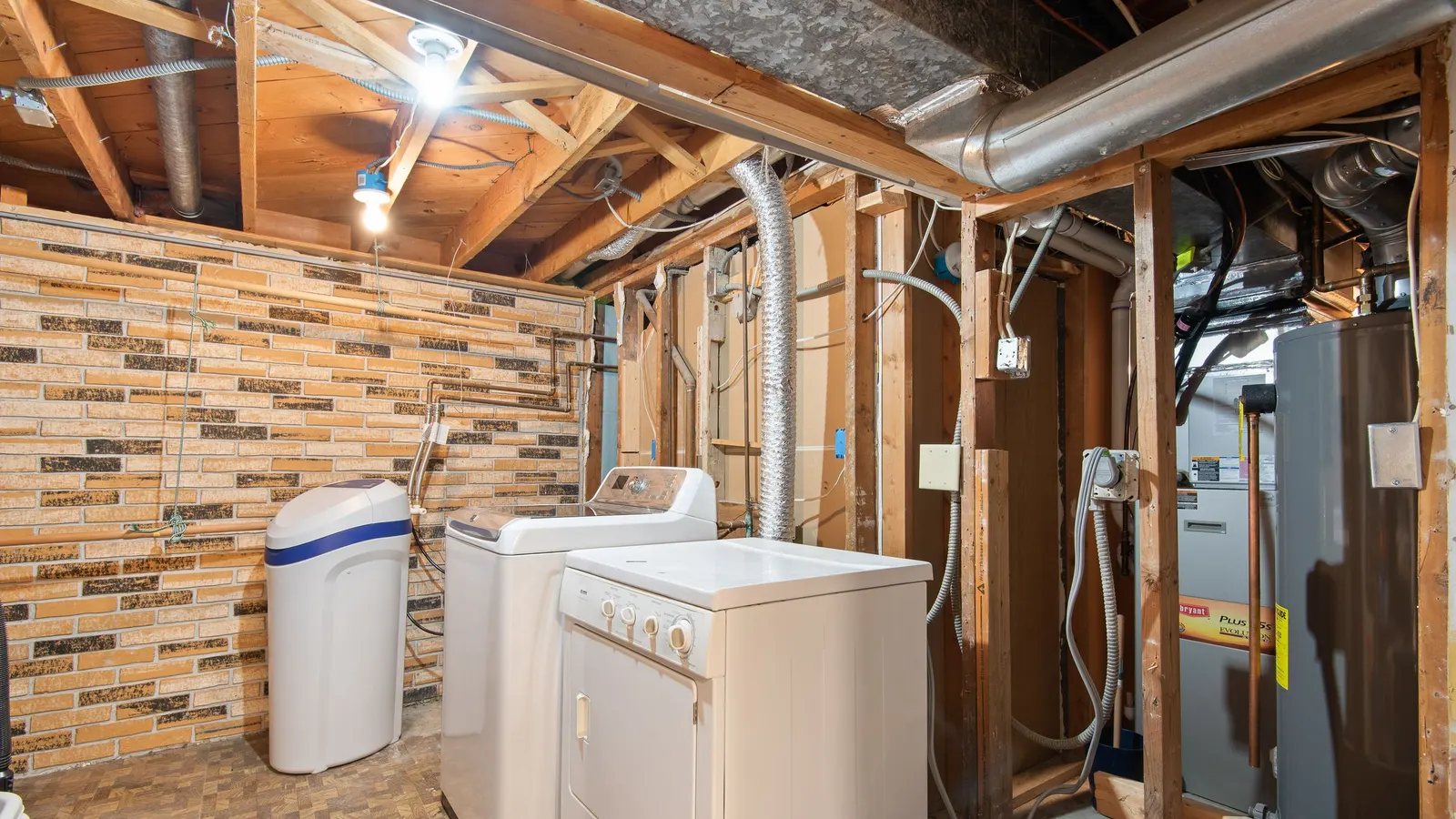
A wet basement is rarely one problem. It is usually a chain: roof water arriving beside the wall, ground that slopes the wrong way, groundwater rising under the slab, and humid air condensing on cold masonry. Fix them out of order and you spend a great deal of money on the wrong link. This page is the map. Work the steps in order and each one makes the next cheaper.
Short on time? Build your plan in two minutes
Answer six questions and get a step-by-step dry-up plan with the exact tools and guides for your situation.
Step 1: Find where the water comes from
Condensation, hydrostatic pressure, a cracked wall and a blocked downspout all put water on a floor, and each needs a different fix. Before buying anything, work out which one you have. Beads of water on cold surfaces in humid weather point at condensation. Water at the joint where the floor meets the wall after heavy rain points at groundwater pressure. White powdery deposits mean water is moving through the masonry. The Basement Moisture Diagnosis narrows it down from what you can actually see.
Step 2: Move water away from the house
Most wet basements start outside, and outside work is the cheapest change with the largest effect. Check that the ground falls away from the wall rather than toward it, and follow every downspout to where it actually ends. A single downspout serving 500 square feet of roof delivers roughly 312 gallons for every inch of rain, so a short extension is rarely enough. The Yard Drainage Grading Calculator turns your measurements into the fall you need and the soil to add.
Step 3: Pump what is left
Some groundwater will still arrive, and that is what a sump pump is for. Size it on total head rather than horsepower: the vertical lift to the discharge plus the friction in the pipe and fittings. Then plan the backup, because the storm that floods a basement is often the storm that cuts the power. The Sump Pump Sizing Calculator and the Backup Runtime Calculator do both jobs from your own numbers.
Step 4: Dry the air
Liquid water and humid air are separate problems. EPA suggests keeping indoor humidity below 60 percent, and ideally between 30 and 50 percent, to limit mold growth. Condensation depends on surface temperature as much as humidity, so insulating a cold wall sometimes solves it with no dehumidifier at all. Work out your dew point with the Basement Humidity Target Tool, then size a unit with the Dehumidifier Size Calculator.
Step 5: Test for radon
Radon is a naturally occurring radioactive gas, and EPA states that testing is the only way to know your level of exposure. It has no smell, taste or colour. EPA recommends homes be fixed at 4 pCi/L or higher, and recommends considering a fix between 2 and 4 pCi/L, because there is no known safe level. Test before you finish a basement rather than after. Our radon test kit guide covers doing it properly.
What is not a DIY job
Three things on this site are deliberately sent to professionals. Structural movement, which includes bowing walls, horizontal cracks and settling, belongs to a licensed structural engineer. Radon mitigation design and installation belong to a state-certified or nationally certified mitigator. Mold over roughly 10 square feet goes to a remediation professional, following EPA guidance. Everything else on this page is work a careful homeowner can plan, measure and often do.
Tools for this topic
- Basement Dry-Up Plan Builder – six questions, one ordered plan
- Basement Moisture Diagnosis – symptom to likely source
- Yard Drainage Grading Calculator – fall, soil and roof water volume
- Sump Pump Sizing Calculator – flow and total head from your own pit
Most useful guides to read first
- Sump Pump Guide: How They Work, Sizing and Backup How a sump pump works, how to size one for your pit and inflow, submersible versus pedestal, the backup options that matter in an outage, and what installation costs.
- Basement Waterproofing: Methods, Order of Work and Cost What basement waterproofing actually covers, how interior and exterior methods differ, the order that saves the most money, and what published cost figures include.
- Radon Test Kit: How to Test Your Home and Read the Result How to choose and use a radon test kit: short-term versus long-term kits, the closed-house conditions that make a result valid, where in the house to place it, and what EPA says each result means.
- Basement Dehumidifier: Choosing, Siting and Running One What a dehumidifier can and cannot fix in a basement, how to choose and site one, and the drainage and settings that decide whether it actually works.
- Crawl Space Encapsulation: What It Is and When It Pays What a full encapsulation actually includes, why the industry moved away from venting, and how to judge whether your crawl space needs the whole system.
- Foundation Crack Repair: Which Cracks Matter and Why How to read a foundation crack by direction, width and movement, which ones an engineer should see first, and what each repair method actually does.
Get the free planner
The Basement Dry-Up Planner puts all five steps on paper: a moisture map, a water-entry tracing sheet, pump and dehumidifier sizing worksheets, a drainage planner, a radon test log and a seasonal maintenance calendar.
Sources we rely on
- EPA: A brief guide to mold, moisture and your home
- EPA: Radon
- EPA: What is EPA’s action level for radon and what does it mean?
- ENERGY STAR: Dehumidifiers
- Ready.gov: Floods
Frequently asked questions
Find where the water comes from, then fix the outside before the inside. Grading and downspouts are the cheapest change with the largest effect, and they reduce how much work the pump and dehumidifier have to do. Almost always exterior first. Surface and roof water is the largest single source in most wet basements, and redirecting it costs a fraction of an interior drainage system. EPA suggests keeping indoor humidity below 60 percent, and ideally between 30 and 50 percent, to limit mold growth. Before finishing a basement, when buying or selling, and every couple of years otherwise. EPA states that testing is the only way to know your level. Not until it has stayed dry through a full wet season. Framing and flooring over an active moisture problem traps it behind the wall where you cannot see it.Where should I start with a wet basement?
Do I need interior drainage or exterior work first?
What humidity should a basement be?
When should I test for radon?
Can I finish a basement that gets damp?