
Basement Finishing Cost: Budget by Square Foot and Scope
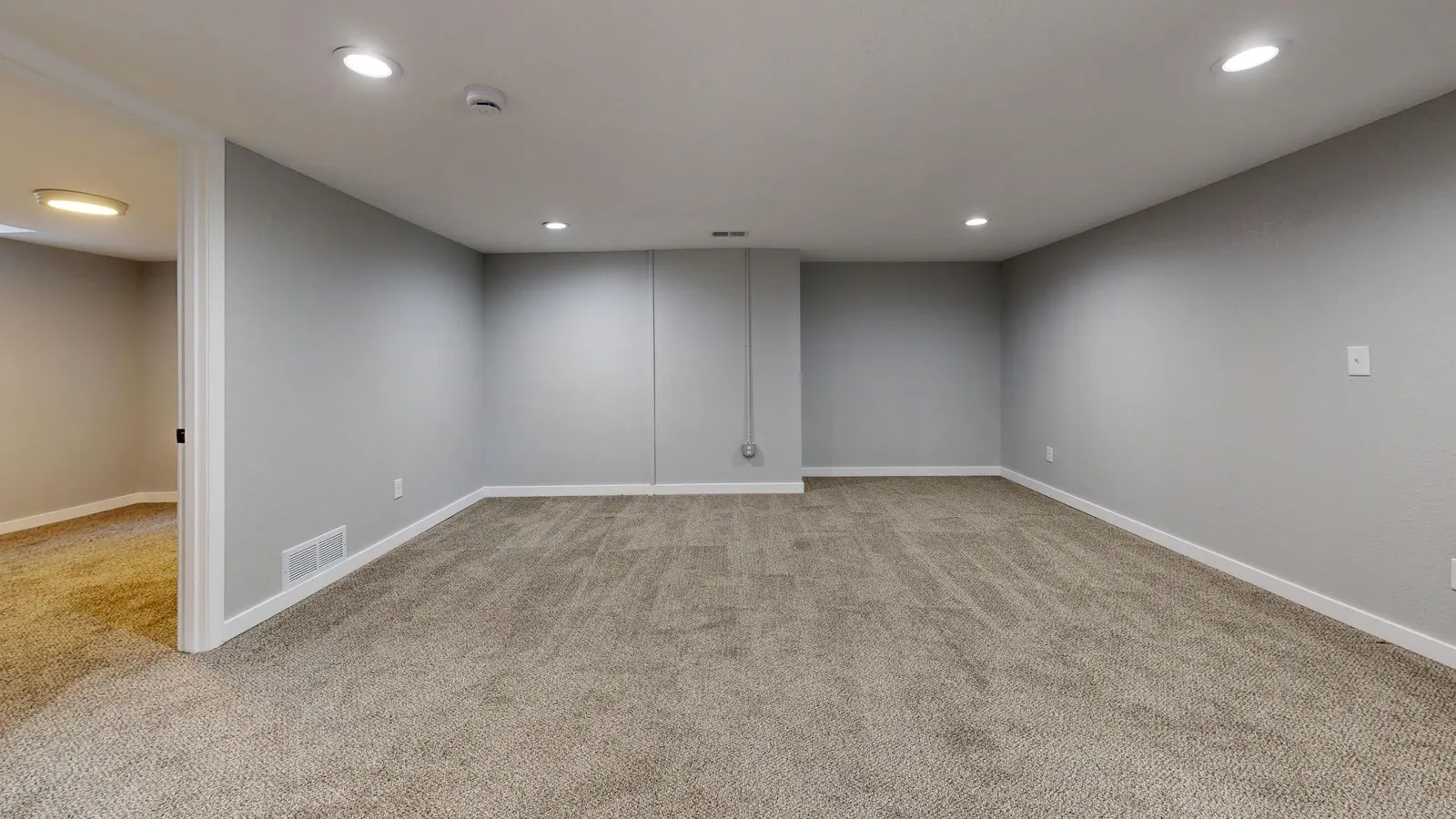
Basement finishing cost is published as a range so wide that the average is almost meaningless on its own. The cost to finish a basement runs from a few thousand dollars to well over thirty thousand, and the difference is scope rather than regional variation. This guide separates the levels, gives the per-square-foot figure that actually travels, and sets out the order of work that stops you paying twice.
Last reviewed and updated: October 9, 2026. Written by Jeremy Jarvis.
Key takeaways
- Bob Vila puts finishing a basement at $2,800 to $34,500, with a national average of $18,398.
- The per-square-foot figure is more useful: Bob Vila gives $7 to $23 per square foot.
- Remodelling an already-finished basement is a different number: $12,070 to $33,687, averaging $22,138.
- Bob Vila notes basement remodeling almost always requires a permit.
- Moisture work comes before finishing, or you pay for the finishes twice.
Price your own space
Area and finish level decide most of this. Work through the numbers with the Basement Finishing Cost Calculator.
The headline basement finishing cost
Bob Vila, citing Angi and HomeAdvisor, puts the cost to finish a basement at between $2,800 and $34,500, with homeowners across the country paying a national average of $18,398.
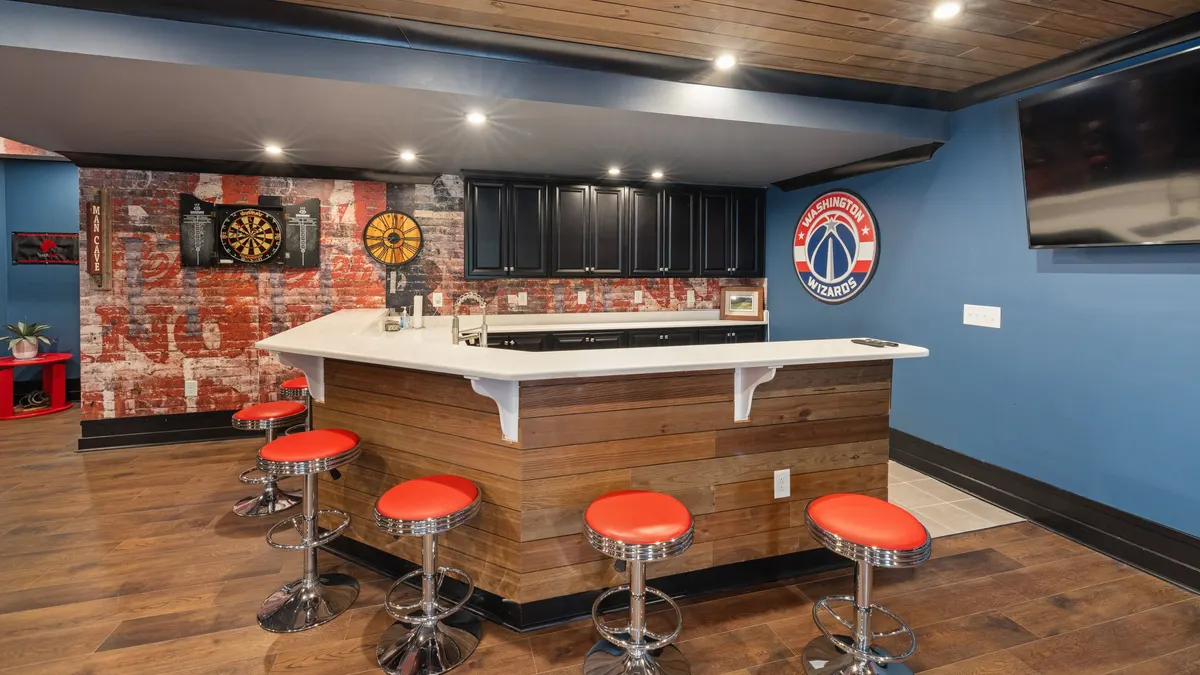
That is a twelvefold span, so the average sits in the middle of two very different projects rather than describing a typical one. At the low end is a basement made usable: cleaned, painted, floored, lit. At the high end is a complete living space with a bathroom, a kitchenette and finishes matching the rest of the house.
Bob Vila lists the biggest factors as the basement size and type, the cost of labor and permits, the project scope, the quality of materials used, and the home’s geographic location.
Basement finishing cost per square foot
For checking a quote against your own basement, the per-unit number beats the national average every time.
Bob Vila gives it as $7 to $23 per square foot, while noting that the total price depends on the quality of the materials the homeowner chooses, the contractor’s labor fees, and the intended purpose of the space.
Measure your basement, multiply by seven, then multiply by twenty-three. Those two products bracket what a reasonable quote should cost, and anything materially outside the bracket should be explained by something specific rather than by the base work.
Finishing and remodelling are different projects
These words get used interchangeably, and the published figures show they are not the same thing.
| Finishing | Remodelling | |
|---|---|---|
| Starting point | Bare concrete, unfinished | An already-finished space |
| Bob Vila range | $2,800 to $34,500 | $12,070 to $33,687 |
| National average | $18,398 | Approximately $22,138 |
| Typical work | Framing, insulation, drywall, flooring, lighting | Reworking layout, finishes, systems |
Bob Vila describes an unfinished basement as one that typically lacks plumbing, drywall and insulation, usually with concrete flooring and walls. Such a basement, it adds, rarely has insulation, drywall or finished flooring, though it may have plumbing. Contents might include a bathroom, shower, laundry room, exercise equipment or furniture.
It also describes a middle state: a basement that may have some drywall installed, rough-in plumbing, insulation, and heating and cooling, but is not a completely finished living space like the rest of the house. Many real projects start there, which is worth saying when you ask for a quote.
Moisture work before any basement finishing cost
This is the single most consequential point in basement budgeting, and it does not appear in any headline figure.
Framing, insulating and boarding a basement that still takes water means building a sealed cavity around a moisture problem. The finishes fail, mold follows, and the remedy is to remove what you just paid for in order to reach the cause.
So budget the water work before the finishing work, in the order our waterproofing guide sets out: gutters and downspouts, then grading, then drainage, then the wall itself. The cheap items at the top of that list cost very little and protect everything that follows.
Give the space a full wet season after the moisture work and before the finishing, if you can. A basement that stays dry through a spring is one you can safely build in. Bob Vila lists mold prevention among the benefits of basement remodeling, which only holds if the sequence is right.
Egress is usually a required line item
If any part of the finished space will be used as a bedroom or similar, an egress window is generally mandatory rather than optional, and it is a substantial line.
Fixr puts egress window installation at $2,500 to $5,000 with a national average of $3,500 for a prefabricated below-ground installation, with a low case of $900 for a prefabricated single-hung window above ground and a high case of $10,000 for a custom awning window below ground with excavation and a window well.
Note the sequencing point: cutting that opening before the room is built is considerably cheaper than cutting it afterwards. Our egress window cost guide covers the detail.
What a complete basement finishing cost budget contains
Quotes vary in scope more than in price, so it helps to have the full basement finishing cost list before comparing.
- Moisture remediation and drainage, completed first.
- Egress window and well, where required.
- Framing of walls and any partitions.
- Insulation to walls and the rim joist.
- Electrical: circuits, outlets, lighting, and inspection.
- Plumbing, where a bathroom or kitchenette is included.
- Heating and cooling provision for the new space.
- Subfloor over the slab.
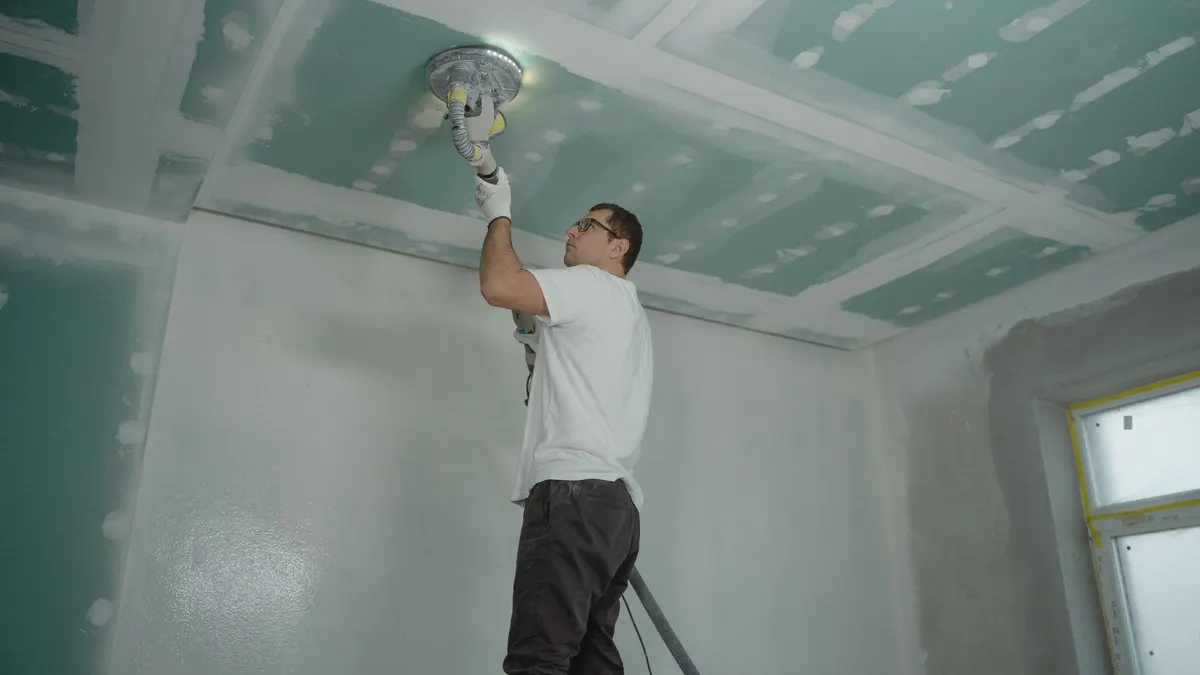
- Drywall, taping and finishing.
- Ceiling, whether boarded or suspended.
- Flooring.
- Doors, trim, paint and fittings.
- Permits and inspections.
- Contingency for what the walls reveal.
Two of those are most often missing from a cheap quote: the heating and cooling provision, and the contingency. Both tend to appear later as extras.
Getting comparable quotes
Three quotes for a basement are rarely three prices for the same job, so a little preparation makes them comparable.
Write the scope yourself before inviting anyone. List the rooms, whether a bathroom is included, the flooring type, the ceiling type, and whether an egress window is needed. Handing every contractor the same list is the only way the numbers mean anything next to each other.
Ask each to price the same optional items separately rather than bundling them. The bathroom, the egress window and the flooring upgrade should each appear as a line you can include or remove, which also lets you stage the work later.
Ask how the moisture question has been assessed. A contractor who inspects the space for damp before quoting is thinking about the right risk. One who quotes from a floor plan without visiting is not.
Finally, ask what is excluded. Exclusions tell you more about a quote than inclusions do, and the gap between two prices is usually sitting in that paragraph.
The order of work
Sequence affects the basement finishing cost as much as specification does, because work done out of order gets undone.
- Fix the water, outside first, then inside.
- Observe the space through a wet season.
- Obtain permits and agree the scope.
- Cut the egress opening and fit the window and well.
- Rough in electrical, plumbing and ductwork.
- Insulate, including the rim joist.
- Lay the subfloor.
- Board, tape and finish the walls and ceiling.
- Lay flooring, then fit doors, trim and fixtures.
Our subfloor guide covers step seven, which is the one homeowners most often skip, and our flooring guide covers step nine, where the wrong choice over concrete causes avoidable failures.
The items people forget to budget
Most overruns come from the same short list, and none of these are unusual or unforeseeable.
Heating and cooling for the new space is the most common omission. A finished basement needs conditioning like any other room, and extending the existing system, or adding a separate provision, is a real cost that rarely appears in an early estimate.
Electrical capacity is the next. A basement converted to living space may need more circuits than the panel can currently supply, and discovering that mid-project is expensive. Ask an electrician to look at the panel before the scope is fixed.
Ceiling height is a third, along with the services running below the floor above. Ductwork, pipes and beams all intrude, and boxing them in or rerouting them costs money and headroom. Measure the finished height you will actually have before committing to a layout.
Then there is the stairway. An unfinished basement stair is often steep, narrow or open, and bringing it up to the standard of a finished space can be a project in itself.
Finally, a contingency. Opening up a basement reveals things: old wiring, a leak nobody knew about, a joist with rot at the end. A budget with no allowance for discoveries is a budget that will be exceeded.
Permits and code
Bob Vila is unambiguous: basement remodeling almost always requires a permit. It also lists permit fees and local building code compliance among the factors that move prices away from the national average.
Expect inspections at specific stages, typically after rough-in electrical and plumbing and before anything is closed up. That is another reason the order above matters, since boarding over uninspected work means opening it again.
Unpermitted finishing is a false economy with a delayed cost. It surfaces during a sale, when a buyer’s inspector or an appraiser asks whether the space is permitted living area, and the answer affects both the sale and the valuation.
Three worked basement finishing cost situations
These use the published per-square-foot band rather than inventing figures.
A basic usable space. Cleaning, painting, lighting and simple flooring over a dry slab, with no plumbing and minimal framing. This sits at the bottom of the $7 to $23 band and near Bob Vila’s $2,800 floor.
A standard finished room. Framing, insulation, drywall, subfloor, flooring, lighting and heating, with an egress window. Multiply your area by the middle of the per-foot band, then add the egress window, and you land near the $18,398 national average for a typical basement.
A full living suite. The above plus a bathroom, a kitchenette and high-specification finishes. This approaches Bob Vila’s $34,500 ceiling, and the plumbing is the item that moves it there.
Where the cost to finish a basement can come down
Some economies are real and some simply shift the spending to a later date.
Real savings: finishing part of the basement rather than all of it, keeping the existing layout so plumbing stays where it is, choosing mid-range materials rather than premium, doing the paintwork and some finishing yourself, and scheduling outside the busiest season.
The largest real saving is doing the moisture work first, because it prevents the whole project being rebuilt. The second largest is sequencing the egress window before the room rather than after.
False economies: skipping the subfloor over concrete, choosing flooring unsuited to a below-grade slab, omitting insulation at the rim joist, and working without permits. Each of these reduces the quote and increases the eventual total.
Doing it in stages
A basement does not have to be finished in one project, and staging it suits a budget better than borrowing against the whole figure at once.
The natural first stage is everything that has to happen anyway and gets harder later. That means the moisture work, the egress window, and any electrical capacity upgrade. None of these are visible when finished, which makes them unsatisfying to pay for. All of them are far more expensive to retrofit into a completed room.
The second stage is the shell: framing, insulation, subfloor and drywall. At the end of it the space is usable and dry even if it is plain, and it can stay that way for a year without harm.
The third stage is the finishes, where personal taste and the largest discretionary spending sit. Flooring, trim, lighting, built-in storage and decoration can all follow later. Prices here vary far more by choice than by necessity.
One caution applies to staging. Anything requiring a permit and an inspection should be completed and signed off within its stage rather than left part-done. An open permit is awkward to revive, and awkward to explain at sale.
Is it worth doing
Bob Vila lists the benefits of basement remodeling as return on investment, additional versatile space, energy efficiency, mold prevention, and income potential.
Whether the return materialises depends on local property values, and on whether the finished space counts as living area where you are, which turns on permits and on egress. That is a question for a local agent and your building department rather than a national figure.
What is reliable is the space itself. Bob Vila also notes that it is a good idea to hire a contractor to manage basement remodeling projects. Any electrical or plumbing work, it adds, will need to be handled by licensed professionals. Budget for that rather than around it, and the basement finishing cost you end up with will be the one you planned.
Frequently asked questions about basement finishing cost
How much does it cost to finish a basement?
Bob Vila, citing Angi and HomeAdvisor, gives a range of $2,800 to $34,500 with a national average of $18,398. That span is wide because it covers everything from a simple painted and floored space to a full living area with a bathroom. The per-square-foot figure is the more useful check on a quote.
What is the cost per square foot?
Bob Vila puts it at $7 to $23 per square foot, noting that the total depends on the quality of the materials the homeowner chooses, the contractor’s labor fees, and the intended purpose of the space. Multiply your basement area by both ends of that band to get the range a reasonable quote should sit within.
Is remodelling different from finishing?
Yes, and the figures differ accordingly. Bob Vila gives basement remodel cost as $12,070 to $33,687 with a national average of approximately $22,138, which describes reworking a space rather than finishing a bare one. Finishing starts from concrete; remodelling starts from something already built.
Do I need a permit?
Almost certainly. Bob Vila states that basement remodeling almost always requires a permit, and lists permit fees and local building code compliance among the factors that move costs away from the national average. Confirm what your jurisdiction requires before work starts, since unpermitted work tends to surface during a sale.
What should I spend money on first?
The moisture work, before any finishes. A finished basement built over an unresolved water problem means paying for the drywall, flooring and framing twice, and dealing with mold in between. Every dollar spent on gutters, grading and drainage before the project protects everything spent afterwards.
Is finishing a basement worth it?
Bob Vila lists the benefits of basement remodeling as return on investment, additional versatile space, energy efficiency, mold prevention, and income potential. Whether it pays in your case depends on local property values and what the space becomes, which is a question for a local agent rather than a national average.
Sources and how we researched this guide
Research-based. Figures are attributed to Bob Vila with the scope each describes, and we distinguish finishing from remodelling because the published averages differ by nearly $4,000 for that reason alone. We also place the moisture work before the finishing work throughout, because every source that discusses basement moisture says the water problem has to be fixed first. Found something out of date? Tell us and we will check it against the source.
- Bob Vila: How much does it cost to finish a basement
- Bob Vila: Basement remodel cost
- Fixr: Egress window installation cost
Keep planning
- Best Flooring for a Basement: What Survives a Below-Grade Slab
- Basement Subfloor: Why Concrete Needs One and What to Use
- Egress Window Cost: Above Ground, Below Ground and Why
- Egress Window: Requirements, Types and Whether You Need One
Go deeper: Foundations & Cracks hub · Foundation Crack Triage Tool · Yard Drainage Grading Calculator

Written by Jeremy Jarvis
Jeremy Jarvis is the founder and editor of Basement Playbook, where he builds research-based guides and free planning tools for wet basements and crawl spaces: sump pumps and drainage, encapsulation, dehumidification, radon testing and mitigation, foundation cracks and finishing a basement that stays dry. He sets the site's editorial standards, checks every guide against official sources such as EPA radon and mold guidance, CDC, ENERGY STAR, state health departments and manufacturer documentation, and is responsible for corrections. Structural and radon mitigation work is always referred to a licensed engineer or a certified mitigator. Jeremy also founded Eco Nomad Travel, Mind Clarity Hub, SilkHarborTravel, WanderOza Travel, Freedom Road Living, PowerProof Home and Garage Playbook, and he is the author of books on clarity, focus and practical AI, including The Power of Clarity and Digital Clarity.