
Condensation on Basement Walls: Cause, Test and Fix
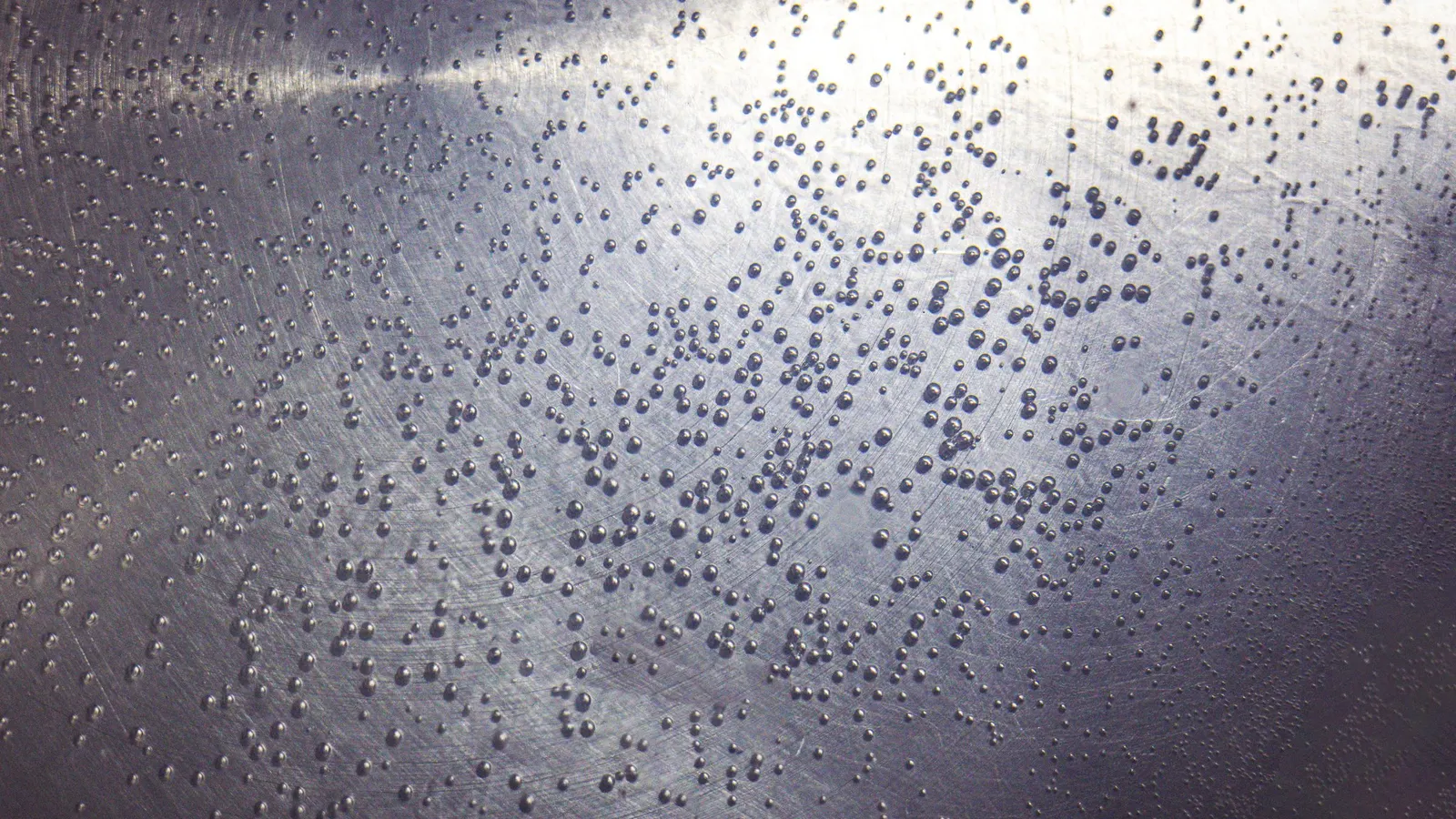
Condensation on basement walls looks exactly like a leak, and that resemblance costs people a great deal of money. One of these problems is solved by a dehumidifier and some insulation. The other is solved by drainage and excavation. Sweating basement walls and leaking ones need opposite responses, so the first job is finding out which you have.
Last reviewed and updated: October 9, 2026. Written by Jeremy Jarvis.
Key takeaways
- A wet basement wall is either condensation out of the air or water coming through the masonry, and the fixes are opposite.
- The plastic sheet test settles it overnight and costs nothing.
- Condensation forms when a surface is colder than the dew point of the air touching it.
- Two routes fix it: lower the humidity, or raise the surface temperature.
- EPA notes mold may begin growing indoors when mold spores land on surfaces that are wet, whichever way the water arrived.
Settle it for free
The plastic sheet test below takes a day and costs nothing. Do it before accepting any quote, then set a target with the Basement Humidity Target Tool.
Condensation on basement walls, or a leak?
Moisture from the air and water passing through the masonry are the only two explanations, and almost everything else follows from which one applies.
| Condensation | Water through the wall | |
|---|---|---|
| Where the water comes from | The air inside | The soil outside |
| Typical timing | Humid weather, especially summer | During and after rain |
| Distribution | Even, across cold surfaces | Specific places; cracks, joints, mid-wall |
| Also appears on | Cold pipes, ducts, windows | Only the wall or floor |
| Fix | Dehumidify, insulate | Grading, drainage, waterproofing |
| Typical cost | Low | High |
Notice the last row. Mistaking condensation for a leak leads to buying the expensive answer for the cheap problem, which is the error this guide exists to prevent.
Why getting the diagnosis right saves money
The two problems sit at opposite ends of the spending scale, which is what makes the diagnosis worth an afternoon.
Treating condensation as if it were a leak means paying for excavation, membranes and drainage to solve a problem that a dehumidifier and some pipe lagging would have handled. The work gets done, the wall still sweats the following summer, and the natural conclusion is that the contractor failed.
The reverse error is cheaper but no better. Running a dehumidifier against water genuinely coming through a wall means the machine runs permanently, the reading never settles, and the actual cause continues doing damage behind the scenes.
Both errors come from the same place: deciding what the problem is by looking at it. A wet wall simply does not reveal which side the water came from, which is why the test below exists and why it is worth doing before anybody quotes.
The plastic sheet test
This is the definitive test for condensation on basement walls. It is free, and it takes a day or two.
- Choose a section of bare wall that gets wet.
- Cut a square of clear plastic sheet, about a foot and a half across.
- Tape it tightly to the wall, sealing all four edges completely.
- Leave it for at least twenty-four hours, ideally through humid weather.
- Come back and look at which side is wet.
Moisture on the room side of the plastic means the water came out of the air and condensed on the cold plastic. That is condensation.
Moisture trapped between the plastic and the wall means the water came through the masonry. That is a leak, and our water after rain guide covers what to do next.
Both sides wet means both things are happening, which is more common than people expect, and the response is to address each in its own way.

Other signs of condensation on basement walls
Several observations point strongly one way, and they cost nothing to make.
Look at the cold water pipes and any ductwork. If those are beaded with moisture too, the air is the source, because no amount of groundwater reaches a pipe running across the middle of the room.
Consider the timing against the weather. Water appearing on hot humid days with no rain is condensation. Water appearing during or after rain is far more likely to be coming through.
Look at the distribution. Moisture from the air forms fairly evenly on every cold surface. A leak concentrates instead: at a crack, around a pipe penetration, along the floor-wall joint, below a window well.
And check whether the surfaces feel cool. A cold surface is required for any of this, so a wall that is warm to the touch and still wet is probably not sweating.
The physics, briefly
Understanding why condensation on basement walls happens at all makes the fixes obvious rather than arbitrary.
Air holds water vapour, and how much it can hold depends on its temperature. Warm air holds a lot; cool air holds much less. The dew point is the temperature at which a given parcel of air becomes saturated and water starts coming out of it.
When air touches a surface colder than its dew point, water condenses on that surface. A basement wall below grade is cooled by the ground, so it is frequently the coldest surface in the house, and in summer the air reaching it is the most humid air of the year.
Consequently there are exactly two ways to stop it. Lower the dew point of the air, or raise the temperature of the surface. Everything in the next two sections is one of those.
Where condensation on basement walls shows up first
Knowing the usual order helps you catch it early and confirms the diagnosis.
- Cold water pipes, which are the coldest things in most basements.
- Below-grade sections of exterior walls, particularly on the shaded side.
- Corners, where two cold surfaces meet and air moves least.
- Behind stored boxes and furniture, where air cannot circulate.
- Uninsulated ductwork carrying cooled air.
- The underside of the floor above, near exterior walls.
- Window glass and metal frames.
Those last-listed spots matter diagnostically. A leak does not wet the underside of a floor or a pipe in free air, so finding moisture there is close to conclusive.
How much water the air can actually deliver
People underestimate condensation because it arrives invisibly, with no dripping sound and no obvious source. The volumes involved, though, are not trivial.
Think about what happens on a humid summer day. Air moves continuously through a basement, even one with the windows shut, through doors, stairwells, gaps and the ordinary air exchange of a house. Every parcel of that air which touches a surface below its dew point gives up some of its moisture onto that surface.
That process runs for hours at a time, day after day, for the length of the humid season. A film of water that evaporates and reforms twice a day is a wall that is effectively wet for months.
This is why condensation causes genuine damage rather than merely looking unpleasant, and why EPA’s framing applies to it as much as to a leak: mold may begin growing indoors when mold spores land on surfaces that are wet. The surface does not care which direction the water arrived from.
It also explains why the problem is seasonal and recurring rather than a single event. Each summer repeats it, which is why a fix that works has to change either the air or the surface rather than simply drying what is there.
Route one: lower the humidity
This is the faster and usually cheaper of the two routes, and it starts with sources rather than with equipment.
Find what is adding moisture. A dryer venting indoors is the worst single offender. An uncovered sump pit evaporates continuously. Bare soil in an adjoining crawl space does the same. Drying laundry indoors, long showers with poor extraction and firewood stored inside all contribute.
Then stop importing humid air. Closing windows on humid summer days is counterintuitive and correct. Sealing gaps around a bulkhead door or a crawl space hatch does the same job permanently.
Then dehumidify what remains. ENERGY STAR’s description of a slightly to moderately damp space, which it puts at 50 to 75% relative humidity with a musty odour that may be intermittent, is the band to compare your readings against. Our dehumidifier guide covers choosing and running one, and our humidity level guide covers what target to hold.
Route two: raise the surface temperature
The other route attacks the same equation from the other side, and it is often the more durable fix.
Insulating a cold wall keeps its interior surface warmer, so the air touching it is no longer below its dew point. Cold pipes benefit the same way, and pipe lagging is cheap and quick. Cooled ductwork, once wrapped, stops sweating onto whatever sits below it.
There is a critical condition, though. The insulation must be air-impermeable or thoroughly air-sealed. Fibreglass alone lets humid indoor air pass straight through to the cold surface behind, which still condenses, now hidden from view. Our rim joist guide explains that failure mode in detail, and the same principle applies to any cold wall.
Improving air movement helps too. Still air in corners and behind furniture is where condensation concentrates, so pulling storage away from exterior walls and allowing circulation makes a measurable difference for no cost at all.
What not to do about condensation on basement walls
Several common responses make the situation worse or simply hide it.
Do not open windows in humid weather. It feels like ventilation and it imports exactly the air that causes the problem.
Do not fit fibreglass against a cold wall without an air barrier. You will move the condensation behind the insulation where it cannot dry or be seen.
Do not paint over it. A coating does not change surface temperature or air moisture, and paint applied to a damp wall usually fails.
Do not assume it is a leak and buy drainage. Run the plastic sheet test first.
Do not finish the basement over a sweating wall. Studs and boarding create a hidden cavity at exactly the temperature condensation prefers.
Sweating basement walls behind a finished surface
Condensation behind a finished wall is harder to detect and more damaging, because it has somewhere to hide.
The signs are indirect: a musty smell with no visible source, staining appearing at the base of the boarding, flooring lifting or cupping near an exterior wall, or mould on the back of stored items placed against it.
EPA’s point about hidden moisture applies directly here: undiscovered or ignored moisture problems can create an environment in which mold can grow, and if left unchecked, mold eventually can cause structural damage to building materials. A small inspection opening in an inconspicuous place is a reasonable way to find out, and far cheaper than waiting.
A seasonal routine for sweating basement walls
Once the cause is established and the fixes are in, a short seasonal routine stops the problem creeping back unnoticed.
In late spring, before the humid months, check that the dehumidifier runs and drains, confirm pipe lagging is intact, and pull stored items away from exterior walls so air can move behind them. That single hour does most of the preventive work for the year.
Through summer, read the hygrometer weekly and run a hand along the coldest wall occasionally. Surfaces tell you things the display does not, because the display reports the air in the middle of the room rather than the film against the masonry.
In autumn, look for what the summer left behind. Staining, a musty smell in stored textiles, or mould spots at the base of a wall all indicate the control was not quite sufficient, and acting then is easier than waiting for next July.
Through winter, the risk is low but it is the right time for the structural fixes. Insulating walls and pipes is far pleasanter work in cool weather, and it means the improvement is in place before the season that tests it.
When it turns out to be both
Plenty of basements have a drainage problem and condensation on basement walls at once, and the plastic sheet test will show both sides wet.
Deal with the liquid water first, because it is the larger source and because it will defeat any attempt to control the air. Our waterproofing guide sets those remedies out in order of cost, starting with gutters and grading.
Then treat the condensation separately, with the two routes above. The sequence matters, since a dehumidifier working against an active leak simply runs continuously.
Throughout, EPA’s standard is the one to judge by: the key to mold control is moisture control, and you must have completely fixed the water or moisture problem before a cleanup can be considered finished. A dry wall in February proves nothing. A dry wall in August, with a hygrometer to show why, proves you have solved it.
Frequently asked questions about condensation on basement walls
Why are my basement walls wet?
There are only two possibilities, and they need opposite responses. Either moisture from the air is condensing on a cold wall surface, or water is passing through the wall from the soil outside. Condensation tends to appear evenly across cold surfaces in humid weather; water coming through tends to appear in specific places and to track rainfall. The plastic sheet test below distinguishes them definitively.
How do I tell condensation from a leak?
Tape a square of plastic sheet tightly to a bare section of wall, sealing all four edges, and leave it for a day or two. Moisture on the room side of the plastic means the water came from the air, so it is condensation. Moisture trapped between the plastic and the wall means the water came through the masonry. It costs nothing and it answers the question.
How do I stop basement walls sweating?
Either reduce the moisture in the air, or raise the temperature of the wall surface, or both. Dehumidification and removing moisture sources address the first. Insulating the wall addresses the second, by keeping the surface warmer than the dew point of the air touching it. Which route is better depends on the wall and on what the space is used for.
Does insulation stop condensation?
Done properly, yes, because it keeps the interior surface warmer than the air’s dew point. Done wrongly it moves the problem somewhere you cannot see, by creating a cold surface behind the insulation that humid indoor air can still reach. The insulation has to be air-impermeable or properly air-sealed for it to help rather than hide.
Is condensation as serious as a leak?
It causes less dramatic damage but the same biological outcome. EPA states that mold may begin growing indoors when mold spores land on surfaces that are wet, and a wall that sweats every summer is wet for months at a time. It is also easier and cheaper to fix than a drainage problem, which is a reason to confirm which one you have before spending.
Why does it only happen in summer?
Because warm air holds far more moisture than cool air, and a basement stays cool. When warm humid air enters and meets cold masonry, it cools below its dew point and the moisture comes out onto the wall. In winter, indoor air is drier and the difference is smaller, so the same wall stays dry.
Sources and how we researched this guide
Research-based and diagnostic. The plastic sheet test described here is long-standing standard practice rather than our invention, and it is included because it settles the question for free. Moisture and mold guidance is quoted from EPA. Where a wall turns out to be leaking rather than sweating, that is a drainage question and we point to it rather than treating it here. Found something out of date? Tell us and we will check it against the source.
- EPA: A brief guide to mold, moisture and your home
- EPA: Mold course, chapter 2
- ENERGY STAR: Dehumidifiers
Keep planning

Written by Jeremy Jarvis
Jeremy Jarvis is the founder and editor of Basement Playbook, where he builds research-based guides and free planning tools for wet basements and crawl spaces: sump pumps and drainage, encapsulation, dehumidification, radon testing and mitigation, foundation cracks and finishing a basement that stays dry. He sets the site's editorial standards, checks every guide against official sources such as EPA radon and mold guidance, CDC, ENERGY STAR, state health departments and manufacturer documentation, and is responsible for corrections. Structural and radon mitigation work is always referred to a licensed engineer or a certified mitigator. Jeremy also founded Eco Nomad Travel, Mind Clarity Hub, SilkHarborTravel, WanderOza Travel, Freedom Road Living, PowerProof Home and Garage Playbook, and he is the author of books on clarity, focus and practical AI, including The Power of Clarity and Digital Clarity.