
Basement Dehumidifier: Choosing, Siting and Running One
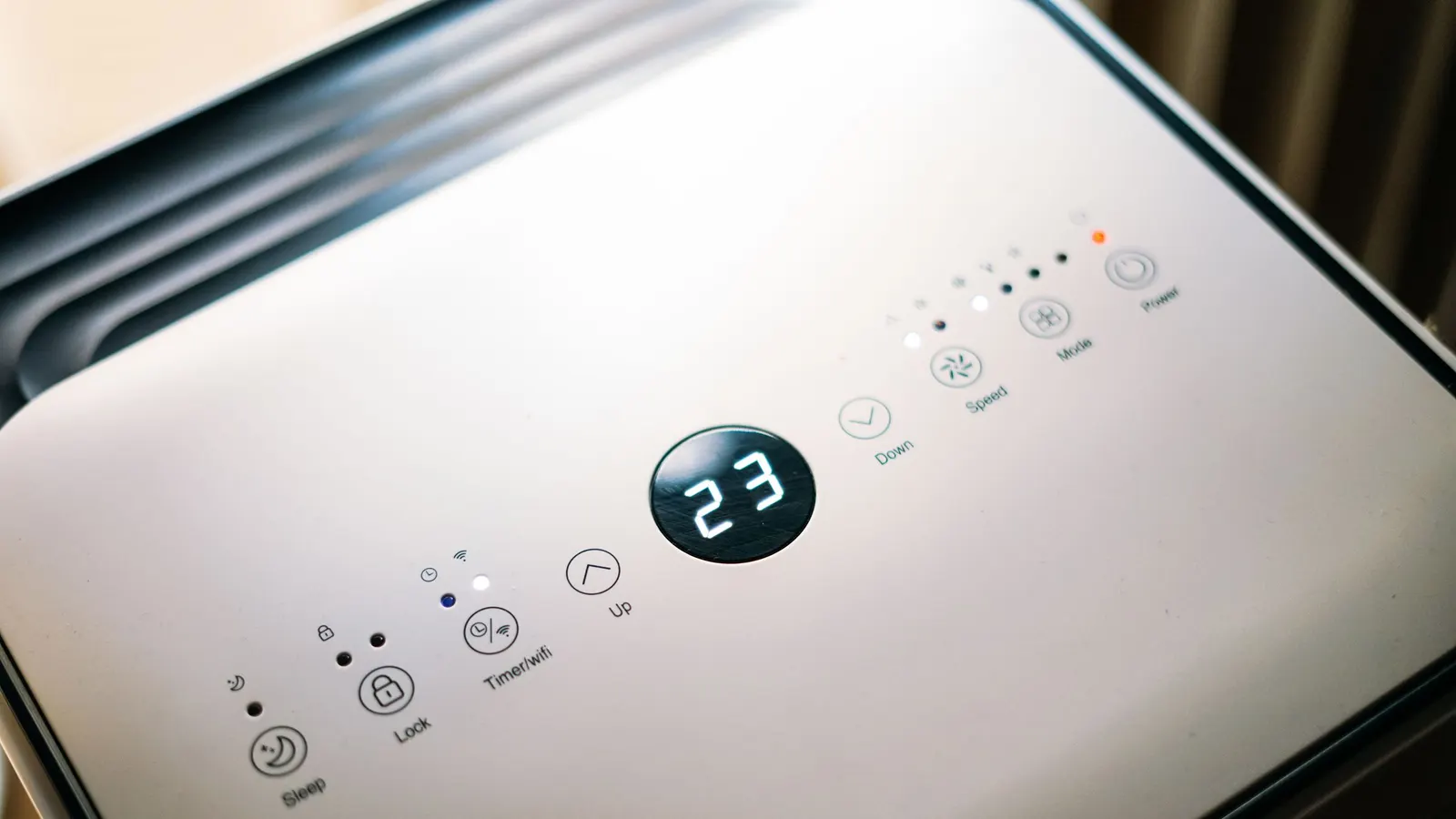
A basement dehumidifier is the right tool for a specific problem, and the wrong one for a problem that looks similar. It controls the moisture in the air. It does nothing about water arriving through a wall or a floor. Getting that distinction right before buying is what separates a dehumidifier for basement use that transforms the space from one that runs forever and changes little.
Last reviewed and updated: October 9, 2026. Written by Jeremy Jarvis.
Key takeaways
- A dehumidifier controls humidity; it does not stop liquid water, so drainage comes first.
- ENERGY STAR measures capacity in pints per 24 hours and sizes it by area and by how damp the space is.
- An ENERGY STAR certified unit uses 20% less energy than a similarly sized conventional one.
- Continuous drainage matters more than tank size, because a full tank stops the machine.
- EPA’s standard is the right one to judge against: control moisture and you control mold growth.
Know your target
A dehumidifier needs a number to hold, not just a dial. Work out the right one with the Basement Humidity Target Tool.
What a basement dehumidifier actually fixes
It removes water vapour from the air, and in doing so it addresses a specific set of symptoms.
| Symptom | Does a dehumidifier help? | What actually fixes it |
|---|---|---|
| Musty smell, damp feel | Yes, directly | Dehumidification |
| Condensation on cold pipes and walls | Yes | Dehumidification, plus insulation on cold surfaces |
| Stored items going damp or mouldy | Yes | Dehumidification and storage off the slab |
| Water on the floor after rain | No | Grading, drainage, a sump |
| Water at the floor-wall joint | No | Drainage; see waterproofing |
| Active leak through a crack | No | Crack repair plus drainage |
| Existing mold growth | Prevents recurrence only | Cleanup, after the moisture is fixed |
Read the “No” rows as a warning. Buying a machine to deal with a drainage problem is the single most common way to waste money in a basement.
Fix the water before you buy the machine
EPA’s framing is worth taking literally here: the key to mold control is moisture control, and there are many types of mold, none of which will grow without water or moisture.
So work outward in first. Gutters clear, downspouts discharging well away, ground falling away from the house. Then drainage where groundwater enters, as our waterproofing guide sets out. Only then does the air become the remaining problem.
EPA is also explicit about sequence where mold already exists: you must have completely fixed the water or moisture problem before the cleanup or remediation can be considered finished.

Basement dehumidifier capacity, in pints per day
ENERGY STAR explains the unit clearly. The dehumidifier size or capacity of the unit is usually measured in pints per 24 hours, and the capacity you need depends on two factors: the size of the space that needs to be dehumidified, and the conditions that exist in the space without dehumidification.
Its published starting point for the lightest category is specific. For a space that is slightly to moderately damp, which it defines as feeling damp with a musty odour that may be intermittent, at 50 to 75% relative humidity, it recommends 20 to 30 pints per day for a small-medium room under 2,000 square feet, and 30 or more pints per day for a large room over 2,000 square feet.
ENERGY STAR describes these as minimum capacity for a portable dehumidifier, and its chart continues into wetter categories than the one quoted here. Note also that it warns capacity options have changed, so an older guide may use ratings that no longer match what is on the shelf.
Our sizing guide works through how to apply this to a basement specifically, which is usually damper and cooler than the room the chart assumes.
Features that actually matter
Retail listings emphasise the wrong things, so here is the order that matters when buying a dehumidifier for basement use.
- Capacity in pints per day. The single most important specification.
- A continuous drain outlet. More important than tank size, by a wide margin.
- An adjustable humidistat. Lets the unit hold a target rather than running blindly.
- Auto restart. So a power cut does not leave it off for a month.
- Low-temperature operation. Relevant in a cool basement, where some units frost up.
- ENERGY STAR certification. 20% less energy for the same moisture removal.
- Castors and a handle. Trivial until you have to move it to clean behind it.
Tank size appears nowhere on that list, and deliberately so. In a basement the tank should never be filling, because the unit should be draining continuously.
Portable, whole-home and desiccant options
Three broad types are sold for this job, and the right one depends on the basement rather than on the price.
A portable refrigerant unit is what most people buy. It is self-contained, it moves if you need it to, and it is the cheapest route to adequate capacity. In a reasonably warm basement with somewhere to drain, it is usually the sensible choice.
A whole-home dehumidifier is installed as part of the heating and cooling system, dehumidifying the house as a whole rather than one room. ENERGY STAR notes that certified models are available for both portable and whole home dehumidifiers. This option suits a finished basement that forms part of the living space, and it costs considerably more to install.
A desiccant unit absorbs moisture onto a drying material rather than condensing it on a cold coil. That makes it far less troubled by low temperatures, which matters in a basement that stays cold. The trade-offs are different energy behaviour and, in some models, warm exhaust air.
For most damp basements, the portable refrigerant unit sized properly and plumbed to a drain does the job. Consider the alternatives when the space is unusually cold, or when the basement is genuinely part of the house rather than storage.
Drainage is the detail that decides everything
A unit with a tank fills, switches off and waits. In a basement visited weekly at best, that means it works for a day or two and then stops.
Specify continuous drainage instead, in this order of preference. A gravity drain to a floor drain, a sump pit or a suitable outlet is simplest and has nothing to fail. Where nothing suitable sits below the unit, a condensate pump lifts the water, at the cost of another component that needs maintaining.
Run the hose with continuous fall and no dips, because a sagging hose holds water and eventually blocks. Check the discharge point occasionally, and make sure it is not somewhere that returns the water to the foundation.

Where to place a basement dehumidifier
Basements are awkward for air movement, with partition walls, storage and mechanical equipment breaking up the space. A basement dehumidifier has to work against that.
Put the unit as centrally as the layout allows, leave clear space at the intake and outlet, and make sure its own discharge cannot flow straight back into the intake. Keep it a sensible distance from walls rather than pressed against one.
Raise it if there is any chance of standing water. And site it where you will actually service it, because a dehumidifier behind a stack of boxes is a dehumidifier with a filter nobody cleans.
Where a basement is divided into separate rooms, recognise that one unit may not control all of them. Doors left open help; in a genuinely divided basement, a second unit or a larger one may be needed.
What to expect in the first weeks
A new unit in a damp basement behaves in a way that surprises people, so it helps to know the normal pattern.
For the first days it may run almost continuously and empty a great deal of water. That is not a fault, and it is not evidence that the unit is undersized. A basement that has been damp for years holds moisture in the slab, the masonry, stored belongings and the timber, and all of it comes out slowly once the air around it is drier.
After a week or two the run time should begin to fall as the space approaches the target. Within a month a correctly sized unit should be cycling rather than running flat out, except during the most humid weather.
Materials lag the air by a long way. Cardboard boxes, upholstered furniture and timber will still be giving up moisture when the air reads normal, which is why a musty smell can persist for a while after the numbers look good. Give it a full season before concluding anything.
If the unit is still running continuously after a month and the reading has barely moved, that is the point at which capacity, drainage or an open route to outside becomes the likely explanation.
Settings, and what to aim for
Set a target and let the machine cycle to hold it. That is the whole operating principle, and it is more efficient than either extreme.
Running continuously regardless of conditions wastes energy and can over-dry a space, which is its own nuisance. Switching the unit off for the cooler months means the humidity rises again unobserved, and the first you know is the smell in spring.
Our humidity level guide covers what range to aim for. The short version is that chasing an unnecessarily low number costs money without improving anything, while a sensible target held year-round does the job.
Cold basements, frost and dehumidifier choice
A refrigerant dehumidifier works by condensing moisture on a cold coil, so when the room itself is cold, that coil can drop below freezing and ice up.
Units intended for cool spaces include a defrost function, which pauses dehumidification to clear the coil. Without it, a unit in a cold basement can spend much of its time frozen and achieve very little while still drawing power.
Desiccant dehumidifiers use a different principle and tolerate cold better, though they have their own trade-offs. If your basement runs genuinely cold for much of the year, that difference is worth researching before buying on capacity alone.
Running costs and efficiency
No honest single figure exists, because the cost depends on capacity, how damp the space is, how long the unit runs and local prices.
What is published is the comparison. ENERGY STAR states that a dehumidifier that has earned the ENERGY STAR label uses more efficient refrigeration coils, compressors and fans to remove the same amount of moisture as a similarly sized conventional unit, but uses 20% less energy. It also notes that certified models are available for both portable and whole home dehumidifiers.
Two decisions reduce running cost more than the model does. Reducing the moisture load, by fixing drainage and sealing obvious gaps, means the unit works less. Setting a sensible target rather than the lowest available avoids paying to remove moisture that was never causing a problem.
Basement dehumidifier maintenance
Three checks, a few minutes each, keep a basement dehumidifier working at its rated capacity.
Clean the filter on the manufacturer’s schedule, since a clogged filter restricts airflow and therefore moisture removal. Check the drain hose for blockages and sagging. Keep the coils free of dust, which insulates them and reduces efficiency.
Alongside that, keep a separate hygrometer somewhere away from the unit, and glance at it monthly. The machine’s own display tells you about the air at the machine; a separate gauge tells you about the room.
When the humidity will not come down
Work through these before assuming the unit has failed.
- Confirm it is running rather than sitting with a full tank.
- Check the drain hose for a blockage or a dip holding water.
- Clean the filter.
- Look for an open window, a vent or a door to an unconditioned space.
- Check whether liquid water is still entering somewhere.
- Reconsider capacity against how damp the basement really is.
- Consider whether the space is too cold for that unit to work effectively.
Most of these are not faults in the machine. A correctly sized unit that drains properly will usually hold a basement, so a stubborn reading is more often a message about the space.
When a basement dehumidifier is not the answer
Finally, the honest limits. If condensation is forming on specific cold surfaces rather than generally, insulation on those surfaces may do more than dehumidification; our condensation guide covers that distinction.
If a musty smell persists in a space whose humidity reads normal, something is holding moisture that the air is not, and our musty smell guide works through where to look.
And if water is arriving as liquid, no dehumidifier of any capacity will keep up. EPA’s mold course puts the general case well: eliminating all mold and mold spores indoors is virtually impossible, but controlling indoor moisture will control the growth of indoor mold. A dehumidifier is one instrument of moisture control, and it works best once the larger sources have been dealt with.
Frequently asked questions about basement dehumidifier
Do I need a dehumidifier in my basement?
If the space feels damp, smells musty, or shows condensation on cold surfaces in humid weather, then yes, a dehumidifier is the tool for that. If there is liquid water on the floor after rain, a dehumidifier is the wrong first purchase, because it cannot stop water arriving. Deal with drainage first and dehumidify what remains.
What size basement dehumidifier do I need?
ENERGY STAR states that capacity is usually measured in pints per 24 hours, and that the capacity you need depends on the size of the space and the conditions in it without dehumidification. For a slightly to moderately damp small-medium room under 2,000 square feet, which it describes as feeling damp with an intermittent musty odour at 50 to 75% relative humidity, it suggests 20 to 30 pints per day, and 30 or more for a large room.
Should a basement dehumidifier run all the time?
Not continuously by the clock, but continuously available. Set a humidity target on the humidistat and let the unit cycle to hold it. Running flat out regardless of conditions wastes energy and over-dries the space; switching it off for months means the humidity simply returns while you are not watching.
Where should I put it?
Centrally, with clear space around the air intake and the outlet so it is not pulling in its own discharge. Keep it off the floor if there is any chance of standing water, and keep it near a suitable drain so it can run continuously. Avoid tucking it into a corner behind stored boxes, which is where most basement units end up.
How much does it cost to run?
That depends on capacity, how damp the basement is and local electricity prices, so no single figure is honest. The published comparison that does hold is efficiency: ENERGY STAR states that a certified dehumidifier uses more efficient refrigeration coils, compressors and fans to remove the same amount of moisture as a similarly sized conventional unit while using 20% less energy.
Will a dehumidifier stop mold?
It removes the condition mold needs. EPA states that mold may begin growing indoors when mold spores land on surfaces that are wet, and that controlling indoor moisture will control the growth of indoor mold. A dehumidifier does not clean up existing mold, though, and EPA is clear that you must fix the water or moisture problem before a cleanup can be considered finished.
Sources and how we researched this guide
Research-based. Capacity guidance and efficiency figures are quoted from ENERGY STAR, including the note that their chart gives minimum capacity for a portable unit in a room; we say where a basement differs rather than presenting room figures as basement specifications. Moisture and mold guidance comes from EPA. We do not test appliances and recommend no brand. Found something out of date? Tell us and we will check it against the source.
- ENERGY STAR: Dehumidifiers
- EPA: A brief guide to mold, moisture and your home
- EPA: Mold course, chapter 2
Keep planning

Written by Jeremy Jarvis
Jeremy Jarvis is the founder and editor of Basement Playbook, where he builds research-based guides and free planning tools for wet basements and crawl spaces: sump pumps and drainage, encapsulation, dehumidification, radon testing and mitigation, foundation cracks and finishing a basement that stays dry. He sets the site's editorial standards, checks every guide against official sources such as EPA radon and mold guidance, CDC, ENERGY STAR, state health departments and manufacturer documentation, and is responsible for corrections. Structural and radon mitigation work is always referred to a licensed engineer or a certified mitigator. Jeremy also founded Eco Nomad Travel, Mind Clarity Hub, SilkHarborTravel, WanderOza Travel, Freedom Road Living, PowerProof Home and Garage Playbook, and he is the author of books on clarity, focus and practical AI, including The Power of Clarity and Digital Clarity.