
French Drain: How They Work, Where to Put One, What It Costs
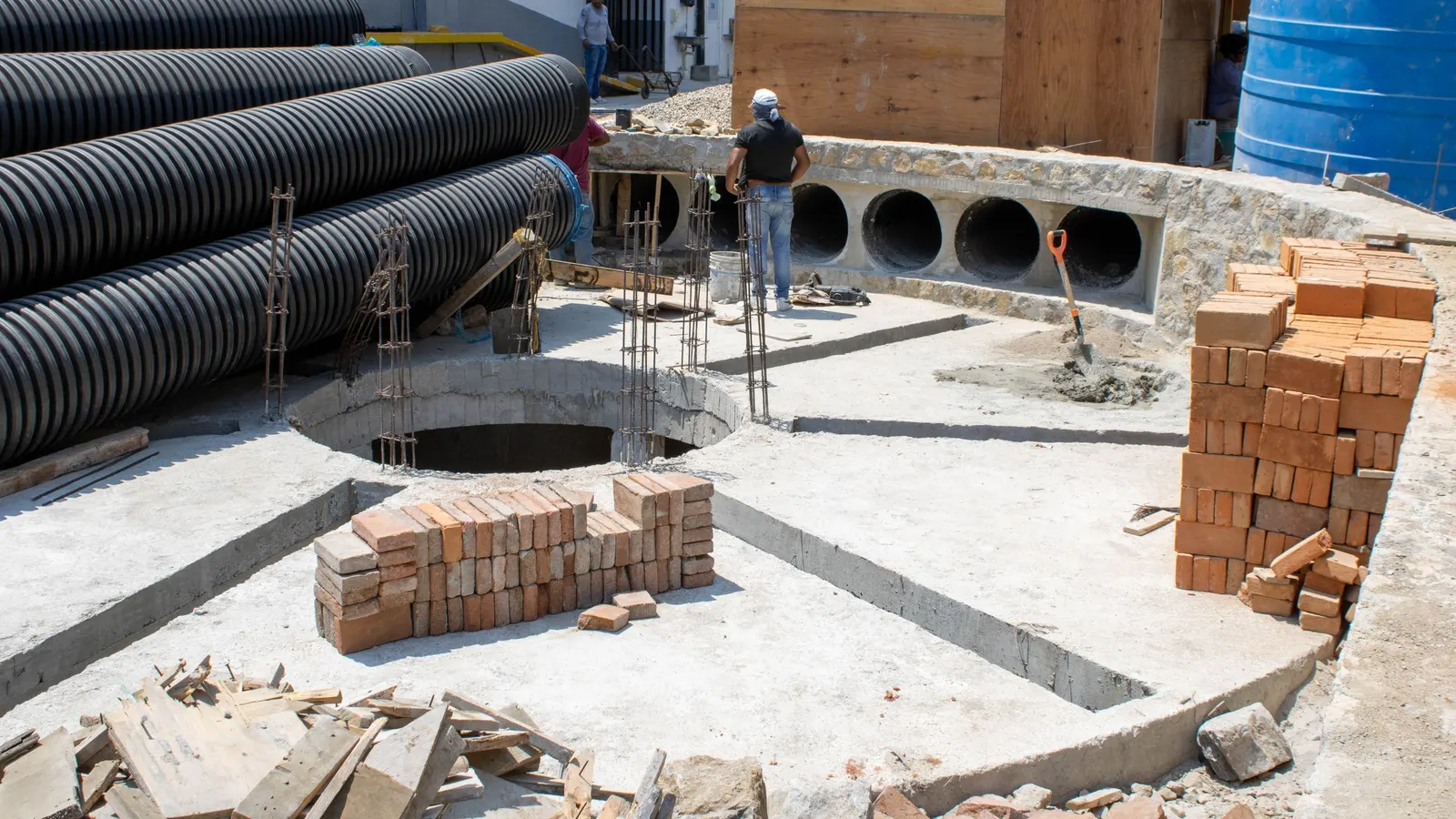
A french drain is the most commonly recommended fix for water that pools where it should not, and one of the most commonly botched. The build itself is simple. The thing that decides whether it works is fall, and fall is the part that gets guessed. This guide covers french drain installation from the ground up: how the drain actually moves water, whether yours belongs outside or inside, and what the published cost figures really cover.
Last reviewed and updated: October 8, 2026. Written by Jeremy Jarvis.
Key takeaways
- A french drain is a trench holding a perforated pipe surrounded by gravel, which collects water and carries it somewhere safe.
- Fall decides whether it works. Water will not run uphill, and a level trench is just a reservoir.
- Exterior drains cost roughly $10 to $50 per linear foot; interior basement drains run about $40 to $100, per Bob Vila.
- Fixr and Bob Vila both give a national average around $5,000, with a range from $500 to $18,000.
- EPA notes the key to mold control is moisture control, and that water-damaged areas should be dried within 24 to 48 hours.
Work out materials before you dig
Gravel is sold by volume and a trench swallows more than people expect. The French Drain Material Calculator gives cubic yards, pipe, fabric and total fall from your own measurements.
What a french drain actually is
Fixr describes the construction in one sentence: dig a trench through the affected area, line it with gravel and weed-blocking fabric, lay perforated pipe, and cover it with more gravel. Water enters the pipe and is carried away to the designated emptying area.
Bob Vila adds a useful clarification about naming. French drain is a generic term describing multiple types of underground drainage system, and it goes by several names including weeping tile, trench drain and channel drain.
So the term covers a family of things rather than one product. What they share is a buried void that water prefers to travel through, and a pipe to carry it somewhere chosen rather than somewhere accidental.
How a french drain moves water
This is worth understanding, because it explains every mistake later in this page.
Water in soil moves slowly, through small gaps between particles. A trench full of clean, angular stone offers far larger gaps, so water takes that easier route. It percolates down through the stone and enters the pipe through its perforations.
From there, gravity does the rest. The pipe simply provides a low-resistance channel to the discharge point, and Fixr notes the system works well in areas with pooling water and can sit within gravel, dirt or underneath concrete.
Consequently, two things matter more than anything else: the voids must stay open, and the pipe must run downhill.

Exterior french drain or interior drain tile?
These are different projects with different prices, and people conflate them constantly.
| Exterior french drain | Interior drain tile | |
|---|---|---|
| Where it sits | In the yard, or against the foundation outside | Under the basement floor slab, at the footing |
| What it does | Intercepts water before it reaches the wall | Collects water that has already arrived |
| Access needed | Excavation outside | Breaking out concrete floor |
| Typical cost per linear foot | About $10 to $50 | About $40 to $100 |
| Usually paired with | Regrading and downspout extensions | A sump pit and pump |
Those per-foot figures are Bob Vila’s, quoted October 2026. The gap between them is mostly concrete: a basement drain costs more because the floor has to be broken out to excavate beneath it.
The practical rule is to work outward in. Fix grading and downspouts first, because they are cheapest. Then consider an exterior drain. Then, if excavating outside is impractical or the water is already arriving under the slab, consider interior drain tile and a pump. Our basement waterproofing guide covers that case.
French drain fall: the thing that decides everything
A trench without fall is a reservoir. That sounds obvious, and it is still the most common failure.
A widely used target is about one percent, which works out to roughly one inch of drop in eight feet. Over a 40 foot run that is nearly five inches from one end to the other. Measure whether your route can actually deliver that before you start digging.
Check the fall along the finished pipe bed, not along the ground surface. The surface can slope one way while the trench bottom wanders. A string line and a level, or a laser, will tell you the truth.
Where the route is genuinely flat, a drain alone may not be the answer. That is the situation where a collection point and a pump start to make sense instead.
Gravel and fabric: french drain details that matter
Use washed, angular stone. Avoid rounded pea gravel and anything carrying fines or dust.
The reason is the voids. Angular stone locks together and leaves large, consistent gaps. Fines wash down into those gaps and fill them, and a clogged trench stops draining long before anything visible happens above ground.
Line the trench with filter fabric rather than sleeving the pipe in a sock. A sock sits tight against the perforations, so silt blinds it off faster. Fabric lining the trench keeps soil out of the whole stone body, which is the part doing the work.
Wrap the fabric over the top of the stone before backfilling, so soil cannot migrate down into the drain from above.
Where a french drain discharges
A drain is only as good as its outlet, and this is where plans fall apart.
- Discharge downhill to daylight wherever the grade allows; it is the simplest and most reliable option.
- Keep the outlet clear of leaves, mulch and snow, and fit a rodent grate.
- Never discharge toward a neighbour’s property, and check local rules before you commit.
- Many jurisdictions prohibit connecting drainage to a sanitary sewer; confirm before assuming.
- Where there is no fall to daylight, the drain has to end at a sump with a pump.
- In freezing climates, plan for the outlet icing up and the line needing to drain itself.
Plan french drain installation backwards: decide the discharge point before the trench route, not after. The outlet dictates where the low end has to be, and therefore where the trench can go.
What a french drain costs
Two independent sources agree closely, which is unusual and worth noting.
Fixr, quoted October 2026, gives a national average range of $2,800 to $6,500 with a national average of $5,000, and notes that most homeowners installing one in their basement spend around $5,000 for 100 linear feet of drain. It puts the extremes at $500 for a 50 linear foot exterior drain and $18,000 for an extensive 100 linear foot perimeter drain to stop basement flooding.
Bob Vila gives the same headline shape: $500 to $18,000, with $5,000 as the national average, citing Angi and HomeAdvisor. Its per-linear-foot figures are the more useful number for comparing quotes: roughly $10 to $50 for an exterior drain, and about $40 to $100 for a basement drain.
Use the per-foot figures rather than the average. A national average of $5,000 describes a job of a particular length in a particular place, and tells you very little about a 30 foot run in your own yard. Our french drain cost guide breaks a quote down line by line.
Why french drains fail, and how long they last
A well-built french drain installation in clean stone can last decades. A poorly built one can fail in a season.
Silt is the usual killer. Fines reach the stone, fill the voids and the water stops finding its easy route. The symptom is a basement that was dry for years and then was not, with no obvious change outside.
Bob Vila describes exactly that pattern: something may have happened over the years, such as the collapse of a perimeter exterior drain tile that no longer carries water away, leading it to back up in the basement.
Crushing is the second cause of french drain installation failure. Pipe laid without proper bedding, or driven over during later landscaping, deforms and restricts flow. Mark the route on a plan and keep it.
Common french drain installation mistakes
- Digging a trench with no measured fall, so it holds water instead of moving it.
- Using rounded pea gravel or stone with fines, which clogs the voids.
- Sleeving the pipe in a sock instead of lining the trench with fabric.
- Choosing the trench route before deciding where the water will discharge.
- Ending the outlet beside the foundation, which recirculates the same water.
- Installing a drain while a downspout still empties against the wall.
- Digging without calling 811 to have buried utilities located first.
The last one is the only item on that list that can hurt you rather than your wallet.
Sizing the trench
There is no single correct trench size, but the variables interact in a predictable way.
Depth is set by what you are intercepting. A drain catching surface water can be shallow. One intended to relieve water against a foundation wall needs to sit low enough to be below the water you are trying to stop, which usually means down toward the footing.
Width affects capacity and cost together. A wider trench holds more stone and therefore more water, but every extra inch is more excavation and more gravel. Twelve inches is a common residential width.
Pipe diameter is rarely the limiting factor in a house. Four inch perforated pipe handles far more than most residential runs deliver. The stone, the fall and the outlet constrain the system long before the pipe does.
Work out the quantities before ordering, because gravel is sold by volume and a 40 foot trench at 12 inches wide and 18 inches deep needs well over two cubic yards once the pipe displacement and over-dig allowance are included.
Curtain drains, trench drains and the other names
Because french drain is a generic term, you will meet several variants, and knowing which one a contractor means avoids confusion in a quote.
A curtain drain is a shallower trench placed uphill of the area you want to protect. It intercepts water moving through the upper soil before it arrives, rather than collecting it once it has.
A footing drain, often called weeping tile, runs around the foundation at footing level. Many houses already have one, installed when the house was built, and Bob Vila notes that an old perimeter drain collapsing is one way a dry basement turns wet years later.
A trench or channel drain is the grated surface version set into a driveway or patio. It handles runoff on a hard surface rather than water in soil, so it solves a different problem.
When you read a quote, check which of these is being priced. The word on the page is not enough on its own.
What to ask a contractor
- Which type of drain is this, and what is it intercepting?
- How much fall will the pipe have, measured end to end, and how will you verify it?
- Which stone are you using, and is it washed and angular?
- Does filter fabric line the trench, or is it a sock on the pipe?
- Where exactly does it discharge, and what happens there in a freeze?
- Is a cleanout or access point included for future maintenance?
- Who is calling 811, and when?
- Is regrading or downspout work included, or priced separately?
A contractor who answers the fall question with a number and a method is usually one worth hiring.
Doing it yourself, honestly
An exterior drain in open ground is within reach of a determined homeowner. The work is digging, and the skill is in the fall.
Be realistic about the volume of material. A trench of any length produces a large pile of spoil and needs a large delivery of stone, and both have to be moved by hand unless you hire plant.
Two parts are genuinely worth paying for. Excavation against a foundation wall, where depth and safety matter, and anything that involves breaking out a basement floor. The second is why interior drain tile costs what it does.
And before any of it, call 811. Having utilities located is free, and striking a buried line is the one mistake on this page with consequences beyond money.
Try the cheaper fixes first
A drain is a substantial project. Before committing, check whether the simpler work would do.
Regrading so the ground falls away from the wall, and extending downspouts so roof water lands well clear, together solve a surprising share of wet basements. They cost a fraction of a drain. Our yard drainage and grading calculator and the Yard Drainage Grading Calculator work out what is achievable.
There is also a drying argument for acting promptly. EPA states that the key to mold control is moisture control, and that it is important to dry water-damaged areas and items within 24 to 48 hours to prevent mold growth. EPA is equally clear that if you clean up mold but do not fix the water problem, the mold problem will most likely come back.
In other words, drainage is not only about the basement floor. It is what stops the moisture problem returning after everything else has been cleaned up.
Frequently asked questions about french drains
How does a french drain work?
Fixr describes the build plainly: you dig a trench through the affected area, line it with gravel and weed-blocking fabric, lay perforated pipe, and cover it with more gravel. Water soaks down through the stone, enters the pipe through its perforations, and is carried away to a designated discharge point. The gravel is not filler; the voids between the stones are the path water takes to reach the pipe.
How much fall does a french drain need?
Enough that water runs along the pipe rather than sitting in it. A commonly used target is around one percent, which is roughly one inch of drop in eight feet. More is better where the route allows it. Check the total drop across your whole run before digging, because a trench with no measurable fall is a trench that holds water.
Should the drain be inside or outside?
Outside first, where it is possible. An exterior drain intercepts water before it reaches the wall, and Bob Vila puts exterior installation at roughly $10 to $50 per linear foot against about $40 to $100 for a basement drain, because the interior job means breaking out concrete floor. Interior drain tile is the answer when excavating outside is impractical.
How long does a french drain last?
That depends almost entirely on whether silt can reach the stone. Washed angular stone and fabric lining the trench keep the voids open; fines, soil and rounded pea gravel with dust in it shorten the life considerably. Bob Vila notes that a collapsed perimeter exterior drain tile that no longer carries water away is one way basements start backing up years later.
Is a french drain the same as drain tile?
Broadly yes. Bob Vila notes that french drain is a generic term describing multiple types of underground drainage system, going by names including weeping tile, trench drain and channel drain. In practice, people often say french drain for an exterior trench and drain tile for the perforated pipe around a footing.
Do I need a permit or to call anyone first?
Call 811 before you dig anywhere in the United States, so buried utilities are located first. Beyond that, discharge rules vary: many jurisdictions restrict where drainage water may be sent, and some prohibit connecting it to a sanitary sewer. Check locally before you commit to a discharge point.
Sources and how we researched this guide
This guide is research-based. We did not install a drain for this article. Cost figures are quoted from Fixr and Bob Vila with the date and the scope named, and the moisture and mold guidance comes from EPA. Call 811 before digging anywhere in the United States. Found something out of date? Tell us and we will check it against the source.
- Fixr: French drain installation cost
- Bob Vila: French drain cost
- EPA: A brief guide to mold, moisture and your home
Keep planning
- Basement Water Alarm: Where to Put One and Which Type
- Yard Drainage: Fix the Water Before It Reaches the Basement
- Sump Pump Maintenance: A Twice-Yearly Routine
- Sump Pump Installation Cost: What Drives the Price
Go deeper: Wet Basements & Drainage hub · Sump Pump Sizing Calculator · French Drain Material Calculator

Written by Jeremy Jarvis
Jeremy Jarvis is the founder and editor of Basement Playbook, where he builds research-based guides and free planning tools for wet basements and crawl spaces: sump pumps and drainage, encapsulation, dehumidification, radon testing and mitigation, foundation cracks and finishing a basement that stays dry. He sets the site's editorial standards, checks every guide against official sources such as EPA radon and mold guidance, CDC, ENERGY STAR, state health departments and manufacturer documentation, and is responsible for corrections. Structural and radon mitigation work is always referred to a licensed engineer or a certified mitigator. Jeremy also founded Eco Nomad Travel, Mind Clarity Hub, SilkHarborTravel, WanderOza Travel, Freedom Road Living, PowerProof Home and Garage Playbook, and he is the author of books on clarity, focus and practical AI, including The Power of Clarity and Digital Clarity.