
Sump Pump Installation Cost: What Drives the Price
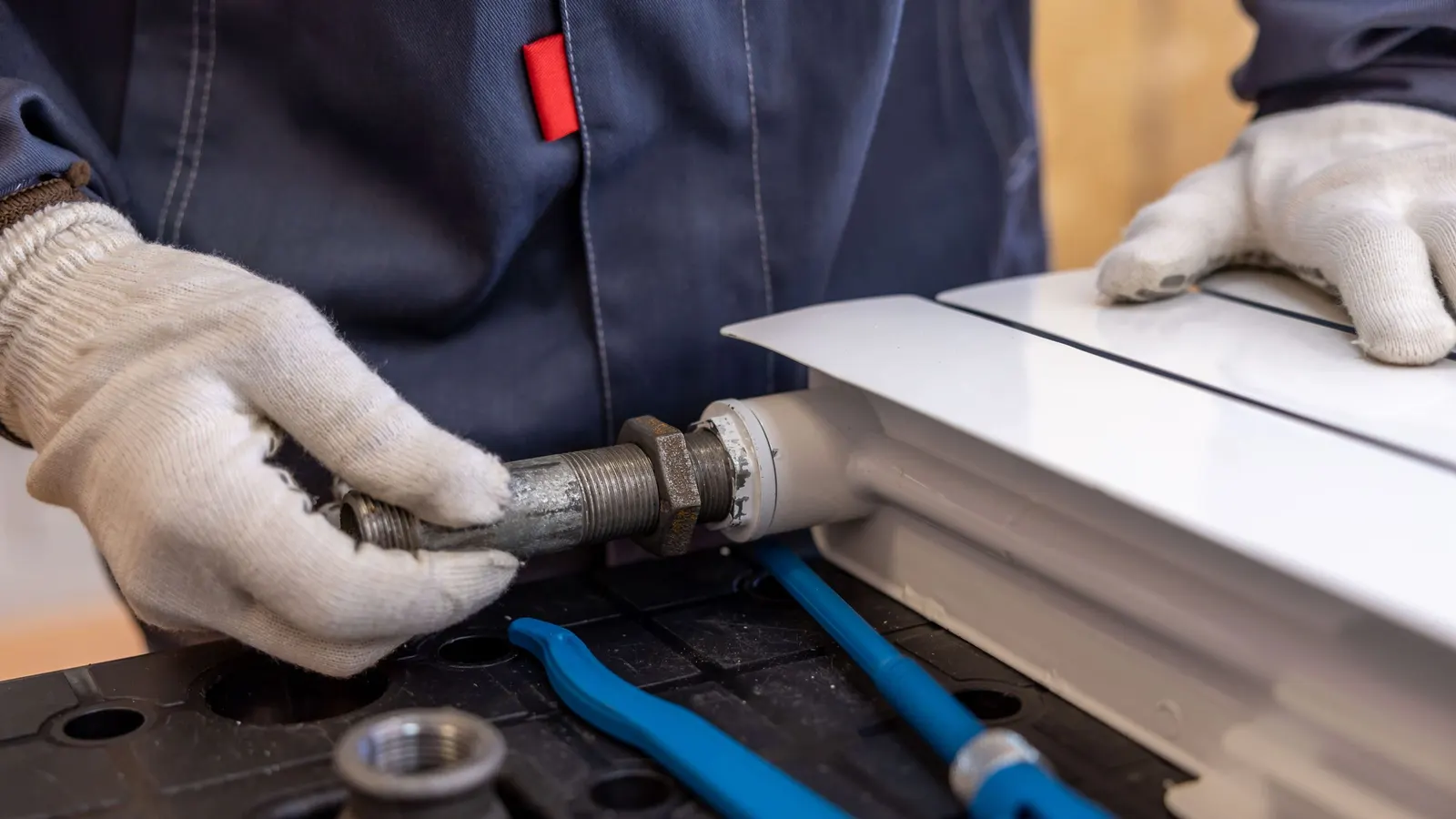
Sump pump installation cost is quoted as a single number far more often than it should be. In reality the same phrase covers two very different jobs: dropping a replacement into a pit that already exists, and cutting a new pit into a concrete slab with a discharge route and a dedicated circuit. Consequently the published ranges are wide, and the cost to install a sump pump in your house depends almost entirely on which of those two jobs you are buying.
Last reviewed and updated: October 9, 2026. Written by Jeremy Jarvis.
Key takeaways
- Fixr gives a $1,400 national average, a $800 to $2,000 typical range, and a $500 to $4,000 full span.
- This Old House agrees closely: $500 to $4,000 with a $1,400 average, and labor of $300 to $4,000.
- Bob Vila, citing Angi, sits higher at $1,200 to $2,500 with a $1,500 average.
- Floor type is the biggest swing: Bob Vila puts a concrete-floor installation at $2,500 to $5,000 because jackhammers are needed.
- Replacing an existing pump in an existing pit is the cheapest version of this job by a wide margin.
Size it before you price it
A quote is only comparable once you know the capacity you need. Work that out first with the Sump Pump Sizing Calculator.
The headline sump pump installation cost figures
Three independent sources, all read in October 2026, give a consistent picture at the top and a divergent one at the bottom.
| Source | Typical range | National average | Full span |
|---|---|---|---|
| Fixr (updated January 2025) | $800 to $2,000 | $1,400 | $500 to $4,000 |
| This Old House | Not stated separately | $1,400 | $500 to $4,000 |
| Bob Vila, citing Angi | $1,200 to $2,500 | $1,500 | Not stated separately |
Two of the three agree exactly on both the average and the span. Therefore a sump pump installation cost of about $1,400 is a reasonable central expectation. The realistic outer bounds are $500 and $4,000.
Why the sources disagree at the low end
Bob Vila’s floor of $1,200 sits well above Fixr’s $500, and the reason is scope rather than regional pricing.
Fixr is explicit that its low cost of $500 describes installing a new pedestal pump in an existing pit with minimal labor. That is a replacement, not an installation. Bob Vila’s range, by contrast, describes a first-time job. It notes that the initial installation will involve digging, electrical upgrades and plumbing costs.
So the two are measuring different jobs. Once you know which one you need, the right range becomes obvious.

What the sump pump cost actually covers
A complete first-time installation bundles several trades. Recognising them is what makes a quote readable.
- The pit. Excavating or cutting a basin at the lowest point of the floor.
- The basin and the pump. The liner, the pump itself and the float switch.
- Discharge plumbing. Pipe from the pit to outside, with a check valve.
- The discharge route. Above-ground, or buried, which costs more.
- Electrical. Ideally a dedicated circuit, which may mean a new run.
- Spoil removal. Concrete and soil carried out of the house.
- Reinstatement. Sealing the slab back around the basin.
Fixr describes the mainstream version of this bundle as a new submersible sump pump and pit with an above-ground drainage system. It puts that package at the $1,400 average. Anything buried, doubled or backed up pushes the sump pump installation cost upward from there.
Floor type moves the sump pump installation cost most
This is the single biggest driver, and it is worth checking before you read any quote.
Bob Vila puts digging through a dirt floor at between $300 and $500, or $5 to $10 per linear foot, depending on how deep the drainage pipes need to go. For concrete it gives a very different figure: sump pump installation in a concrete floor averages between $2,500 and $5,000, since jackhammers and other specialized equipment are required to break through the surface.
That is a fivefold difference for the same pump. Moreover, a thicker slab compounds it. Fixr’s worst case specifically mentions drilling into a thick concrete slab, and that detail alone can double a sump pump installation cost.
Pump type and where it sits
The pump itself is a smaller share of the sump pump installation cost than most people assume. It is not nothing, though.
This Old House notes that submersible sump pumps generally cost more than pedestal pumps because they use sealed motors and operate underwater, but that they are typically quieter and more powerful. Our submersible versus pedestal comparison covers which suits which pit.
Location matters too. This Old House points out that pumps installed in unfinished basements or crawl spaces are usually cheaper than installations in finished spaces or hard-to-access areas. In a finished basement you are also paying to open up and make good.
Backups, alarms and the upper end
Fixr’s $4,000 high-end case is worth reading as a shopping list rather than a warning, because each element is optional and priced separately.
It describes creating a new pit with two pumps, underground drainage, battery backup and a pump alarm, drilling into a thick concrete slab. In other words, the top of the range is a belt-and-braces system in the most difficult floor.
A second pump protects against pump failure; a battery backup protects against power failure, which is when storms take the grid down. Our battery backup guide explains which risk each one actually addresses, because they are not interchangeable.
This Old House also notes that primary electric pumps, battery backup systems and water-powered backup pumps come at different price points and can increase the overall installation cost.
Replacement against a first-time sump pump installation
If a pit already exists, you are in a much cheaper job, and it is worth saying so to anyone quoting.
Bob Vila states directly that sump pump replacement is less expensive than installing one for the first time. The pit, the basin, the discharge line and usually the circuit are all already there, so what remains is the pump, a check valve and an hour or two of labor.
Accordingly, if a contractor quotes a first-time installation price for what is really a swap, that is the question to ask.
Labor in the cost to install a sump pump
This Old House puts labor at $300 to $4,000, which is a remarkable range for one trade on one job.
It attributes the swing to a single factor: costs increase significantly if a new sump basin must be dug. Everything else, including the pump, varies far less.
Bob Vila lists a broader set of factors. These are the type and size of the pump, the type of floor, the pump location and accessibility, geographic location, the cost of labor and permits, and drainage system installation. Notice that three of those seven concern access and floor rather than equipment.
Permits, inspections and the electrical circuit
Two line items surprise people, and both are legitimate rather than padding.
The first is electrical. A sump pump should run on a grounded, ideally dedicated circuit, because sharing a circuit with other loads risks a trip that silently disables the pump. Where no suitable outlet exists near the pit, a new run from the panel is part of the cost to install a sump pump rather than an extra. Bob Vila explicitly includes electrical upgrades in what a first-time installation involves.
The second is permits. Bob Vila lists the cost of labor and permits among the factors affecting price, and requirements vary by jurisdiction. Where a permit applies it is usually modest, but the inspection can add days to the schedule, so ask early rather than discovering it mid-job.
Discharge rules belong in the same conversation. Many jurisdictions prohibit discharging groundwater into the sanitary sewer, which can force a longer run to a lawful outfall. Fixr notes that pumps move water away from the building via sump pipes that dump the water outside or back into the home wastewater system, so confirm which of those your local rules permit before the pipe is laid.
What it costs to run and maintain
Installation is a one-off; the system then has a running cost, although a small one.
Electricity is the obvious component, and it is modest because a pump only runs when the float rises. A pump cycling constantly, however, is either undersized or dealing with a drainage problem that ought to be fixed outside, and that changes the economics.
Replacement is the larger long-run number. Pumps are mechanical and they wear, so budgeting for an eventual swap is realistic rather than pessimistic. Usefully, that future swap is the cheap version of this job: the pit, the pipe and the circuit will already exist.
Maintenance itself is free and it protects everything else. Testing the pump by pouring water into the pit, clearing the inlet screen and checking the discharge outlet takes minutes twice a year.
Three worked examples
These examples combine the published figures. They are arithmetic rather than quotes, but they show how a sump pump installation cost is built up.
Replacing a failed pump in an existing pit. Fixr’s low-end case, around $500, covering a new pedestal pump and minimal labor. Expect more for a submersible, less if the check valve is sound.
A first pump in an unfinished basement with a dirt or thin slab floor. Around the $1,400 average, for a submersible pump, a new pit and above-ground discharge.
A first pump in a finished basement with a thick slab and a buried discharge. Toward Fixr’s $4,000 ceiling, and Bob Vila’s concrete-floor figures of $2,500 to $5,000 are the relevant benchmark rather than the national average.
Reading a sump pump installation cost quote
Ask for these items itemised, because the differences between quotes almost always hide in them.
- Pump make, model and horsepower, and whether it is submersible or pedestal.
- Basin size, and whether a new pit is being cut or an existing one reused.
- Floor type and thickness, and who removes the spoil.
- Discharge route: above ground or buried, and how far it runs.
- Check valve, and whether a quiet or spring-loaded type is included.
- Electrical: dedicated circuit or existing outlet, and whether a permit is needed.
- Backup pump or battery, listed separately so you can price the option.
- Alarm, and whether it is local or sends a notification.
- Slab reinstatement and clean-up.
With those nine lines filled in, two quotes become genuinely comparable. Without them, the cheaper sump pump installation cost usually describes less work rather than better value.
Where you can sensibly save
Some savings are real and some are false economies, so it helps to separate them.
Real savings: reusing a sound pit, keeping the discharge above ground where that is acceptable, choosing an unfinished location, scheduling outside the spring rush, and buying a quality pump once rather than a cheap one twice.
False economies, meanwhile: undersizing the pump, skipping the check valve, running the pump off an extension lead, and omitting a backup in an area with frequent outages. Each of those saves money at installation and costs more at the first failure.
Finally, maintenance protects the whole investment, and it is free. Our maintenance guide covers the twice-yearly checks that catch problems before a storm does.
Deciding whether the spend is justified
A sump pump is cheap compared with what it protects, but that is only an argument where there is something to protect.
The spend is clearly justified in several situations. Water has already reached the floor. The basement is finished, or holds mechanical equipment. The local water table rises every spring. An existing pit shows evidence of regular use. In each case the comparison is not against zero, but against repeated damage.
It is harder to justify where the basement has stayed dry through several wet seasons and there is no pit, particularly if gutters and grading have never been addressed. In that case the cheaper outside work comes first, and our sump pump guide explains how to tell whether a pump is the right answer at all.
One middle path is worth knowing about. Where a pit exists but is empty, fitting a pump later is inexpensive, so there is no urgency to install one before the evidence appears. Where no pit exists, the decision is larger, because the pit is most of the price.
Frequently asked questions about sump pump installation cost
How much does it cost to install a sump pump?
Fixr, updated January 2025, gives a national average of $1,400 with a typical range of $800 to $2,000, and a full span of $500 to $4,000. This Old House gives the same $500 to $4,000 span and the same $1,400 average. Bob Vila, citing Angi, sits a little higher at $1,200 to $2,500 with a $1,500 average. The spread reflects scope rather than disagreement.
Why is installing into a concrete floor so much more expensive?
Because a pit has to be cut into a structural slab. Bob Vila puts sump pump installation in a concrete floor at an average of $2,500 to $5,000, noting that jackhammers and other specialized equipment are required to break through the surface. By contrast, it puts digging through a dirt floor at $300 to $500, or $5 to $10 per linear foot.
Is sump pump replacement cheaper than a new installation?
Considerably. Bob Vila states plainly that sump pump replacement is less expensive than installing one for the first time, because the pit, the discharge line and usually the electrical circuit already exist. Fixr’s $500 low-end figure describes exactly this: a new pedestal pump in an existing pit with minimal labor.
How much of the price is labor?
A large share, and it rises with difficulty. This Old House puts labor at $300 to $4,000, noting that costs increase significantly if a new sump basin must be dug. That single line explains most of the gap between a drop-in replacement and a first-time installation in a finished basement.
Can I install a sump pump myself?
Bob Vila advises against it, describing sump pump installation as a project best left to the professionals, and as a complex project that may be possible for a homeowner with electrical and plumbing training but is beyond most. Replacing a pump in an existing pit is a more realistic DIY job than creating a pit and a discharge route from nothing.
What pushes a quote toward the high end?
Fixr’s $4,000 high-end case lists the combination: creating a new pit with two pumps, underground drainage, battery backup and a pump alarm, drilling into a thick concrete slab. Each of those on its own is an increment; together they are the top of the range.
Sources and how we researched this guide
Research-based. We did not commission an installation. Each figure is attributed to Fixr, Bob Vila or This Old House with its scope and the date we read it, and where they disagree the reason is explained rather than averaged away. Electrical work and slab cutting are licensed trades in many places; this guide does not substitute for a local quote. Found something out of date? Tell us and we will check it against the source.
Keep planning
- Basement Water Alarm: Where to Put One and Which Type
- Yard Drainage: Fix the Water Before It Reaches the Basement
- Sump Pump Maintenance: A Twice-Yearly Routine
- Water in Basement After Rain: How to Find the Cause
Go deeper: Wet Basements & Drainage hub · Sump Pump Sizing Calculator · French Drain Material Calculator

Written by Jeremy Jarvis
Jeremy Jarvis is the founder and editor of Basement Playbook, where he builds research-based guides and free planning tools for wet basements and crawl spaces: sump pumps and drainage, encapsulation, dehumidification, radon testing and mitigation, foundation cracks and finishing a basement that stays dry. He sets the site's editorial standards, checks every guide against official sources such as EPA radon and mold guidance, CDC, ENERGY STAR, state health departments and manufacturer documentation, and is responsible for corrections. Structural and radon mitigation work is always referred to a licensed engineer or a certified mitigator. Jeremy also founded Eco Nomad Travel, Mind Clarity Hub, SilkHarborTravel, WanderOza Travel, Freedom Road Living, PowerProof Home and Garage Playbook, and he is the author of books on clarity, focus and practical AI, including The Power of Clarity and Digital Clarity.