
Sump Pump Guide: How They Work, Sizing and Backup
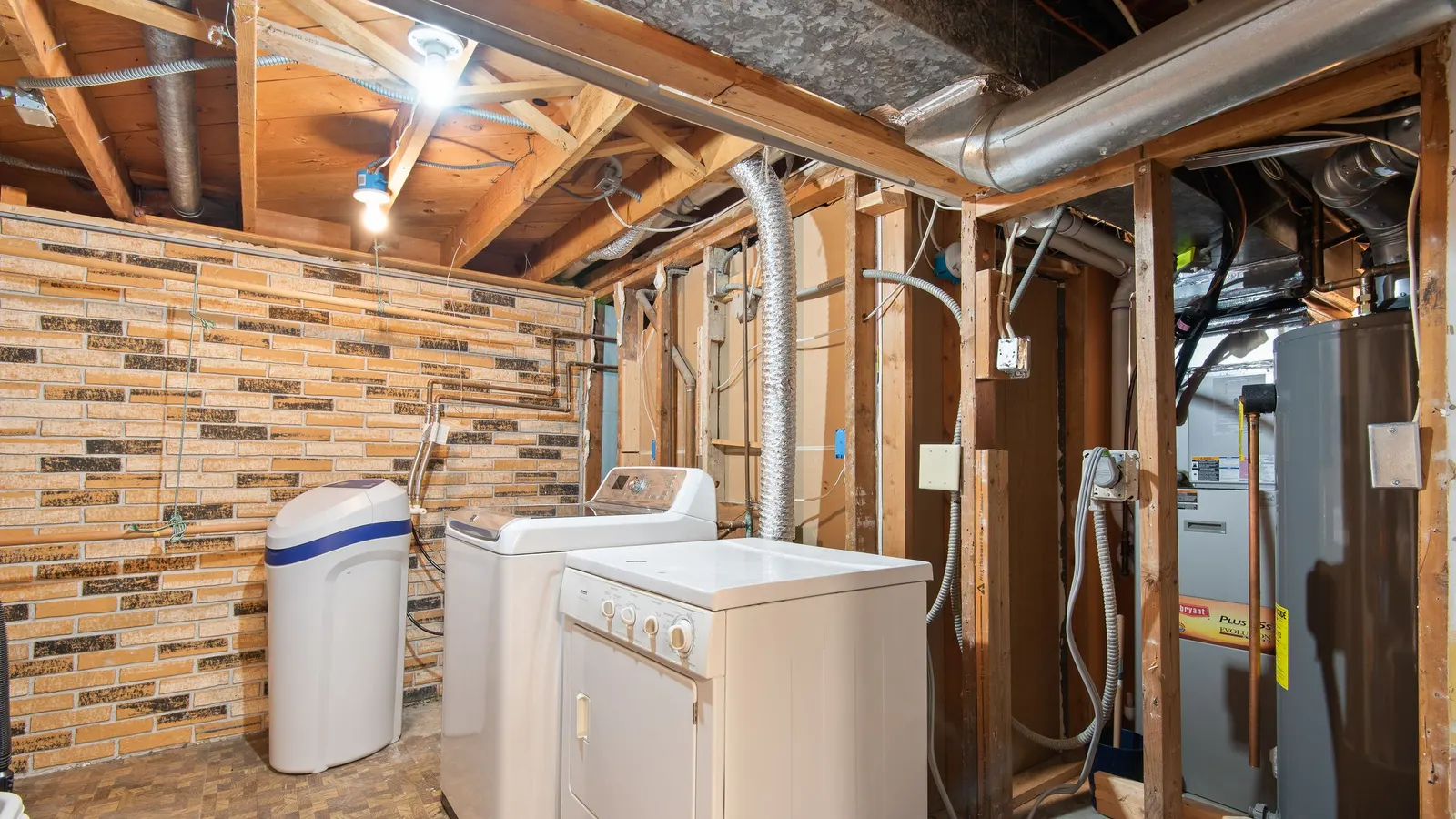
A sump pump is the last line of defence in a basement, and the one piece of equipment most likely to be discovered broken at the worst possible moment. A basement sump pump is also widely misunderstood. People buy on horsepower, ignore total head, and skip the backup that makes the whole system meaningful. This guide covers how the system works, how to size it honestly, and what installation really costs.
Last reviewed and updated: October 8, 2026. Written by Jeremy Jarvis.
Key takeaways
- A sump pump sits in a pit at the lowest point and moves water away before it reaches the floor.
- Horsepower alone does not size a pump: total head, the vertical lift plus pipe losses, decides real output.
- Submersible pumps are quieter and more powerful; pedestal pumps are cheaper and easier to service.
- Storms cause both the water and the power cut, so a backup is part of the system rather than an extra.
- Published installation costs disagree: roughly $500 to $4,000 depending on pit, floor and drainage.
Fix the outside first
A pump manages water that has already reached your foundation. Grading, gutters and downspouts decide how much arrives. Do that work first, then size the pump for what is left.
How a sump pump works
The principle is simple. A pit, sometimes called a sump basin, is dug at the lowest point of the basement or crawl space. Groundwater finds that low point and collects there instead of spreading across the floor.
Fixr describes the sequence plainly. The pumps are installed in sump pits dug in the lowest level of the basement. If water gets near the pit and the unit, it kicks on and pumps the water away from the building via sump pipes that dump the water outside or back into the home’s wastewater system.
Two things follow from that. First, the pit must actually be the low point, or water pools somewhere else. Second, the discharge has to end somewhere the water will not simply return from.
The parts of a sump pump system
| Part | Job | What goes wrong |
|---|---|---|
| Pit or basin | Collects water at the low point | Too small, so the pump short-cycles |
| Pump | Lifts water to the discharge | Undersized for the actual head |
| Float switch | Starts and stops the motor | Jams against the pit wall or debris |
| Check valve | Stops lifted water falling back | Missing, so the pump re-pumps the same water |
| Discharge pipe | Carries water away | Ends too close to the foundation, or freezes |
| Backup | Runs when mains power fails | Absent, or the battery is years past its life |
| Alarm | Warns of a high water level | Not fitted, so failure is discovered by smell |
Most “pump failures” are actually switch failures, discharge failures or power failures. The motor is often the healthiest part of the system.
Submersible and pedestal pumps
There are two basic designs, and both work the same way.
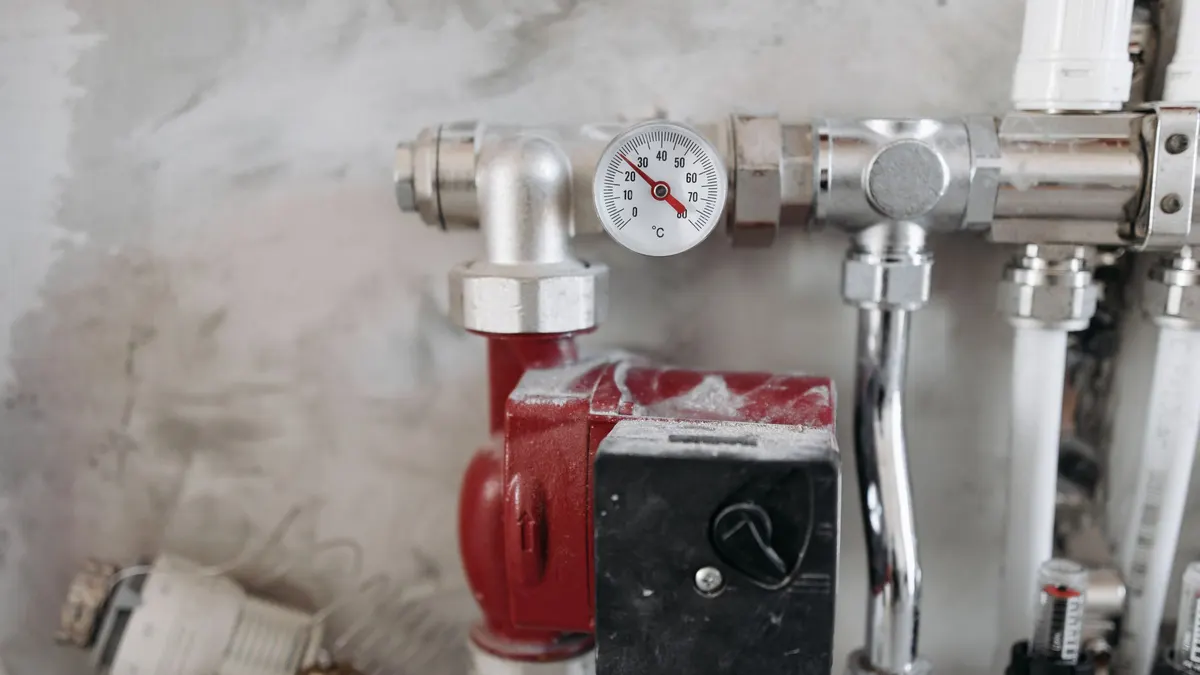
A submersible sump pump sits down in the pit with a sealed motor, under the water. This Old House notes that submersible pumps generally cost more than pedestal models because they use sealed motors and operate underwater, but that they are typically quieter and more powerful.
A pedestal sump pump keeps the motor on a shaft above the pit, with only the intake down in the water. Consequently it is cheaper, easier to inspect and easier to service. However, it is noisier, and the exposed motor is less suited to a finished space.
Pit geometry often decides for you. A narrow or shallow pit may not take a submersible unit at all. Our submersible versus pedestal comparison works through the trade-offs in detail.
Sizing a sump pump properly
This is where most buying advice goes wrong. Horsepower is a headline, not a specification.
What matters is total head: the vertical distance the pump must lift water, plus the friction losses in the pipe, elbows and check valve. A pump advertised at a large gallons-per-hour figure is usually quoting that figure at very little lift.
Work through it in this order.
- Measure the vertical lift from the water level in the pit to the highest point of the discharge run.
- Add an allowance for friction in the pipe length, fittings and the check valve.
- Read the manufacturer’s flow curve at that combined head, not at zero head.
- Estimate your inflow by timing how fast the pit refills during heavy rain.
- Choose a pump that clears your measured inflow comfortably at your actual head.
- Add margin, because the storm you care about is worse than the one you measured.
Fixr notes that prices vary based on the pump type, power type, horsepower, location and material, which is a reminder that the pump itself is only one variable in the job.
Pit size and cycling
An undersized pit is a quiet problem. The pump fills it quickly, runs for a few seconds, stops, and repeats. That short-cycling wears a motor far faster than long steady runs.
A deeper or wider basin gives the pump a longer run and a longer rest. Where a pit is already in place and too small, a lower switch setting or a different switch type sometimes helps. Replacing the basin is the better fix when the floor is open anyway.
Discharge: where the water actually goes
The discharge line is the part homeowners most often get wrong, and it is cheap to get right.
- Terminate well away from the foundation, so water does not soak back to the pit.
- Run it downhill wherever the grade allows.
- Fit a check valve, or the column of water in the pipe falls straight back each cycle.
- Plan for freezing: a buried line with a slope that drains is better than a surface hose.
- Check local rules before connecting to any sewer, because many jurisdictions forbid it.
- Keep the outlet clear of leaves, mulch and snow.
A basement sump pump discharging two feet from the wall is simply recirculating groundwater. It will run until it dies.
Backup power is part of the system
Storms cause the water and the power cut at the same time. Therefore a primary pump alone is only half a system in a house that genuinely floods.
There are two common approaches. A battery backup adds a second pump driven by a deep-cycle battery, which carries you through an outage of hours. A water-powered backup uses municipal water pressure to drive an ejector, which needs no electricity at all but does consume water and is not available on a private well.
Ready.gov’s flood guidance is worth reading alongside this, particularly on safety around water and electricity during a flood. Our battery backup guide covers sizing a battery to a realistic outage.
What installation costs, and why sources disagree
Published figures for this job vary widely, and it is more useful to show that than to average it away.
| Source | Typical range | Average | Stated extremes |
|---|---|---|---|
| Fixr | $800 to $2,000 | $1,400 | $500 pedestal in an existing pit; $4,000 for a new pit with two pumps, underground drainage, battery backup and an alarm |
| Bob Vila, citing Angi | $1,200 to $2,500 | $1,500 | Concrete floor installation averages $2,500 to $5,000 |
| This Old House | $500 to $4,000 | $1,400 | Labor alone $300 to $4,000 |
All three were quoted in October 2026. The spread is not sloppiness; it reflects genuinely different jobs hiding under one phrase.
The biggest single variable is the floor. Bob Vila puts digging through a dirt floor at $300 to $500, or $5 to $10 per linear foot depending on depth. Breaking a concrete slab is a different project, needing jackhammers and specialised equipment.
Bob Vila also makes a point worth repeating: sump pump installation is a project best left to the professionals. It may be possible for a homeowner with electrical and plumbing training, but it combines digging, electrical upgrades and plumbing. Our installation cost guide breaks the quote down line by line.
Float switches, and why they fail first
The switch is the cheapest part and the most common point of failure. It is worth knowing which type you have.
A tethered float hangs on a cord and swings up as water rises. It needs room to move, so it suits a wider pit. In a narrow basin it can catch on the pump body or the pit wall and never trip.
A vertical float runs up and down a rod. It needs less width, which makes it the usual choice in a tight pit. However, the rod can bind if debris collects.
An electronic or diaphragm switch has no moving arm at all and senses pressure or conductivity instead. There is less to jam, though electronics in a damp pit have their own failure modes.
Whichever you have, check clearance. Lift the float by hand and confirm nothing obstructs its full travel. In a basement sump pump that cycles hundreds of times each spring, a switch rubbing on the basin wall will wear through long before the motor does.
Keeping the pit clean
Pits collect what the floor drains deliver: grit, silt, pet hair and construction debris. That sediment is abrasive, and it shortens pump life.
A lid helps considerably. It keeps debris out, reduces evaporation and humidity, and cuts the noise. If you have radon in the house, a sealed lid matters even more, because an open pit is a direct opening into the gravel under the slab.
Clean the basin annually. Disconnect the power first, lift the pump, and remove sludge from the bottom. Check the intake screen while the pump is out, because a blocked screen starves the impeller and makes a healthy pump look weak.
Two pumps, or one?
In a house that floods seriously, two pumps in one pit is a common arrangement, and it is not the same thing as a battery backup.
A duplex setup runs two mains-powered pumps with staggered switch heights. The second only starts when inflow outpaces the first. Consequently you get both redundancy and extra capacity during the worst hour of a storm.
A battery backup solves a different problem: loss of power. It typically moves less water than the primary pump and is sized to get you through an outage rather than to match peak inflow.
The two are complementary. Fixr’s high-end example makes the point, pricing a new pit with two pumps, underground drainage, battery backup and a pump alarm at $4,000.
Crawl spaces need a different approach
A crawl space pump solves the same problem in an awkward space. The principles carry over, but three things change.
Access is the first. Servicing a basement sump pump means walking down the stairs. Servicing a crawl space pump means crawling, which in practice means it gets checked far less often. An alarm is therefore not optional down there.
Second, the pit usually has to be dug into soil rather than cut through a slab. That is cheaper, and Bob Vila puts digging through a dirt floor at $300 to $500, or $5 to $10 per linear foot depending on depth.
Third, a crawl space pump normally works alongside a vapor barrier rather than instead of one. Pumping standing water without sealing the ground leaves you with a damp space and a pump that never rests.
If the crawl space is being encapsulated anyway, fit the pit and the liner in the same visit. Retrofitting a pit through a finished membrane later wastes both.
Before you buy: a short checklist
- Measure total head from the pit water line to the highest point of the discharge.
- Time how fast the pit refills during real rain, not during a dry spell.
- Read the flow curve at your head, and ignore the headline gallons-per-hour figure.
- Check pit width and depth before choosing between a submersible and a pedestal unit.
- Decide on backup now, because retrofitting a basement sump pump backup costs more later.
- Confirm the discharge route, including where it will go when the ground is frozen.
- Budget for a lid, a check valve and an alarm as part of the job rather than extras.
Get those seven right and the pump itself becomes the easy decision.
Alarms and monitoring
An alarm turns a silent failure into a known one, and it is the cheapest upgrade on this page.
- A simple water alarm sits above the normal switch level and sounds when the water rises past it.
- Wi-Fi models send a phone alert, which matters if the house is sometimes empty.
- Some monitors watch pump run time and warn when cycles get longer or more frequent.
- A backup system with its own alarm tells you the battery is low before you need it.
- Place any sensor above the pump switch but below the floor level you care about.
Rising run time is the most useful early warning you can get. It usually means inflow is increasing, the impeller is wearing, or the discharge is partly blocked, and all three are cheaper to address before the pump stops.
Signs your sump pump is failing
- It runs constantly, even in dry weather, which often means a check valve or discharge problem.
- It cycles on and off every few seconds, which usually points to pit size or switch position.
- Visible rust, or a motor that is hot to the touch after a normal run.
- Grinding, rattling or a hum with no water movement.
- The pit fills and nothing happens, which is most often the float switch.
- A musty smell returning to a basement that had been dry.
Test it deliberately rather than waiting. Pour a bucket of water into the pit, watch the switch lift, confirm the motor starts, and check that water actually leaves the discharge outside. Our maintenance guide sets out a seasonal routine.
A sump pump is cheap insurance against an expensive problem, provided it is sized for your real head, discharged somewhere sensible, and backed up for the night the power goes out.
Frequently asked questions about sump pumps
How does a sump pump work?
It sits in a pit dug at the lowest point of the basement or crawl space. As groundwater rises, it collects in that pit. When the water reaches a set level, a float switch starts the motor, and the pump pushes water out through a discharge pipe to a point away from the foundation. Fixr describes the same arrangement: water gets near the pit, the unit kicks on, and sump pipes carry the water outside or to the home’s wastewater system.
What size sump pump do I need?
Size on total head rather than horsepower alone. Total head is the vertical lift from the pit to the discharge point, plus friction losses in the pipe and fittings. A pump rated at a high flow with no lift may move far less water at ten feet of head. Check the manufacturer’s flow curve at your actual head, then add margin for a heavy storm.
How long does a sump pump last?
Treat it as a wearing part rather than a fixture. Life depends heavily on how often it cycles, which in turn depends on your water table and drainage. A pump in a pit that runs constantly through spring will wear far faster than one that runs occasionally. Test it seasonally and budget for replacement rather than waiting for failure.
Do I need a battery backup sump pump?
If a wet basement would cause real damage, yes. The storm that brings the water is often the storm that cuts the power, so the primary pump stops exactly when it is needed. A battery backup or a water-powered backup keeps pumping through the outage.
Submersible or pedestal: which is better?
Submersible pumps sit in the water with a sealed motor. This Old House notes they generally cost more than pedestal pumps, but are typically quieter and more powerful. Pedestal pumps keep the motor above the pit, which makes them cheaper and easier to service, though noisier. Pit depth and width often decide it for you.
Where should the discharge pipe end?
Far enough from the house that the water does not simply soak back down to the pit. Discharge beside the foundation creates a loop that keeps the pump cycling. Direct it downhill, away from the wall, and never into a sanitary sewer where local rules prohibit it.
Sources and how we researched this guide
This guide is research-based. We did not test pumps for this article. Cost figures are quoted from Fixr, Bob Vila and This Old House with the date and scope named, and they disagree, which is explained rather than averaged away. Electrical work on a dedicated circuit is a job for a licensed electrician. Found something out of date? Tell us and we will check it against the source.
- Fixr: Sump pump installation cost
- Bob Vila: Sump pump cost
- This Old House: Sump pump installation cost
- Ready.gov: Floods
Keep planning
- Sump Pump Maintenance: A Twice-Yearly Routine
- Sump Pump Installation Cost: What Drives the Price
- Water in Basement After Rain: How to Find the Cause
- Flooded Basement: Safe Steps to Clean Up and Dry Out
Go deeper: Wet Basements & Drainage hub · Sump Pump Sizing Calculator · French Drain Material Calculator

Written by Jeremy Jarvis
Jeremy Jarvis is the founder and editor of Basement Playbook, where he builds research-based guides and free planning tools for wet basements and crawl spaces: sump pumps and drainage, encapsulation, dehumidification, radon testing and mitigation, foundation cracks and finishing a basement that stays dry. He sets the site's editorial standards, checks every guide against official sources such as EPA radon and mold guidance, CDC, ENERGY STAR, state health departments and manufacturer documentation, and is responsible for corrections. Structural and radon mitigation work is always referred to a licensed engineer or a certified mitigator. Jeremy also founded Eco Nomad Travel, Mind Clarity Hub, SilkHarborTravel, WanderOza Travel, Freedom Road Living, PowerProof Home and Garage Playbook, and he is the author of books on clarity, focus and practical AI, including The Power of Clarity and Digital Clarity.