
Basement Water Alarm: Where to Put One and Which Type

A basement water alarm is the cheapest insurance you can buy for a basement, because water damage is mostly a function of time. A leak found in ten minutes is a mop. The same leak found on Sunday evening after a weekend away is flooring, drywall, insulation and a dehumidifier running for a fortnight.
This basement water alarm guide covers how they work, where to put them, the difference between one that beeps in an empty house and one that reaches your phone, and the automatic shutoff option for people who travel. It also explains who genuinely does not need one.
Last reviewed and updated: October 8, 2026. How this guide was researched: this basement water alarm guide is desk research, not a product test. Claim statistics are taken directly from the Insurance Information Institute, with the period attached, because secondary summaries of the same data disagreed. We did not test any alarm, and we do not quote product prices.
Why a basement water alarm earns its place
Water damage is not a rare event. In fact, it is one of the most common claims homeowners make.
According to the Insurance Information Institute, water damage and freezing accounted for 22.6 percent of homeowners multiple peril claims in 2023, and the share has run between roughly 20 and 29 percent across recent years: 28.7 percent in 2019, 19.8 percent in 2020, 23.7 percent in 2021 and 25.8 percent in 2022.
The severity figure is the one that justifies a sensor. Over 2019 to 2023, the average claim for water damage and freezing was $15,400, excluding loss adjustment expenses. And this is not a remote risk: the same data shows a claim frequency of 1.50 claims per 100 house-years, or about 1.5 percent of homes per year, with Triple-I noting that about one in 60 insured homes has such a claim based on 2018 to 2020 figures.
Against that, a handful of sensors is trivial. Moreover, the alarm does not prevent the leak. It compresses the time between the leak starting and somebody knowing, and that interval is what determines whether you are drying a floor or replacing one.
How basement water alarms work
Every basement water alarm detects water and makes a noise. However, they differ in how they detect, and crucially in who hears it.
Sensor types
- Contact probes. Two metal points on the base of the unit. Water bridges them and the circuit closes. Simple, cheap and reliable, but they only detect water that reaches that exact spot.
- Sensor cable. A length of rope-like cable that triggers anywhere along its run. Much better coverage for a long wall, behind a washer, or along the base of a finished wall.
- Puck sensors with a remote lead. The unit sits where you can see it, with a thin probe lead reaching into the awkward low spot.
- Float switches. Mechanical, used mainly in sump pits to signal a high water level rather than a spill.
For a basement, cable sensors are usually the strongest choice along a wall or behind appliances, because basement water rarely arrives at a single predictable point.

Standalone or connected
| Standalone alarm | Connected alarm | |
|---|---|---|
| Alerts | Local siren only | Siren plus a phone notification |
| Works when you are away | No | Yes |
| Needs wifi | No | Yes, and it fails when the internet does |
| Setup | Drop it on the floor | App, account and a hub in some systems |
| Ongoing attention | Battery changes | Battery changes plus firmware and account upkeep |
| Extra features | Rare | Temperature and humidity alerts, shutoff integration |
The honest summary: a standalone alarm protects an occupied house, and a connected one protects an empty house. If the basement floods while you are at work, a siren in an empty basement achieves nothing. Most people should pick connected for the basement specifically, and standalone units are perfectly sensible elsewhere.
One caveat worth knowing before you buy: connected sensors depend on your internet and often on mains power for the router. A storm that causes a leak frequently causes an outage too, so check whether your system has a cellular or battery-backed path, and read our sump pump battery backup guide for the related problem.
Where to put the sensors
For a basement water alarm, placement matters more than product choice. Water goes to the lowest point available, and it gets there faster than people expect.
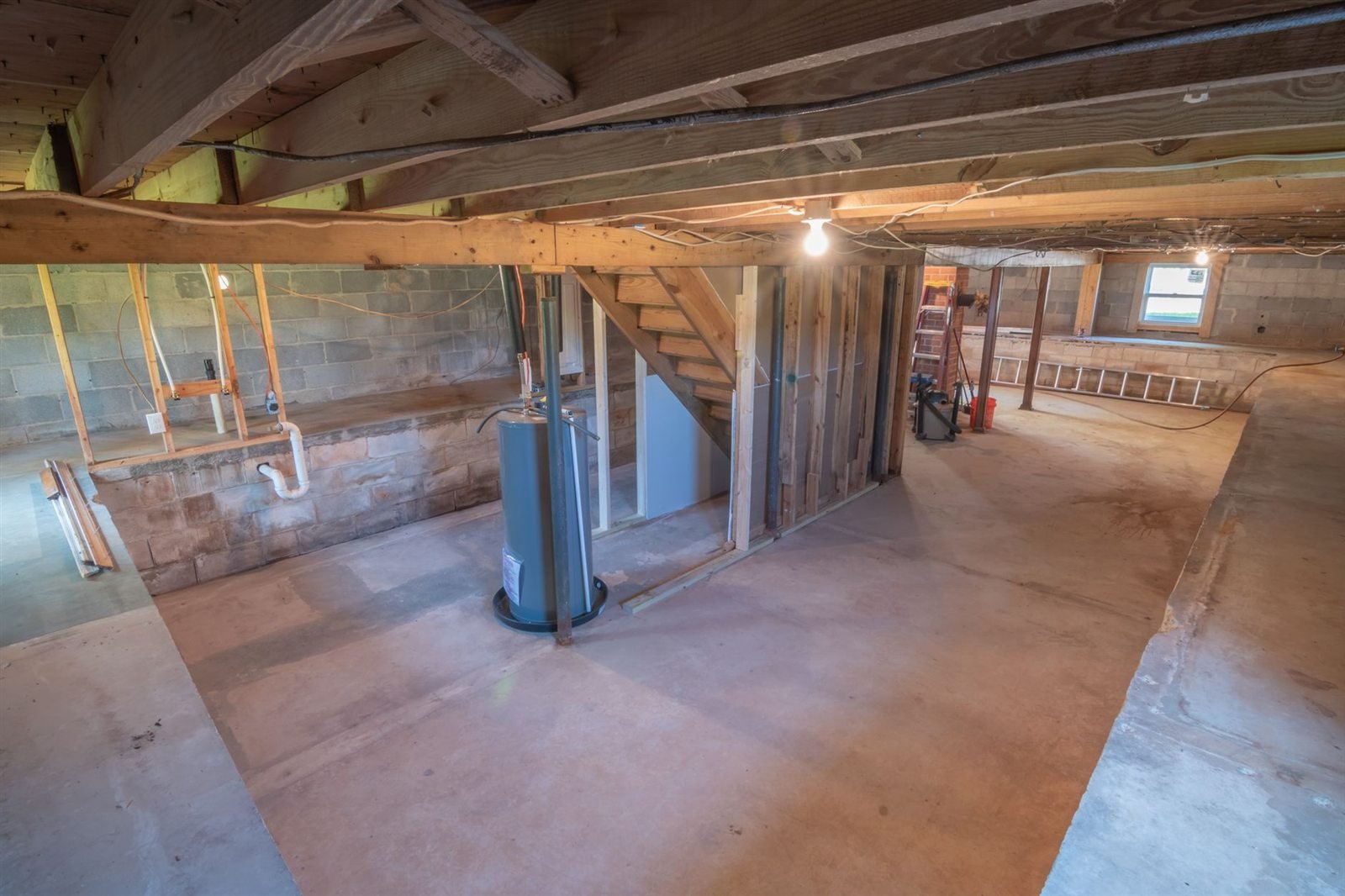
Work through this list, in roughly this order of priority:
- Beside the water heater. Tanks fail, and they fail without warning at the end of their life.
- At the sump pit. Not in it, but beside it, to catch an overflow when the pump fails.
- Behind or under the washing machine. Supply hoses are a classic failure point.
- At the lowest point of the floor. Find it with a ball, not with your eyes.
- Beside the furnace or boiler and any condensate pump.
- Under the laundry sink and any basement bathroom fittings.
- Along the base of any wall that has ever been damp. Use cable here rather than a point sensor.
- At the foot of the basement stairs if water could arrive from above.
Finally, put them flat on the floor, not on a shelf or a block. A sensor an inch off the ground is an inch of water late, and an inch of water across a basement is already a serious event.
Beyond the alarm: automatic water shutoff
An alarm tells you. A shutoff valve acts instead, which is a different level of protection altogether.
These systems fit to the main incoming supply and close it when a sensor triggers, or when flow monitoring detects a pattern that looks like a continuous leak. For a house that is empty during the day, or empty for weeks at a time, that distinction matters: an alert you cannot act on for six hours still allows six hours of water.
They are not for everyone. The valve is a plumbing installation on your main supply, they need power and periodic testing, and a false trigger leaves you with no water until you reset it. But for second homes, frequent travellers, or anyone who has already had one flood, they are the logical upgrade.
Note the limit: a shutoff valve controls supply water. It does nothing about groundwater coming through the floor or walls after heavy rain, which is a drainage problem. For that, read yard drainage and basement waterproofing.
A water alarm is not a sump pump alarm
A basement water alarm and a sump pit alarm get confused constantly, yet they protect against different failures.
A high-water alarm sits in the sump pit and sounds when the water level rises above where the pump should have held it. It tells you the pump has failed, is overwhelmed, or has lost power, and it tells you before the pit overflows.
A floor-level basement water alarm tells you water has already arrived on the floor. By then the pit has overflowed, or the water came from somewhere else entirely.
If you have a sump, fit both. The pit alarm is your early warning and the floor sensors are your backstop. Our sump pump guide covers the pit side, and sump pump maintenance covers keeping it working in the first place.
False alarms, and how to avoid most of them
Nothing destroys confidence in a basement water alarm faster than one that cries wolf. Fortunately the usual causes are mundane.
- Condensation. A sensor directly beneath a cold pipe collects drips that are not a leak. Move it, or insulate the pipe.
- Mopping and cleaning. Lift sensors before washing the floor, and put them back.
- Humidity on a cold slab. Some contact sensors trigger on a damp film in very humid conditions. A short delay setting, if available, helps.
- Flat batteries. Many units chirp when low, and people mistake the chirp for an alert.
- Dust and corrosion on contact probes, which can cause both false alarms and silent failures.
Test every sensor twice a year with a damp cloth across the contacts, and change batteries on a schedule rather than waiting for a warning. A sensor you have never tested is a sensor you are trusting without evidence.
Freezing, humidity and the alerts worth having alongside
Many sensors now report temperature and humidity as well as water, and in a basement both are genuinely useful rather than marketing extras.
Temperature matters because the Insurance Information Institute groups water damage and freezing together for good reason. A pipe that freezes bursts when it thaws, so an alert when the basement drops toward freezing gives you a chance to act before anything splits. If you leave the house empty in winter, set that threshold with room to spare rather than at the freezing point itself.
Humidity is the slow version of the same problem. A basement sitting at persistently high relative humidity will grow mould and rot timber without ever producing a puddle, so no water sensor will ever fire. Therefore a humidity reading tells you about a condition that water alarms are structurally blind to.
If your sensors report both, log them for a season before changing anything. Consequently you learn what normal looks like in your own basement, which makes an abnormal reading meaningful instead of alarming.
How many sensors, and how to phase them in
People often buy one sensor, put it somewhere reasonable, and consider the job done. However, a single point sensor covers a very small area, and basement water seldom cooperates.
A practical approach is to start with the two highest-value positions and expand:
- Start with two. The water heater and the lowest point of the floor. These cover the most likely failure and the place water collects regardless of source.
- Add a third at the sump pit if you have one, because that is where a mechanical failure announces itself first.
- Add cable along any wall with a history of damp, since point sensors will miss a slow seep.
- Then cover appliances: washer, laundry sink, condensate pump and any basement bathroom.
- Finally, consider shutoff if the house is regularly empty.
Above all, write down where each sensor is. In a year you will not remember, and a chirping battery in an unfinished ceiling void at midnight is a genuinely miserable way to find out.
What to do when it goes off
- Do not walk into standing water if anything electrical could be energised. Kill power to the basement at the panel first if you can do it safely from dry ground.
- Find the source. Supply leak, appliance, sump failure or groundwater each need a different response.
- Shut off the water at the main if it is a supply leak, or at the appliance valve if you can reach it safely.
- Start removing water once it is safe, and get air moving.
- Photograph everything before you clean up, because your insurer will want it.
- Lift what you can. Boxes on the floor absorb water; boxes on a shelf do not.
If the water is already deep, read flooded basement for the full sequence, and water in the basement after rain if it only happens during storms.
Who should skip one
Very few people, honestly, although the cases do exist. If your basement is a dry, sealed, climate-controlled space with no plumbing, no appliances, no sump and no history of water, the risk is genuinely low and sensors add little.
Everyone else, including people who have never had a leak, should fit at least two: one at the water heater and one at the lowest point of the floor. The reason is simply the arithmetic above. The downside of being wrong without a sensor is an average claim of $15,400, and the downside of being wrong with one is a few batteries.
Frequently asked questions
How common is water damage in homes?
Common enough to be one of the leading claim types. The Insurance Information Institute reports that water damage and freezing made up 22.6 percent of homeowners multiple peril claims in 2023, having ranged from 19.8 to 28.7 percent across 2019 to 2022. Its 2019 to 2023 data shows a frequency of 1.50 claims per 100 house-years.
How much does water damage typically cost?
Insurance Information Institute data puts the average claim severity for water damage and freezing at $15,400 over 2019 to 2023, excluding loss adjustment expenses. That is an average across all severities, so individual outcomes vary widely, but it indicates why early detection matters so much.
Where should I put a basement water alarm?
Flat on the floor beside the water heater, next to the sump pit, behind the washing machine, and at the lowest point of the slab. Use cable sensors along any wall that has been damp before, since basement water rarely arrives at one predictable spot. Never mount a sensor on a shelf or block.
Do I need a connected alarm or is a simple siren enough?
It depends on whether the house is occupied. A local siren only helps if someone is there to hear it, so for a basement that floods while you are at work it achieves nothing. Connected sensors notify your phone, but they depend on internet and router power, so check for a cellular or battery-backed path.
Is an automatic shutoff valve worth it?
For frequent travellers, second homes, or anyone who has already had a flood, usually yes, because it acts rather than just alerting. Be aware it only controls supply water, so it does nothing for groundwater entering through the floor or walls, and a false trigger leaves you without water until reset.
Why does my water sensor keep false alarming?
Most often condensation from a cold pipe directly above it, humidity on a cold slab, or a low battery chirp being mistaken for an alert. Move the sensor away from drip points, insulate the pipe, and change batteries on a schedule. Test each sensor twice a year with a damp cloth.
Sources and further reading
- Insurance Information Institute, homeowners claim shares and average severity by cause
- Ready.gov, on flood preparation and safe response
This guide is educational. Electrical safety around standing water is a genuine hazard, plumbing alterations such as shutoff valves should be installed by a qualified plumber, and insurance coverage for water damage varies by policy, so check your own terms.
Keep planning
- Yard Drainage: Fix the Water Before It Reaches the Basement
- Sump Pump Maintenance: A Twice-Yearly Routine
- Sump Pump Installation Cost: What Drives the Price
- Water in Basement After Rain: How to Find the Cause
Go deeper: Wet Basements & Drainage hub · Sump Pump Sizing Calculator · French Drain Material Calculator

Written by Jeremy Jarvis
Jeremy Jarvis is the founder and editor of Basement Playbook, where he builds research-based guides and free planning tools for wet basements and crawl spaces: sump pumps and drainage, encapsulation, dehumidification, radon testing and mitigation, foundation cracks and finishing a basement that stays dry. He sets the site's editorial standards, checks every guide against official sources such as EPA radon and mold guidance, CDC, ENERGY STAR, state health departments and manufacturer documentation, and is responsible for corrections. Structural and radon mitigation work is always referred to a licensed engineer or a certified mitigator. Jeremy also founded Eco Nomad Travel, Mind Clarity Hub, SilkHarborTravel, WanderOza Travel, Freedom Road Living, PowerProof Home and Garage Playbook, and he is the author of books on clarity, focus and practical AI, including The Power of Clarity and Digital Clarity.