
Crawl Space Dehumidifier: Sizing, Drainage and Placement
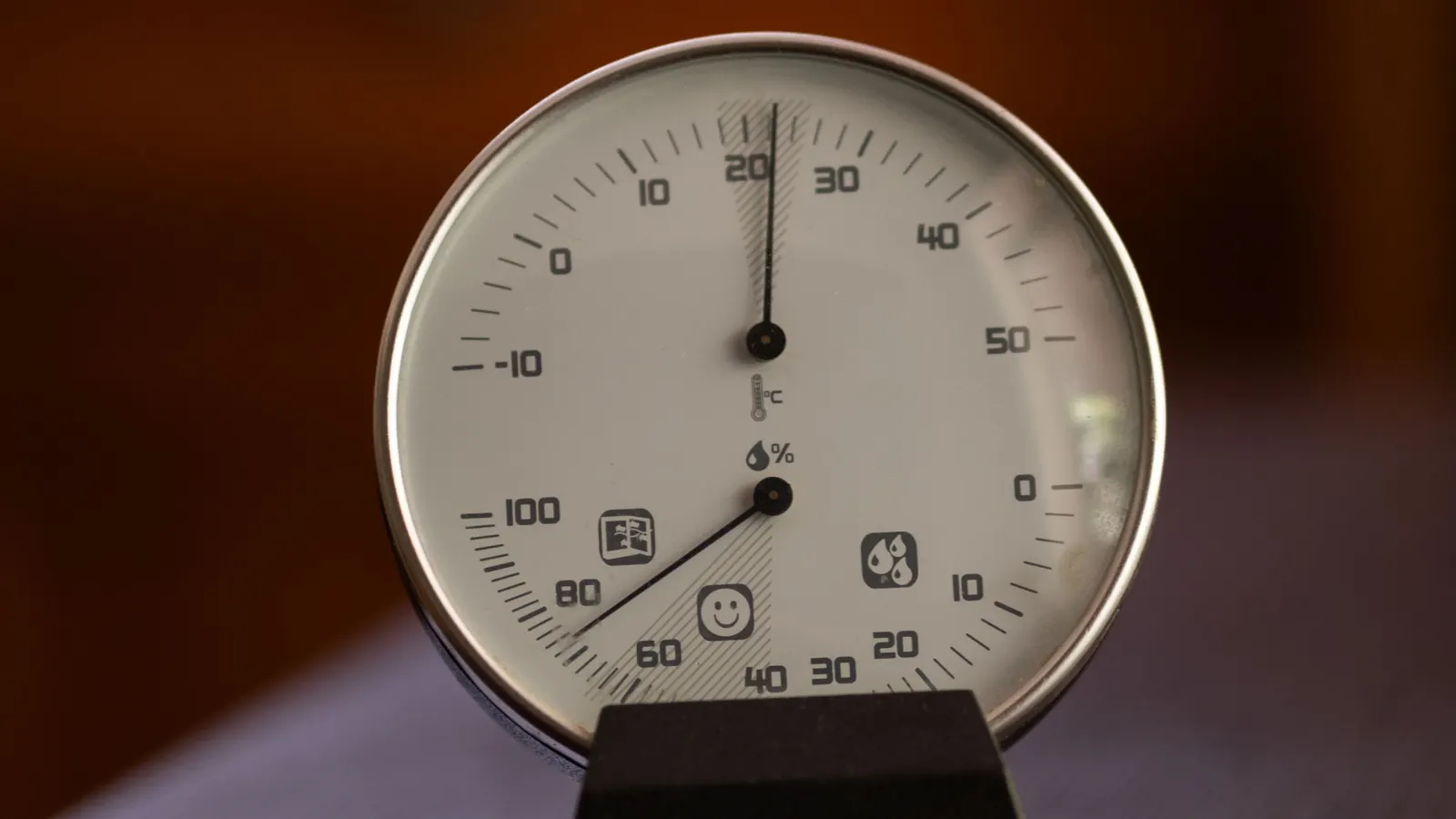
A crawl space dehumidifier is the component that finishes the job the barrier and the sealing started. Sealing stops moisture arriving; the dehumidifier removes what is already there and whatever still gets in. Consequently choosing a dehumidifier for crawl space use is less about brand than about three things: capacity, drainage and placement.
Last reviewed and updated: October 9, 2026. Written by Jeremy Jarvis.
Key takeaways
- Capacity is measured in pints per 24 hours, and ENERGY STAR notes it depends on both the size of the space and how damp it is.
- For a slightly to moderately damp small-medium room under 2,000 square feet, ENERGY STAR suggests 20 to 30 pints per day.
- An ENERGY STAR certified unit uses 20% less energy than a similarly sized conventional one.
- The condensate drain matters more than the brand: a tank nobody empties is a unit that stops working.
- A dehumidifier manages humidity; it does not stop moisture arriving, which is what a barrier and sealing do.
Set a target first
A dehumidifier needs a number to hold. Work out the right humidity target for your space with the Basement Humidity Target Tool.
Why a sealed crawl space needs one
This is the question people reasonably ask after paying for encapsulation, and the answer follows from what sealing does and does not achieve.
A sealed space excludes ground moisture and humid outside air. It does not remove the water already held in the soil beneath the liner, in the timber, and in the air itself. Furthermore, by design it has no ventilation route, so there is nowhere for that moisture to go on its own.
EPA’s mold course puts the goal plainly: eliminating all mold and mold spores indoors is virtually impossible, but controlling indoor moisture will control the growth of indoor mold. The dehumidifier is the control.
Crawl space dehumidifier capacity, and what it means
ENERGY STAR states that the dehumidifier size or capacity of a unit is usually measured in pints per 24 hours. The capacity you need, it says, depends on two factors: the size of the space that needs to be dehumidified, and the conditions that exist in that space without dehumidification.
Those two factors are why a single figure cannot be given for all crawl spaces. Area alone is not enough, because a damp space of a given size needs considerably more capacity than a dry one.
| Condition without dehumidification | Small-medium room, under 2,000 sq ft | Large room, over 2,000 sq ft |
|---|---|---|
| Slightly to moderately damp: feels damp, intermittent musty odour, 50 to 75% relative humidity | 20 to 30 pints per day | 30 or more pints per day |
That is ENERGY STAR’s own guidance for a portable unit, and it is the published starting point.
Adapting room guidance to a crawl space dehumidifier
Here is the honest caveat, and it matters because the figures above are written for rooms.
A crawl space differs from a room in ways that all push the same direction. Sitting against the ground, it runs cooler. Conditions are frequently damper than the descriptions in a room chart. Part of the floor may remain open to the soil beneath the liner, and air circulation is poor because the space is low and full of obstructions.
Therefore the sensible method is to start from the ENERGY STAR figure for your area, assume your space sits in the damper rather than the drier category, and then verify empirically. Install, run for a full season including the most humid months, and read the gauge.
An oversized unit cycles more and costs more to buy, which is a mild penalty. An undersized unit runs continuously and never reaches the target, which is a real failure. Given the asymmetry, erring upward is the safer error.
The drain matters more than the brand
If one detail decides whether a crawl space dehumidifier is still working in three years, it is this one. The brand on the box matters far less.
A unit with an internal tank fills, switches off and waits for somebody to empty it. In a living room that somebody exists. In a crawl space nobody enters, the unit stops within days. The space then returns quietly to where it started, with no indication from the hatch that anything has changed.
So specify continuous drainage. The options, in order of preference:
- Gravity drain to a suitable discharge point. Simplest and most reliable, with no additional parts.
- Gravity drain into an existing sump pit. Convenient where one exists and the pump is sound.
- Condensate pump. Necessary where nothing is below the unit, but it adds a component that can fail.
Run the hose with continuous fall and no dips, because a sagging hose holds water and eventually blocks. Keep the discharge away from the foundation, for the same reason any other water should be kept away from it.
Where to put the crawl space dehumidifier
A crawl space is a difficult environment for air movement, and placement is how you compensate.
Put the unit as centrally as the layout allows, so it influences the whole space rather than one end of it. Leave clear space at the intake and the outlet, and do not let the discharged air blow straight back into the intake, which produces a machine that works hard and dries nothing.
Raise it off the ground on a solid platform or hangers. That keeps it out of any water, protects the liner from the feet, and makes servicing less unpleasant. Some crawl spaces are divided by foundation walls into separate bays. In those, one unit may not reach every bay, so transfer openings or a second unit may be needed.
Finally, site it where you can actually get to it. A dehumidifier in the furthest corner of a low crawl space is a dehumidifier that never gets its filter cleaned.
Standard units and purpose-built ones
Both types are used as a crawl space dehumidifier, and the trade-off between them is real rather than marketing.
| Standard portable unit | Purpose-built crawl space unit | |
|---|---|---|
| Purchase cost | Lower | Higher |
| Low-temperature operation | Varies; may struggle when cool | Generally designed for it |
| Drainage | Tank, with a hose option | Continuous drain as standard |
| Form factor | Upright; may not fit low spaces | Low profile, often hangable |
| Controls | Onboard panel | Often a remote humidistat |
| Durability in damp | Variable | Built for the environment |
A standard unit can work well in an accessible, reasonably warm crawl space, provided you use the hose rather than the tank. A purpose-built unit earns its price in a low, cold or hard-to-reach space, which describes most crawl spaces.
Either way, look for the ENERGY STAR label. ENERGY STAR states that a certified dehumidifier uses more efficient refrigeration coils, compressors and fans to remove the same amount of moisture as a similarly sized conventional unit while using 20% less energy, and notes that certified models are available for both portable and whole home dehumidifiers.
Ventilation as a partner, not a rival
One question comes up repeatedly: if the space needs drying, would moving air through it help? In a sealed crawl space, generally not, and it is worth understanding why.
Bringing outside air into a cool space works only when that air is drier than the air already inside. For much of the year in a humid climate it is not, which was the original problem with vented crawl spaces. Pulling humid summer air across cool surfaces adds moisture rather than removing it.
What does help is circulation within the sealed space. A low-powered fan moving air around obstructions and into the far bays gives the dehumidifier something to work with, rather than leaving still, stratified pockets it never reaches. That is air movement without air exchange, and the distinction is the whole point.
Some systems go further and supply a small amount of conditioned air from the house into the crawl space, which both dries and tempers it. Whether that suits your house depends on the heating system and on local practice, so it is a question for a contractor rather than a default.
Controls and what to set them to
A humidistat is what turns a crawl space dehumidifier from an appliance into a control system, so it is worth having one you can read without crawling.
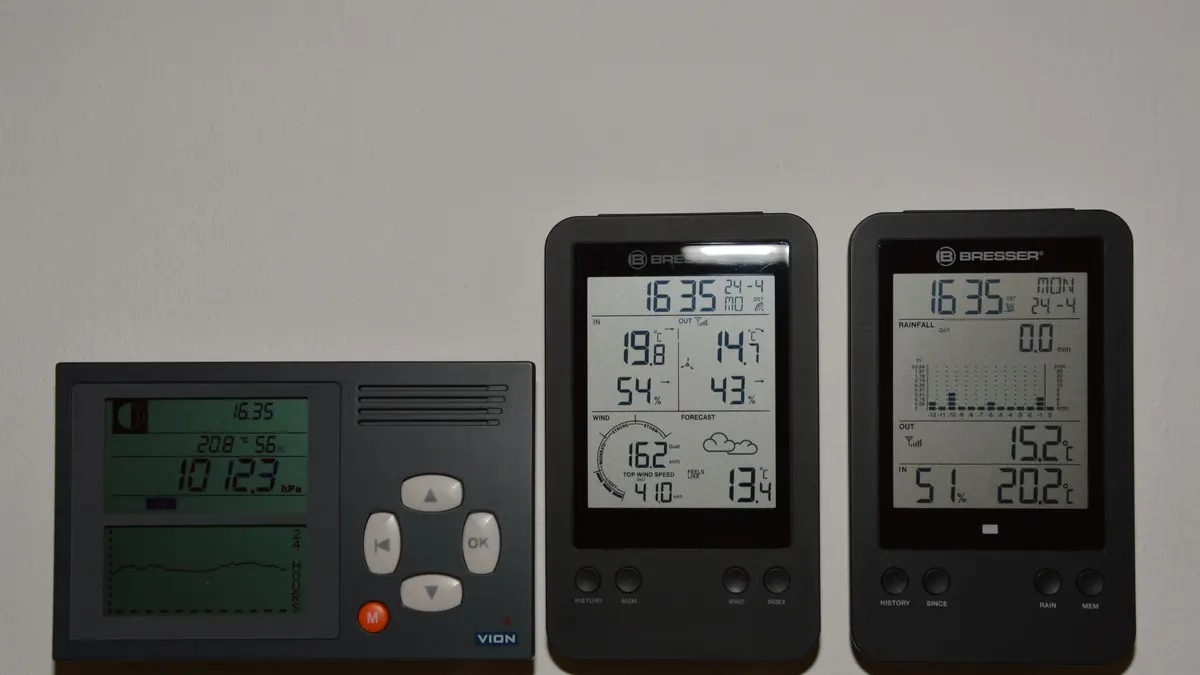
Remote or externally mounted humidistats let you check and adjust from the hatch, which means you will actually do it. Where the unit has only an onboard display, consider a separate wireless hygrometer placed in the space so you can monitor it from indoors.
Set a target rather than running the unit continuously, and give any change a few weeks before judging it. Our humidity level guide covers what range to aim for and why chasing an unnecessarily low number costs money without improving anything.
Installing a dehumidifier for crawl space use
- Confirm the space is sealed and the liner is down first, since a dehumidifier cannot outrun an open vent.
- Choose a central position with room for air at both ends.
- Build a solid, level platform clear of the liner.
- Run the condensate hose with continuous fall to the discharge point.
- Provide a proper grounded electrical supply rather than an extension lead.
- Set the humidistat to your target.
- Place a separate hygrometer away from the unit, so you are measuring the space rather than the machine.
- Record a baseline reading and the date.
Point five deserves emphasis. A permanent appliance on a temporary lead is a fire risk and a reliability problem, and it is the detail most often improvised.
Crawl space dehumidifier maintenance
Three checks keep a crawl space dehumidifier working, and together they take a few minutes.
Clean the filter on the schedule the manufacturer gives. A blocked filter reduces airflow, and therefore capacity. Check the drain hose for blockages, and for sagging that holds water. Check the coils for dust, which insulates them and reduces efficiency.
Alongside that, glance at the hygrometer monthly. A reading drifting upward over several months usually means the filter, the drain or the seal of the space rather than a failing machine, and it is far cheaper to investigate at that point.
What a crawl space dehumidifier costs to buy and run
Purchase prices vary widely by capacity and by whether the unit is purpose-built, so the useful comparisons are relative rather than absolute.
A standard portable unit of adequate capacity is the cheaper purchase by a clear margin. A purpose-built crawl space unit costs considerably more. What the extra buys is low-temperature operation, a low profile, continuous drainage as standard, and a housing designed for permanent damp. In an accessible, temperate crawl space the portable may be the rational choice. In a cold or very low one it usually is not.
Running cost depends on capacity, how damp the space is and local electricity prices, so no single figure applies honestly. The published comparison that does hold is efficiency: ENERGY STAR states that a certified unit removes the same amount of moisture as a similarly sized conventional one while using 20% less energy.
Two choices reduce running cost more than the model does. Sealing the space properly means the unit works against a smaller load, and setting a sensible humidity target rather than the lowest available one avoids paying to remove moisture that was never a problem.
When the reading will not come down
If the humidity stays high despite a running unit, work through these in order before replacing anything.
- Check the unit is actually running, rather than having filled a tank and stopped.
- Look for a blocked drain, or a hose sagging and holding water.
- Clean the filter, which reduces capacity as it clogs.
- Walk the perimeter for a vent left open or a seal that has failed.
- Rule out liquid water entering the space from outside.
- Inspect the liner for tears that expose bare soil.
- Reconsider capacity against how damp this space really is.
- Consider whether the space runs too cold for that unit to work well.
Notice that most of these are not the dehumidifier’s fault. A unit sized correctly and draining properly will usually hold a sealed space. Therefore a persistent high reading is more often a message about the sealing. Our vapor barrier guide and vents guide cover the two most common culprits.
Bob Vila’s note is worth keeping in view while troubleshooting. In some areas, it says, insulating the crawl space makes sense to help maintain a uniform temperature and reduce the risk of sweating. Where surfaces are cold enough to condense, insulation addresses a cause that no amount of dehumidification will reach.
Frequently asked questions about crawl space dehumidifier
What size dehumidifier do I need for a crawl space?
Capacity is measured in pints per 24 hours, and ENERGY STAR notes that the capacity you need depends on two factors: the size of the space that needs to be dehumidified and the conditions that exist in the space without dehumidification. For a slightly to moderately damp small-medium room under 2,000 square feet, which ENERGY STAR defines as feeling damp with an intermittent musty odour at 50 to 75% relative humidity, it suggests 20 to 30 pints per day, rising to 30 or more for a large room.
Do those room figures apply to a crawl space?
Use them as a starting point rather than a specification, because ENERGY STAR’s charts are written for rooms. A crawl space is typically cooler, damper and in contact with the ground, so the honest approach is to start from the chart, allow for your space being damper than a room of the same area, and then verify with a humidity reading across a full season.
Do I need a dehumidifier after encapsulation?
Usually yes in a humid climate. Sealing stops new moisture arriving, but it does not remove the moisture already held in the soil, the timber and the air, and a sealed space has no ventilation route to dry itself. The dehumidifier is what takes that remaining moisture out.
How should it drain?
By gravity to a suitable discharge point wherever possible, using a continuous drain hose rather than the internal tank. A tank in a crawl space is a unit that runs until it is full and then stops, and nobody notices for months. Where gravity is impossible, a condensate pump is the alternative, and it becomes another part to maintain.
Where should the unit go in the crawl space?
Centrally if you can, with clear space around the intake and the outlet so air actually circulates rather than short-cycling back into the machine. Keep it off the ground on a solid platform, keep it clear of the liner so it cannot tear it, and site it where you can reach it to service it.
How much does it cost to run?
That depends on capacity, how damp the space is and local electricity prices, so no single figure applies. What is published is the efficiency difference: ENERGY STAR states that a certified dehumidifier uses more efficient refrigeration coils, compressors and fans to remove the same amount of moisture as a similarly sized conventional unit while using 20% less energy.
Sources and how we researched this guide
Research-based. Capacity guidance and efficiency figures are quoted from ENERGY STAR with the context they were published in, including the fact that their capacity charts are written for rooms rather than crawl spaces, which is why this guide explains how to adapt them rather than presenting them as crawl space specifications. Moisture guidance comes from EPA. We do not test appliances and recommend no brand. Found something out of date? Tell us and we will check it against the source.
Keep planning
- Rim Joist Insulation: The Detail Most Basements Get Wrong
- Crawl Space Vents: Open, Close or Seal Them Permanently?
- Crawl Space Insulation: Walls or Floor, and What R-Value
- Crawl Space Vapor Barrier: Thickness, Coverage and Fitting
Go deeper: Crawl Spaces hub · Vapor Barrier Material Calculator · Dehumidifier Size Calculator

Written by Jeremy Jarvis
Jeremy Jarvis is the founder and editor of Basement Playbook, where he builds research-based guides and free planning tools for wet basements and crawl spaces: sump pumps and drainage, encapsulation, dehumidification, radon testing and mitigation, foundation cracks and finishing a basement that stays dry. He sets the site's editorial standards, checks every guide against official sources such as EPA radon and mold guidance, CDC, ENERGY STAR, state health departments and manufacturer documentation, and is responsible for corrections. Structural and radon mitigation work is always referred to a licensed engineer or a certified mitigator. Jeremy also founded Eco Nomad Travel, Mind Clarity Hub, SilkHarborTravel, WanderOza Travel, Freedom Road Living, PowerProof Home and Garage Playbook, and he is the author of books on clarity, focus and practical AI, including The Power of Clarity and Digital Clarity.