
Foundation Crack Repair: Which Cracks Matter and Why
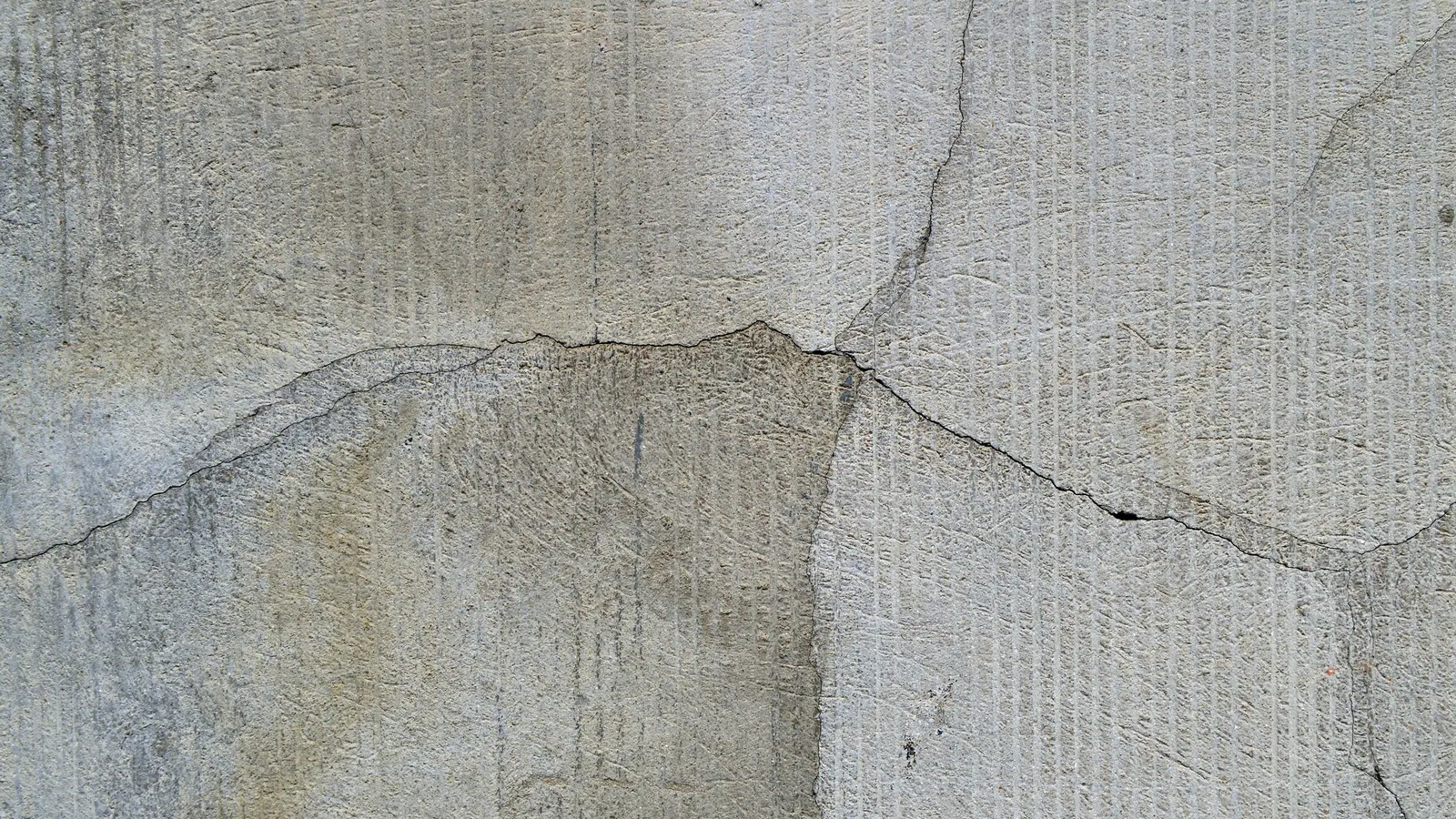
Foundation crack repair covers two jobs that have almost nothing in common. One is filling a narrow shrinkage crack so it stops leaking, which is a modest afternoon. The other is addressing a wall that is moving, which is structural work preceded by an engineer’s assessment. Therefore the useful first step in repairing foundation cracks is not choosing a product. It is reading the crack.
Last reviewed and updated: October 9, 2026. Written by Jeremy Jarvis.
Key takeaways
- Direction matters more than length: horizontal and stair-step cracking indicate pressure, and that is an engineering question.
- Bob Vila lists large horizontal cracks among the signs that a foundation needs repair services.
- Minor cracks in an otherwise sound foundation are cheap: Bob Vila puts those repairs at $250 to $800.
- This Old House notes very small cracks can often be filled with epoxy for a few hundred dollars.
- Sealing a crack that is still moving hides the evidence an engineer needs, and the seal fails anyway.
Triage it before you price it
Work out which category your crack falls into with the Foundation Crack Triage Tool before calling anyone.
Read the crack before repairing foundation cracks
Four properties tell you most of what you need before any foundation crack repair: direction, width, whether it is moving, and what else the house is doing.
Take photographs with a ruler or a coin in frame, and write the date on them. Because cracks change slowly, your memory of how wide it was last spring is not evidence, whereas a dated photograph is.
Direction tells you most about foundation cracks
This is the filter that separates a nuisance from a structural question.
| Crack type | Commonly indicates | Next step |
|---|---|---|
| Narrow vertical, poured concrete | Shrinkage during curing | Monitor; inject if it leaks |
| Diagonal from a corner | Localised settlement | Monitor closely; engineer if widening |
| Horizontal | Lateral pressure on the wall | Licensed structural engineer |
| Stair-step through block joints | Differential movement or pressure | Licensed structural engineer |
| Wide at one end, tapering | Rotation or differential settlement | Engineer, especially if changing |
| Horizontal plus inward bowing | Wall failing under load | Engineer promptly |
Notice how often the right answer is an engineer rather than a product. That is not caution for its own sake; the repair method depends on the mechanism, and only an assessment establishes the mechanism.
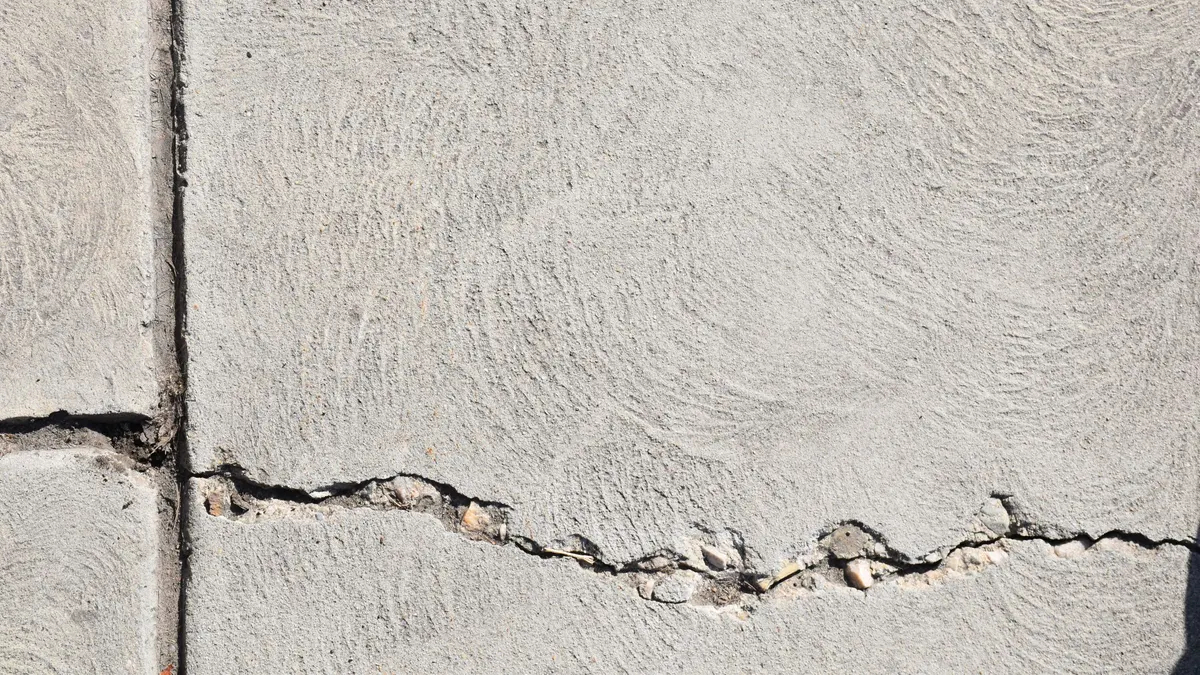
Foundation crack repair starts with width and movement
Width matters less than people expect, and movement matters more.
A hairline crack that has been identical for ten years is a different proposition from one that was hairline in March and is now visibly wider. Consequently the single most valuable thing you can do before spending money is to establish whether it is static.
Mark each end of the crack with a pencil line and the date. Measure the width at a marked point with a crack gauge or calipers. Repeat monthly for several months, and keep the readings together. If nothing changes across a full cycle of seasons, you have strong evidence of a stable crack.
The red flags that change the answer
A crack rarely acts alone. Look at the rest of the house, because the supporting signs are often clearer than the crack itself.
Bob Vila lists the signs that a foundation needs repair services as persistent water and dampness, large horizontal cracks, crumbling concrete, and sloping or sagging floors and walls. It adds a further group of larger indicators: cracked walls, settled floors, doors that are difficult to open and close, and even collapsed ceilings and burst pipes.
If any of those accompany your crack, the crack is a symptom rather than the problem, and filling it addresses nothing.
Foundation crack repair methods, and what each does
Assuming the crack is non-structural, several foundation crack repair approaches exist. They are not interchangeable.
- Epoxy injection. Rigid, and it bonds the two faces together. Suited to stable, structural-grade repairs in sound concrete.
- Polyurethane injection. Flexible and expands, so it seals against water and tolerates slight movement. Often the better choice where the aim is stopping a leak.
- Hydraulic cement. Sets fast, even against running water. Good for active leaks and for pipe penetrations rather than as a general crack repair.
- Surface sealants and coatings. Cosmetic and moisture-reducing. They do not bond anything.
- Carbon fibre straps. A structural measure for stabilising a wall, specified after an engineering assessment.
- Exterior excavation and membrane. Addresses the water side rather than the crack, and costs accordingly.
The common mistake is applying a rigid repair to a crack that is still moving. Epoxy will hold, and the concrete will crack again alongside it.
Choosing between the two injection materials confuses people, so it is worth stating the trade-off directly. Epoxy is strong and rigid, which is what you want when the goal is to bond a sound wall back into one piece. Polyurethane is weaker but flexible and expands as it cures, which is what you want when the goal is to stop water and the crack may still breathe slightly with the seasons.
In practice, most homeowners repairing foundation cracks in a basement wall are trying to stop a leak rather than restore structural capacity. For that purpose polyurethane is usually the better match, and it tolerates a damp crack far better than epoxy does.
Injection in practice
Injection is the mainstream foundation crack repair for a leaking but stable crack, and it is worth knowing how it is meant to go.
Surface ports are fixed along the crack at intervals, the face between them is sealed so the material cannot escape, and resin is injected from the lowest port upward until it appears at the next one. Working upward is what fills the full depth rather than just the visible face.
This is the part that distinguishes a proper repair from a smear of filler. A repair that only treats the surface leaves the crack open through the wall thickness, and water finds it again.
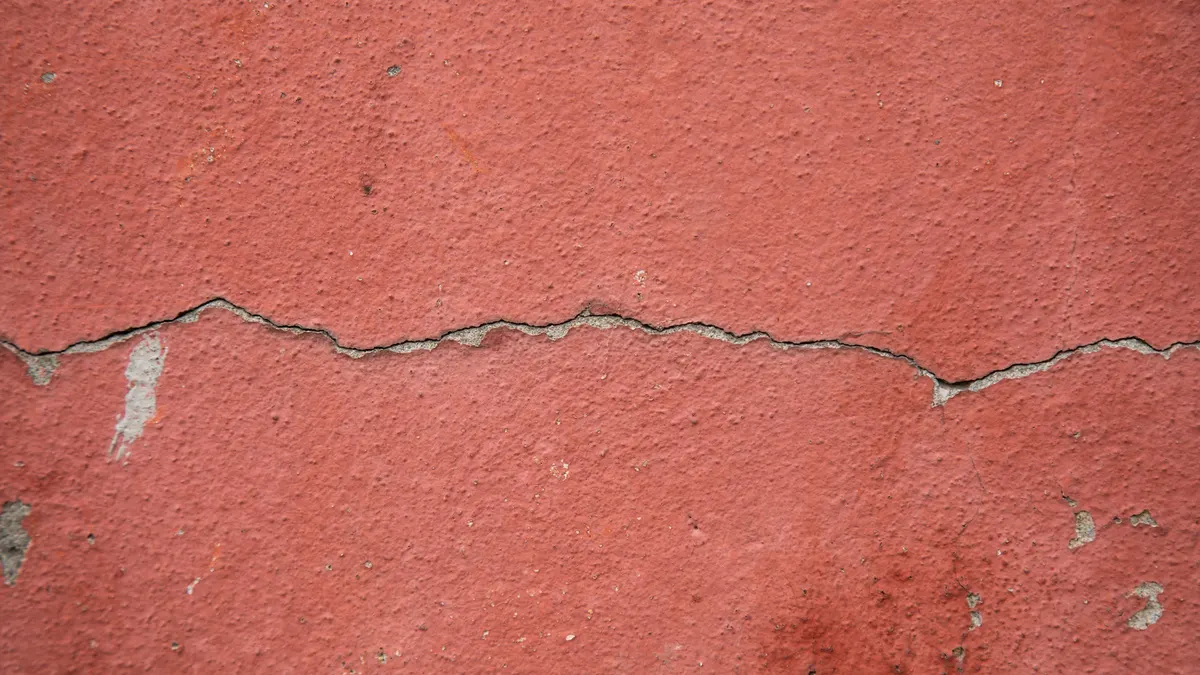
How to monitor a crack properly
Monitoring sounds like doing nothing, but it is the measurement that makes every later decision cheaper. It is also free.
Start with a reference mark. Draw a short pencil line across the crack at a point you can find again, note the date beside it, and measure the width there. A crack gauge costs very little and reads directly in millimetres; calipers work just as well. Avoid measuring at the widest visible point, since that tends to be where the crack meets an edge and it exaggerates the reading.
Record three things each time: the date, the width at the marked point, and the position of each end of the crack. Extension matters as much as widening, because a crack that is lengthening is actively propagating even if the width holds steady.
Then keep going for a full year. Seasonal movement is normal in most soils, and a crack that opens slightly in a dry summer and closes again in a wet winter is behaving like a building rather than failing. What matters is the trend across the cycle, not any single reading.
Two shortcuts help. Photograph the gauge in place so the reading is self-documenting, and keep all the photographs in one album on your phone. If an engineer does eventually visit, that record is worth more than anything you can describe from memory.
Sealing is not a structural repair
This point deserves its own section, because it is where money gets wasted.
Filling a crack restores the barrier. It does not restore the wall’s capacity to resist the load that cracked it. Where pressure from outside caused the crack, that pressure is still there after the repair, and it will express itself somewhere.
Worse, sealing removes the evidence. An engineer reads crack width, taper and position to infer what is happening; a filled crack hides all three. So if there is any doubt about whether a crack is structural, get it looked at before it is filled, not after.
Our bowing wall guide covers the case where the wall has already moved.
Deal with the water as well
Most basement cracks that bother people are noticed because they leak, which makes them a drainage problem too.
EPA’s framing is useful: the key to mold control is moisture control, and fixing the mold without fixing the water problem means the problem most likely comes back. The same logic applies to a crack. Reducing the water reaching the wall reduces the pressure behind the leak and the load on whatever repair you make.
Start outside with gutters, downspout extensions and grading, as our waterproofing guide sets out. Our water after rain guide helps work out where the water is coming from in the first place.
Where DIY foundation crack repair ends
Homeowner injection kits exist and they work on the right crack. This Old House notes that very small cracks can often be filled with epoxy for a few hundred dollars, which is the realistic DIY case.
Attempt it when the crack is narrow, vertical, in poured concrete, demonstrably stable across several months, and unaccompanied by any of the red flags above. Follow the port-and-seal method rather than surface filling, and accept that a cold or damp wall may need warming and drying first.
Do not attempt it when the crack is horizontal or stair-stepped, when it is widening, when the wall bulges, when floors slope or doors stick, or when you are about to sell and will have to disclose what you did. In those cases the cheap repair becomes an expensive complication.
Choosing someone to do the work
There is an order here that saves money. Engage a licensed structural engineer first where the crack is structural, because an engineer sells an opinion rather than a repair, and their specification then makes contractor quotes comparable.
- What do they believe caused the crack, and what evidence supports that?
- What happens if the cause itself is not addressed?
- Which repair method, by name, rather than just a price?
- Is drainage work needed alongside the foundation crack repair?
- What does the warranty cover, and what voids it?
- Get three quotes, then compare the diagnoses before the numbers.
Be wary of anyone who recommends their single method before examining the crack, and of urgency applied as a sales technique. Bob Vila does note that repairing cracks promptly helps avoid potentially irreversible damage, which is true; it is still not a reason to sign the same day.
Putting foundation crack repair cost in proportion
The cost gap between the two kinds of foundation crack repair is the reason triage matters so much.
For a sound foundation with minor cracks, Bob Vila puts repairs at between $250 and $800. Full foundation repair is an order of magnitude higher: Bob Vila, citing Angi, gives $2,176 to $7,833 with a national average of $5,001, and This Old House, updated March 2026, gives $2,224 to $8,134 with an average of $5,179.
At the extreme, This Old House notes that foundation lifting and leveling is the most expensive repair method at up to $23,000, while mud-jacking is the most affordable, starting at $500. It also observes that severe foundation sinking problems may cost $20,000 or more.
Our crack repair cost guide breaks these down by method. The headline, though, is simple: establishing which category you are in is worth far more than shopping around within the wrong one.
What this means if you are buying or selling
Cracks carry different weight in a transaction, and both sides tend to overreact in opposite directions.
As a buyer, treat a crack as a question rather than a dealbreaker. Ask the seller how long it has been there, whether anything was done about it, and whether any paperwork exists. A narrow vertical crack in a poured wall with no supporting symptoms is common. A horizontal crack, or fresh filler over a crack nobody mentioned, is worth an engineer’s opinion before you commit.
As a seller, documentation is your friend. A dated monitoring record and an engineer’s letter saying a crack is stable and non-structural resolve an objection that would otherwise be negotiated against you at a guess. Concealing a crack, by contrast, tends to surface during inspection and costs far more in trust than the repair would have.
In both cases, remember the order of operations. The engineer’s assessment is cheap relative to the work, and it is the only thing that tells either party which of the two very different jobs is actually on the table.
Frequently asked questions about foundation crack repair
When is a foundation crack serious?
Direction is the first filter. Horizontal cracks, stair-step cracking through block mortar joints, and any wall bowing inward all indicate the wall is under pressure it is struggling with, and those warrant a licensed structural engineer. Bob Vila lists large horizontal cracks among the signs that a foundation needs repair services, alongside persistent water and dampness, crumbling concrete, and sloping or sagging floors and walls.
Are vertical cracks in a foundation normal?
Narrow vertical cracks in poured concrete are common and frequently relate to shrinkage as the concrete cured. They often leak, which is a nuisance rather than a structural failure, and injection usually resolves that. Common is not the same as ignorable, though: measure it, date it, and watch whether it changes.
Can I repair a foundation crack myself?
A narrow, stable, non-structural crack is within reach of a competent homeowner using an injection kit, and This Old House notes that very small cracks can often be filled with epoxy for a few hundred dollars. What is not DIY is anything horizontal, stair-stepped, widening, or accompanied by sloping floors or sticking doors. Those need an assessment before any product is applied.
What does a horizontal crack in a basement wall mean?
Usually that lateral pressure from soil or water outside is pushing against the wall. That is a different mechanism from shrinkage, and it does not resolve by filling the crack. Get a licensed structural engineer to look before you accept any quote, because the remedy depends on how far the wall has moved and why.
Should I fix the crack or the water first?
Both, in that order of understanding. A crack that leaks is also a drainage problem, so sealing it without reducing the water outside often just moves the leak. EPA’s underlying principle applies here too: the key to mold control is moisture control, and fixing the symptom while leaving the cause means the problem returns.
How much does foundation crack repair cost?
It depends entirely on whether the crack is structural. Bob Vila notes that if the foundation has minor cracks but is otherwise structurally sound, the repairs will likely cost between $250 and $800. Full foundation repair is a different order of magnitude: Bob Vila, citing Angi, gives $2,176 to $7,833 with a $5,001 average, and This Old House gives $2,224 to $8,134 with a $5,179 average.
Sources and how we researched this guide
Research-based. Cost figures are attributed to Bob Vila or This Old House with scope and date. This guide deliberately stops where structural engineering begins: we describe what different cracks commonly indicate, and we say plainly when the next step is a licensed structural engineer rather than a repair product. We do not inspect foundations. Found something out of date? Tell us and we will check it against the source.
- Bob Vila: Foundation repair cost
- This Old House: Foundation repair cost
- EPA: A brief guide to mold, moisture and your home
Keep planning
- Exterior Foundation Waterproofing: Cost and When It Is Worth It
- Foundation Settling: Normal Movement or a Real Problem?
- Hydraulic Cement: When to Use It and When Not To
- Bowing Basement Wall: Causes, Risk and Repair Options
Go deeper: Radon hub · Radon Mitigation Cost Estimator · Basement Dry-Up Plan Builder

Written by Jeremy Jarvis
Jeremy Jarvis is the founder and editor of Basement Playbook, where he builds research-based guides and free planning tools for wet basements and crawl spaces: sump pumps and drainage, encapsulation, dehumidification, radon testing and mitigation, foundation cracks and finishing a basement that stays dry. He sets the site's editorial standards, checks every guide against official sources such as EPA radon and mold guidance, CDC, ENERGY STAR, state health departments and manufacturer documentation, and is responsible for corrections. Structural and radon mitigation work is always referred to a licensed engineer or a certified mitigator. Jeremy also founded Eco Nomad Travel, Mind Clarity Hub, SilkHarborTravel, WanderOza Travel, Freedom Road Living, PowerProof Home and Garage Playbook, and he is the author of books on clarity, focus and practical AI, including The Power of Clarity and Digital Clarity.