
Foundation Settling: Normal Movement or a Real Problem?
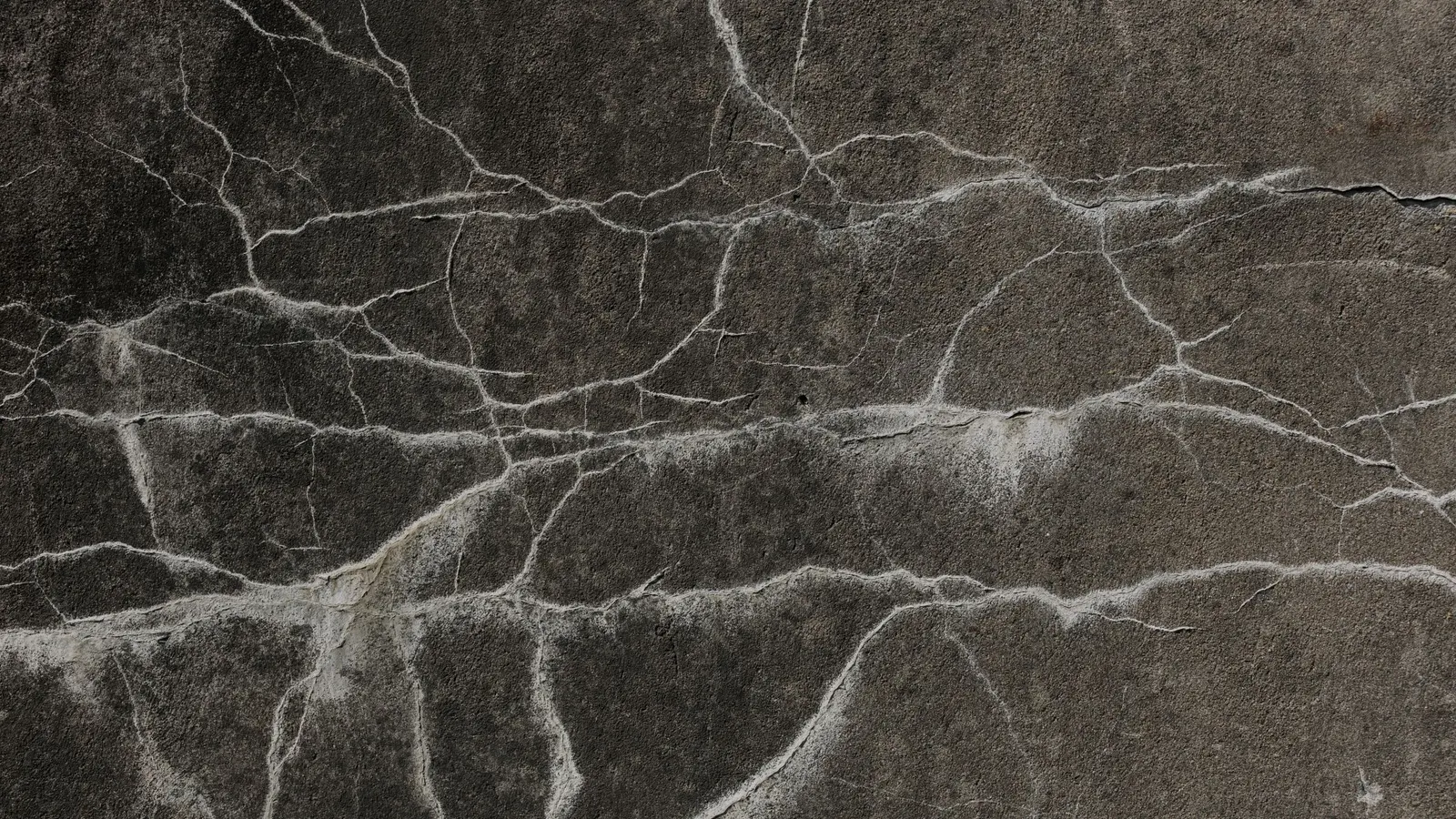
Foundation settling is the phrase used both to dismiss real problems and to sell expensive repairs, which makes it unusually unhelpful on its own. Every house settles. The question worth answering about house settling is not whether yours has, but whether it has settled evenly, because that single distinction separates a cosmetic crack from a structural bill.
Last reviewed and updated: October 9, 2026. Written by Jeremy Jarvis.
Key takeaways
- All houses settle; what matters is whether they settle evenly or unevenly.
- Differential settlement is the problem, because it puts the structure into tension it was not designed for.
- Bob Vila notes that foundation settling which results in cracking can lead to significant structural issues.
- Doors that stick, sloping floors and diagonal cracks from openings are the classic differential signs.
- This Old House puts lifting and leveling at up to $23,000, and mud-jacking from $500, so the diagnosis decides the bill.
Start with the crack
If a crack prompted this search, triage it first with the Foundation Crack Triage Tool, then come back to the pattern across the whole house.
What foundation settling actually is
A house is heavy, and it sits on soil that compresses under load. Settlement is the downward movement that results as the ground consolidates.
Most of it happens early, in the first years after construction, and then slows as the soil reaches equilibrium. Afterwards, seasonal movement continues in most soils as moisture content rises and falls. Consequently a house that has not moved at all is the exception rather than the rule.
None of that is a defect in itself. The defect arises when different parts of the same structure move by different amounts.
Uniform settlement and differential settlement
This is the distinction that governs everything else, so it is worth being precise about.
| Uniform settlement | Differential settlement | |
|---|---|---|
| What happens | The whole house moves down together | One part moves relative to another |
| Effect on structure | Little; geometry is preserved | The structure is racked out of square |
| Typical cracks | Few, small, often none | Diagonal, widening at one end |
| Floors | Remain level relative to each other | Slope, often toward one corner |
| Doors and windows | Operate normally | Stick, bind or swing open |
| Usual response | Monitor | Engineer, then repair |
A house can be several inches lower than when it was built and perfectly sound, provided it went down evenly. Conversely, a fraction of that movement unevenly distributed can crack walls throughout.
Why the soil decides how a house settles
Settlement is really a soil story, and the ground under one corner is often not the ground under another.
- Expansive clay. Swells when wet and shrinks when dry, so it moves with the seasons.
- Poorly compacted fill. Common where a site was levelled before building; consolidates for years.
- Organic soils. Decompose and lose volume over time.
- Variable ground. A house straddling two soil types settles differently at each end.
- Erosion and washout. Water removing soil from beneath a footing creates a void.
- Nearby excavation. Trenching or digging close to a footing can undermine support.
Bob Vila lists soil stability and foundation settlement among the factors that move repair prices away from the national average, which reflects how much the ground drives both the problem and the remedy.
Signs that are usually nothing to worry about
Plenty of ordinary cosmetic movement gets mistaken for structural failure, so it helps to know the benign list.
Hairline cracks in drywall above door and window openings are extremely common, because those are the weak points in a sheet of board. Fine vertical cracks in a poured concrete wall are frequently shrinkage from curing. Small gaps opening between trim and wall with the seasons reflect timber moving with humidity. Nail pops in ceilings are a framing and fixing matter rather than a foundation one.
Seasonal cracks that open and close are also worth recognising as a category of their own. A crack that is slightly wider every winter and narrower every summer is tracking soil moisture, and that cyclical behaviour is quite different from a crack that only ever grows. Noting the season alongside each measurement is what lets you tell the two apart.
What these share is that they are small, static and unaccompanied by anything else. Our crack repair guide covers how to read an individual crack in more detail.
Signs that are not normal
By contrast, these indicate the house is being pulled out of shape, and several together are more meaningful than any one.
- Floors that slope noticeably, especially toward one corner.
- Doors and windows that stick or bind, having previously operated normally.
- Diagonal cracks running from the corners of door and window openings.
- Cracks that are wider at one end than the other.
- Gaps opening between walls and ceilings, or between a chimney and the house.
- Exterior brickwork showing stair-step cracking through the mortar.
- Cracks that continue through both the interior finish and the exterior wall.
- Visible separation at the junction between an extension and the original house.
Bob Vila groups several of these together, listing cracked walls, settled floors, doors that are difficult to open and close, and even collapsed ceilings and burst pipes among the larger problems that help homeowners identify foundation issues.
The timeline of house settling
Settlement is not a single event, and knowing roughly where a house is in its life helps you judge what you are seeing.
In the first few years after construction, soil consolidates under the new load and most of the total movement occurs. Cracks appearing in a new house are common enough that builders often expect to return and make good once, and that early movement is usually uniform.
After that, the house enters a long period of seasonal movement. Soil takes up water in wet months and loses it in dry ones, and the building rises and falls slightly with it. This is why a door that binds every August and frees every November is describing the weather rather than a failure.
Problems arrive when something changes the ground beneath one part of the house: a leaking drain, a new tree, an extension on different footings, a drought in clay, or water consistently discharged at one corner. Therefore a house that behaved predictably for thirty years and then started moving is telling you that a condition changed, and finding that change is more useful than measuring the crack.
An extension deserves particular mention, because it is the most common source of differential movement in otherwise sound houses. New footings next to an old building settle on their own schedule, and the junction between the two is where that difference appears.
Measuring what is happening
As with cracks, converting an impression into dated measurements is the single most valuable thing you can do, and it costs nothing.
For floors, a long spirit level or a laser level will show the fall across a room. Record the drop and the direction, with a sketch of the room and the date. For cracks, mark a point, measure the width there, and date it. For doors, note which ones bind and on which edge, since the edge tells you which way the opening has gone out of square.
Then repeat seasonally. Most soils move through the year, so a single reading in August and another in August the following year tell you far more than two readings a fortnight apart.

Water is usually involved
Moisture changes soil volume, so water management and settlement are closely connected.
Gutters discharging beside the foundation saturate the soil at one point. Poor grading does the same across a whole elevation. Conversely, prolonged dry weather shrinks clay and can withdraw support. Leaking drains and water supply pipes beneath a slab are a well-known cause of localised washout.
Ready.gov notes that floods are the most common disaster in the United States, and saturation events are exactly the conditions under which weak ground reveals itself. Accordingly, the cheap outside work in our waterproofing guide is worth doing for structural reasons as well as for a dry basement.
Trees, and why removal is not automatic
Large trees near a house in clay soil draw significant moisture from the ground, which can shrink the soil locally and lower support under one part of the foundation.
The obvious response is to remove the tree, and sometimes that is right. However, removing a mature tree allows the soil to rehydrate and swell again, which can lift the ground that had been dry for decades. That movement, in the opposite direction, is called heave and it causes its own damage.
So the sensible order is an assessment first. An engineer or arboriculturalist can advise whether removal, crown reduction, root barriers or simply managed watering is appropriate for your soil and your tree.
When to call someone
Call a licensed structural engineer when several of the abnormal signs appear together, when a crack is widening across your dated measurements, when floors have a noticeable slope, or when doors that worked last year no longer do.
Call sooner if movement is rapid, if an exterior wall is separating, or if you can see through a crack. Bob Vila notes that when homeowners notice cracks, leaks or settling, quick action is essential, and that repairing cracks right away helps avoid potentially irreversible damage.
Bring your measurements, your photographs and the dates. An engineer presented with a year of records can distinguish active movement from historic movement, which is the single most consequential judgement in this whole subject.
How settlement gets repaired
Methods address support rather than the cracks, which are consequences.
| Method | What it does | Indicative cost |
|---|---|---|
| Mud-jacking | Pumps material beneath a slab to fill voids and lift it | From $500 |
| Drainage correction | Removes the water driving soil movement | Varies; often modest |
| Crack repair after stabilising | Restores the barrier once movement has stopped | $250 to $800 for minor cracks |
| Piering and underpinning | Transfers load to stable ground below | $20,000 or more where severe |
| Lifting and leveling | Returns the structure toward its original geometry | Up to $23,000 |
The ordering matters. Repairing cracks before the movement is stabilised means repairing them twice, which is why an engineer’s sequence is worth having.
What it costs overall
Whole-foundation figures put the middle of this range in context.
This Old House, updated March 2026, gives foundation repair at $2,224 to $8,134 with an average of $5,179. Bob Vila, citing Angi, gives $2,176 to $7,833 with a national average of $5,001. Our repair cost guide breaks these down by method.
At the two extremes, the gap is enormous: mud-jacking from $500 against lifting and leveling at up to $23,000. That gap is the strongest possible argument for establishing what is actually happening before buying a remedy.
Foundation settling and your insurance
This catches people out, so it is worth knowing before you need to know.
Gradual settlement is commonly treated differently from sudden damage, and policies vary considerably in how they handle earth movement. Rather than assume either way, read your own policy wording and ask your insurer directly what is and is not covered.
Two practical points follow. First, where a specific event caused the damage, such as a burst pipe washing out soil beneath a footing, document that event thoroughly, because the cause may matter more to a claim than the damage does. Second, keep your dated monitoring records, since they evidence when movement began.
If you are selling, disclosure requirements vary by state, and concealing known foundation settling tends to surface during a buyer’s inspection anyway. A clear file with an engineer’s assessment is a far stronger position than an unexplained patch of fresh filler.
Reducing the risk from here
You cannot change the soil under a house, but you can control most of what changes the soil’s behaviour.
Keep moisture around the foundation as even as possible. That means working gutters, downspouts discharging well clear, ground that falls away from the house, and no part of the perimeter being soaked while another stays dry. Fix leaking drains and supply pipes promptly, since a slow leak under a slab removes support quietly.
Avoid adding load close to the foundation, think carefully before planting large trees near the house, and keep your records going. A house with a decade of dated observations is a house whose next owner, or next engineer, can tell at a glance whether the foundation settling finished long ago or is still underway.
Frequently asked questions about foundation settling
Is my house settling or is the foundation failing?
The useful question is whether the settlement is uniform or differential. A house that has moved down evenly is usually fine, even if it is now an inch lower than it was. A house where one part has moved relative to another is in a different situation, because the structure is being pulled out of shape. Sloping floors, doors that stick at one end of the house and diagonal cracks radiating from openings all point to differential movement.
How much foundation settling is normal?
Some settlement is expected in the first years after construction as soil consolidates under the new load, and seasonal movement continues in most soils afterwards. There is no single published figure that applies to every house, because tolerance depends on the soil, the foundation type and the construction above. What is reliable is the pattern: evenly distributed and slowing is normal, uneven and accelerating is not.
What are the signs of a settlement problem?
Bob Vila lists signs that a foundation needs repair services as persistent water and dampness, large horizontal cracks, crumbling concrete, and sloping or sagging floors and walls. It adds cracked walls, settled floors, doors that are difficult to open and close, and even collapsed ceilings and burst pipes as larger indicators. Several of these appearing together matters more than any one alone.
Can trees cause foundation settlement?
They can contribute, particularly in clay soils, because large trees draw substantial moisture out of the ground near them. Clay shrinks as it dries, which can lower the soil locally and produce exactly the uneven support that causes differential movement. Removing a mature tree close to a house is not automatically the answer either, since the soil can then swell again.
How much does it cost to fix a settling foundation?
It depends on the method, which depends on the diagnosis. This Old House notes that mud-jacking is the most affordable method, starting at $500, while foundation lifting and leveling is the most expensive at up to $23,000, and that severe foundation sinking problems may cost $20,000 or more. Whole-foundation repair generally falls between $2,224 and $8,134 with an average of $5,179.
Should I buy a house that has settled?
Settlement on its own is not a reason to walk away, since most older houses have moved. What matters is whether the movement is finished or continuing, and that is a question for a structural engineer rather than for a seller’s reassurance. Ask for any history, any previous repairs and any monitoring records before deciding.
Sources and how we researched this guide
Research-based. Cost figures are attributed to This Old House or Bob Vila with scope and date. The distinction between uniform and differential settlement is standard structural vocabulary rather than our invention, and we use it because it is the distinction that decides whether a crack matters. We do not inspect foundations; the measurements described here are for gathering evidence, not reaching a verdict. Found something out of date? Tell us and we will check it against the source.
Keep planning
- Exterior Foundation Waterproofing: Cost and When It Is Worth It
- Hydraulic Cement: When to Use It and When Not To
- Bowing Basement Wall: Causes, Risk and Repair Options
- Foundation Crack Repair Cost: By Method and Severity
Go deeper: Radon hub · Radon Mitigation Cost Estimator · Basement Dry-Up Plan Builder

Written by Jeremy Jarvis
Jeremy Jarvis is the founder and editor of Basement Playbook, where he builds research-based guides and free planning tools for wet basements and crawl spaces: sump pumps and drainage, encapsulation, dehumidification, radon testing and mitigation, foundation cracks and finishing a basement that stays dry. He sets the site's editorial standards, checks every guide against official sources such as EPA radon and mold guidance, CDC, ENERGY STAR, state health departments and manufacturer documentation, and is responsible for corrections. Structural and radon mitigation work is always referred to a licensed engineer or a certified mitigator. Jeremy also founded Eco Nomad Travel, Mind Clarity Hub, SilkHarborTravel, WanderOza Travel, Freedom Road Living, PowerProof Home and Garage Playbook, and he is the author of books on clarity, focus and practical AI, including The Power of Clarity and Digital Clarity.