
Sump Pump Float Switch: Types and Safe Checks

A sump pump float switch controls when the pump starts and stops as the water level changes. The right replacement depends on the exact pump, switch arrangement and available clearance. A pump that will not start, will not stop or cycles often may have a switch problem, but those symptoms can have other causes. Begin with the model manual and safe observations; do not bypass a switch or handle powered equipment to diagnose it.
A sump pump float switch is a small part with an important job. However, buying a replacement from a picture alone can create a new problem. Two switches can look similar while using different mounting, electrical ratings or operating ranges. Likewise, a float that appears stuck is not proof that the switch itself has failed.
This guide explains the main arrangements, what to record before requesting service, and how to compare a proposed replacement. It focuses on the control rather than selecting a complete pump. For the wider system, start with our sump pump guide.
This research-based guide uses AI-assisted drafting and cited manufacturer information. No products were tested for this article, and your equipment has not been inspected. Images are AI-generated conceptual illustrations, not installation diagrams or photographs of tested products. Reviewed on November 16, 2026. Use your exact manual and qualified service personnel for diagnosis, adjustment and repair.

Free download: The Basement Dry-Up Planner
Our 12-page printable planner: your basement today, measure and map, which kind of water you have, a storm log, outside checks, pump and humidity records, radon and crack logs, a budget worksheet and the order of work.
First: when should you stop and call for help?
If the area is flooded, water is near electrical equipment, a cord is damaged, or you smell burning, keep away and get qualified help. Do not step into water to reach a plug or breaker. A pump problem does not make an unsafe electrical area safe to enter.
Zoeller’s installation and troubleshooting guidance requires power disconnection before handling and directs flooded electrical situations to the utility or a licensed electrician. It also warns against carrying a pump by its cord or using an extension cord. Treat those as boundaries, not steps to attempt in unsafe conditions.
For a dry, accessible installation, you can gather paperwork and describe what you observed without touching the mechanism. However, leave powered testing, wiring, adjustments and disassembly to qualified personnel following the model instructions. If water is rising, prioritize the service call rather than completing the worksheet below. Our flooded basement guide addresses the broader response.
What does a sump pump float switch actually do?
In a float-controlled arrangement, a buoyant part moves with the water level and operates the switch mechanism. The switch provides the control that starts or stops the pump. Therefore, the pump’s ability to move water and the control’s ability to request operation are related but separate questions.
A float needs the clearance and movement specified for its design. If nearby equipment interferes with that movement, replacing the electrical switch alone may not solve the problem. Also, the start and stop levels belong to the complete setup. They should not be chosen from a generic online measurement.
Some controls use a different sensing method, so not every water-level control is literally a float switch. First identify what is installed. Then use the manufacturer’s name for the arrangement when asking about parts. That small step can prevent a seller from recommending something that fits the search phrase but not the actual equipment.
Sump pump float switch types: what is the difference?
The main distinction is how the level control moves or senses water, followed by how it connects to the pump. A vertical float, a wide-angle tethered float and an electronic level control are not interchangeable descriptions. Meanwhile, “piggyback” describes a connection arrangement rather than one universal float shape.
For a concrete example, Liberty’s S30-Series product listing distinguishes manual, vertical, vertical piggyback and wide-angle piggyback models. That illustrates why the model suffix matters. It does not establish that any switch from that series is compatible with another pump.
| Arrangement | What to identify | Question for the supplier |
|---|---|---|
| Vertical float | A float traveling along a guided path or linkage | What clearance and approved replacement assembly does this model require? |
| Tethered or wide-angle float | A floating body moving through an arc on its cord | Does the basin allow the full specified movement without interference? |
| Integral switch | The control forms part of the pump assembly | Is the service part replaceable, and who is authorized to fit it? |
| Piggyback connection | A separate control plug arrangement described in the manual | Is this exact control approved for the pump and its electrical load? |
| Electronic level control | A sensing arrangement without the same moving float | Which installation, cleaning and compatibility requirements apply? |
Vertical versus tethered sump pump float switches
A vertical arrangement may suit a different space from a wide-angle float, but there is no universal winner. The useful comparison is the actual operating envelope in your basin. Ask the installer to account for the pump, discharge piping, cords, backup equipment and lid arrangement together.
Next, compare the approved start and stop behavior. Do not assume that a larger visible travel range is always better. The correct arrangement depends on the pump instructions and the system. Likewise, do not shorten a tether or move a stop just to make an unsuitable part fit.
Also separate mechanical style from serviceability. An integrated vertical switch and a separate external control can involve different repair procedures. Request the exact part number and the manufacturer’s compatibility basis in the estimate. A description such as “universal replacement” is not enough by itself.
Why might a sump pump float switch get stuck?
A moving float can be restricted by something in its path. However, an apparent control fault may involve the mounting, surrounding equipment or a different part of the system. Record what is visible from a safe, dry position without reaching into the basin or moving powered components.
The Liberty S30-Series manual requires unobstructed float movement and clearance from the basin wall, pump, piping and other objects. It also assigns installation and maintenance to qualified personnel. Therefore, a service visit should consider the space around the control, not just the replacement part.
Tell the technician whether anything changed before the problem began: recent service, a new backup unit, moved storage or an unusual water event. These observations are useful context. They are not proof of a cause, so avoid changing the arrangement before the professional has assessed it.
Symptoms: what can you record without diagnosing?
Describe the behavior in plain language. “The pump made a sound but the water level did not fall” is more useful than “the float is bad.” Also record when the event happened and whether the condition is continuing. A short factual description helps the service provider decide how urgently to respond.
| Observed behavior | What to report | What not to conclude |
|---|---|---|
| Pump does not start | Water situation, alarms and what you observed from a safe location | That the switch is the only possible fault |
| Pump keeps running | Whether water appears to be falling, without reaching into equipment | That changing the float position will solve it |
| Frequent starts and stops | Approximate pattern and whether it recently changed | That every short cycle has the same cause |
| Noise without useful pumping | The sound, visible water behavior and current urgency | That the motor, discharge and control are all functioning correctly |
| Damaged cord, burning smell or electrical exposure | The hazard to the appropriate emergency or qualified service contact | That it is safe to approach or unplug the equipment |
Pentair’s troubleshooting information lists multiple possible causes for continuous operation and other symptoms. Use that to understand why a symptom is not a diagnosis. Do not transfer its model-specific adjustments to equipment with different instructions.
Gather these details before buying a sump pump float switch
Begin with the paperwork you already have. A receipt, installer invoice or manual may identify the model without approaching the equipment. If the label cannot be read from a safe location, ask the service provider to identify it. Saving a few minutes is not worth reaching around electrical or moving components.
- Pump manufacturer, full model number and any model suffix.
- Existing control’s part number, if recorded in the paperwork.
- Whether the switch is integral or a separate approved control.
- Installer details and any previous repair record.
- What the system did, when it happened and what changed recently.
- Whether backup pumping and independent alarms are present.
- The exact manual version used for the proposed repair.
Next, keep photos separate from conclusions. A wide view from a safe position can show the overall layout, while the written note records symptoms. Do not remove a sealed cover or disturb a radon-related arrangement just to improve a picture. The technician can decide what access is needed.

How should you compare replacement options?
Ask the supplier to confirm compatibility in writing. The answer should cover the exact pump model, control type, mounting and electrical requirements. A matching plug or a similar-looking float does not establish all of those points. Also confirm whether the proposed work affects the product warranty.
Then compare the repair scope with the condition of the whole system. A switch-only repair and complete pump replacement are different proposals. Ask why each is being offered, what problem it addresses and which existing parts remain. This makes it easier to compare estimates without assuming the largest job is always necessary.
Finally, request a completion record. It should identify what was fitted and how the installer confirmed normal operation under the manufacturer’s procedure. Keep any relevant service recommendations with the manual. Avoid accepting a verbal statement that the pump “seems fine” as the only record of work.
Questions to put in the service estimate
A useful estimate explains the proposed remedy and its limits. Start with the problem you reported, then ask the provider to distinguish observations from confirmed findings. If diagnosis is still required, the estimate should make that clear instead of presenting a guessed part as a certain fix.
- Which pump and control model have you identified?
- What finding supports the proposed switch repair or replacement?
- Which exact approved part will be installed?
- Will you check clearance, mounting and the surrounding equipment?
- What work, parts and disposal are included or excluded?
- How will the completed system be checked under its manual?
- What warranty and follow-up contact apply to the work?
Also ask how unexpected findings will be handled before additional work begins. For broader budgeting factors, use our sump pump installation cost guide. This article does not quote a replacement price because the correct scope has to be established first.
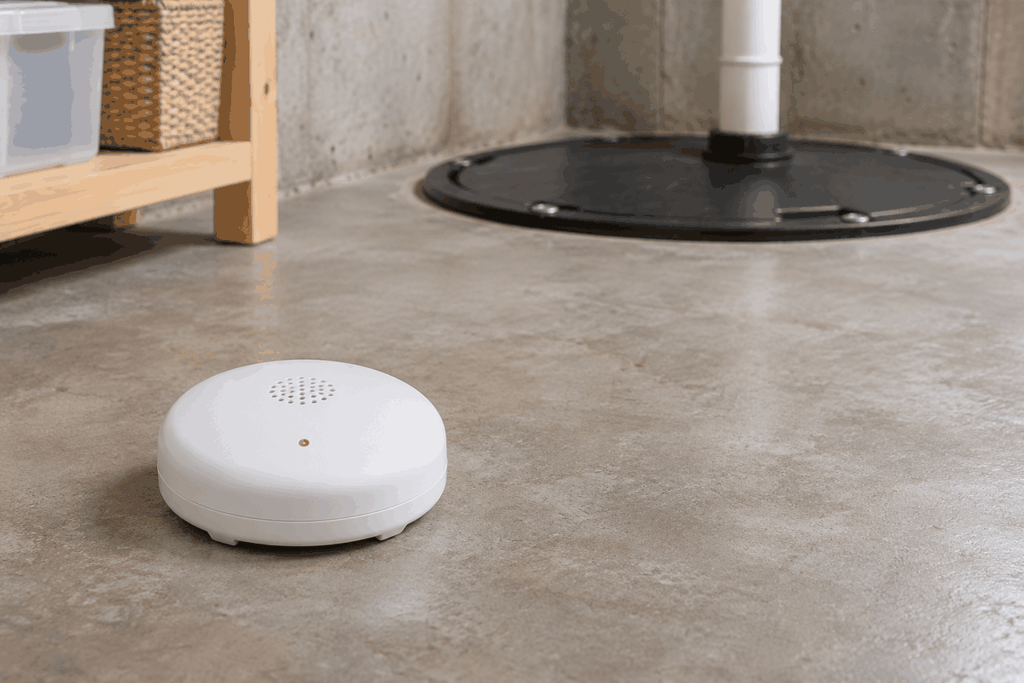
A water alarm is separate from the float switch
The control that operates the pump and a device that alerts you to water serve different purposes. Therefore, do not treat the presence of one as proof that the other is working. Ask your installer to explain the role and normal checks for every device in the actual setup.
An alert also needs a response plan. Decide who can hear or receive it, what happens when you are away, and which contact can provide service. A notification that reaches an unattended phone does not resolve rising water. Our basement water alarm guide covers alarm selection and placement separately.
Likewise, backup pumping belongs in a separate assessment. It does not make a faulty primary control acceptable. Use our battery backup guide to frame questions about that additional system, while the technician addresses the primary pump’s actual condition.
Keep a simple sump pump float switch service record
A small record can make the next service call more focused. Note the date, the model, the reported symptom, the technician’s finding and the exact part fitted. Then add the provider’s recommended checks and contact details. Keep this with the manual rather than relying on a photo buried in your phone.
Also record uncertainty honestly. If you do not know whether the pump ran during a storm, write that you do not know. Do not turn an absence of an alert into proof of correct operation. Factual records are more useful than confident guesses when a problem appears intermittently.
For ongoing care, follow the model instructions and your service provider’s advice. Our sump pump maintenance guide helps organize the broader routine. Keep this article’s narrower role in mind: identifying the control and preparing a better replacement or service decision.
Before the technician leaves, ask where the updated instructions and replacement receipt should be stored. Also make sure another household member knows the service contact. If you rent the home, send the factual record to the responsible property manager through the agreed maintenance channel. A clear handoff helps the next person understand what changed without guessing from the equipment alone.
Three common decision scenarios
The pump stopped after nearby work
Tell the service provider what work took place and when the behavior changed. Also provide the earlier service record if available. A changed layout may be relevant, but the timing alone does not prove the cause. Avoid moving components to test a theory before a qualified person assesses them.
You found a cheap switch that looks similar
Start with the full pump model and ask for documented compatibility. Next, compare the proposed control’s installation requirements with the existing setup. If the seller cannot support the match, keep looking through the manufacturer or a qualified supplier. Appearance and price do not settle compatibility.
The pump runs often during heavy rain
Describe the pattern and any change from what you normally observe. Then let the professional assess incoming water, pumping, discharge and control behavior together. Frequent operation does not automatically identify a failed switch. If water is rising or a hazard is present, treat the situation as urgent rather than a shopping exercise.
Frequently asked questions
Can I use any sump pump float switch?
No. Match the control to the exact pump and its approved installation requirements. Ask the manufacturer or qualified supplier to confirm the part, mounting and electrical compatibility. A similar shape or plug is not sufficient evidence.
Is a vertical sump pump float switch always better?
No single style is best for every basin and pump. Compare the required clearance, approved operating range and service arrangement for the specific installation. Choose from supported options rather than changing a control to fit a preference.
Does a continuously running pump mean the switch failed?
Not necessarily. A control issue is one possibility, but water flow, discharge and other system conditions also matter. Describe the observed behavior and have a qualified provider diagnose it. Do not bypass or adjust the switch as a general test.
Should I reach into the basin to free a stuck float?
Do not handle powered equipment or enter an unsafe electrical area. Follow the exact manual and use qualified service personnel for diagnosis and repair. If flooding creates electrical exposure, stay clear and contact the appropriate utility or licensed professional.
What information makes a service call more useful?
Provide the full model number from accessible paperwork, the observed behavior, when it began and any recent work. Also mention alarms, backup equipment and rising water. Keep observations separate from an assumed diagnosis.
Research method and sources
This guide draws on the linked manufacturer product pages, manuals and troubleshooting references. The tables and service worksheet are original editorial planning aids. They do not replace the instructions for a particular pump, and no products were tested for this article.
By Jeremy Jarvis, publisher of Basement Playbook. Use the guide to organize questions and records. Qualified personnel should determine the cause, select compatible parts and verify the completed work. Keep the final model details and service record where the next person can find them.
Keep planning
- Sump Pump Weep Hole: Check the Model Before Drilling
- Basement Water Alarm: Where to Put One and Which Type
- Yard Drainage: Fix the Water Before It Reaches the Basement
- Sump Pump Maintenance: A Twice-Yearly Routine
Go deeper: Wet Basements & Drainage hub · Sump Pump Sizing Calculator · French Drain Material Calculator

Written by Jeremy Jarvis
Jeremy Jarvis is the founder and editor of Basement Playbook, where he builds research-based guides and free planning tools for wet basements and crawl spaces: sump pumps and drainage, encapsulation, dehumidification, radon testing and mitigation, foundation cracks and finishing a basement that stays dry. He sets the site's editorial standards, checks every guide against official sources such as EPA radon and mold guidance, CDC, ENERGY STAR, state health departments and manufacturer documentation, and is responsible for corrections. Structural and radon mitigation work is always referred to a licensed engineer or a certified mitigator. Jeremy also founded Eco Nomad Travel, Mind Clarity Hub, SilkHarborTravel, WanderOza Travel, Freedom Road Living, PowerProof Home and Garage Playbook, and he is the author of books on clarity, focus and practical AI, including The Power of Clarity and Digital Clarity.
Questions and comments